

 shrimp
 squid
 fish sauce
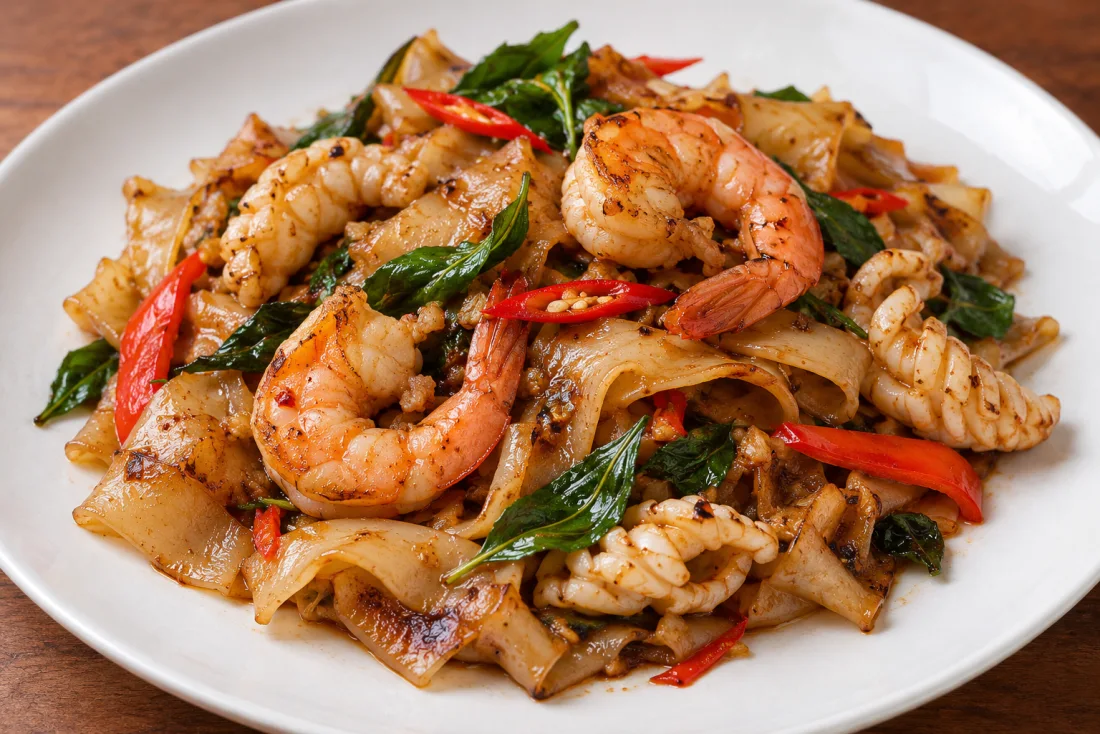
Seafood drunken noodles from a Thai wok
Pad kee mao talay is seafood prepared in a Thai chilli-and-basil stir-fry. Sen yai indicates wide rice noodles. The English name drunken noodles describes the style, and the reference rice-noodle recipe makes it without alcohol. The exact origin of the name or seafood version is uncertain.
Wide rice noodles, shrimp, squid and holy basil
The reference uses wide rice noodles, shrimp, squid, crushed chilli and garlic, fish sauce, oyster sauce and a little sugar. Holy basil contributes a peppery herbal aroma. Vegetables, young peppercorns or light soy sauce may appear in other versions.
Frying aromatics and quickly tossing the noodles
Chilli and garlic fry first, then the cook adds seafood and the wide noodles. Tossing coats the noodles with a thin layer of sauce while the shrimp and squid cook. Holy basil goes in near the end so it wilts briefly and keeps its aroma.
Direct heat, savoury sauce and springy seafood
Chilli and garlic stand out, followed by the fragrance of holy basil. The wide noodles stay soft and slippery while shrimp and squid add a firmer bite. Some edges can pick up a light wok toast. Heat depends on the amount and kind of chillies.
Wide rice noodles and other pad kee mao styles
The same style can use glass sheets or spaghetti. KRUA documents seafood glass sheets with peppercorns and holy basil and a spaghetti variation that uses wine. Pad see ew tends towards soy, while seafood pad Thai normally uses narrower noodles and a sweet-sour tamarind sauce.
Allergens in seafood and sauces
Shrimp, squid, fish sauce and oyster sauce are present in the wide noodle reference. Soy sauce can contain soy and wheat, and a curry or chilli mixture may contain shrimp paste. Ask about the actual noodles, seafood and seasonings, and whether a wok or utensils are used for other dishes.
If you have a food allergy, tell the restaurant before ordering and ask about ingredients, sauces and shared cooking equipment.