

 chicken
 fish sauce
Soy sauce rice noodles in Thai quick-service shops
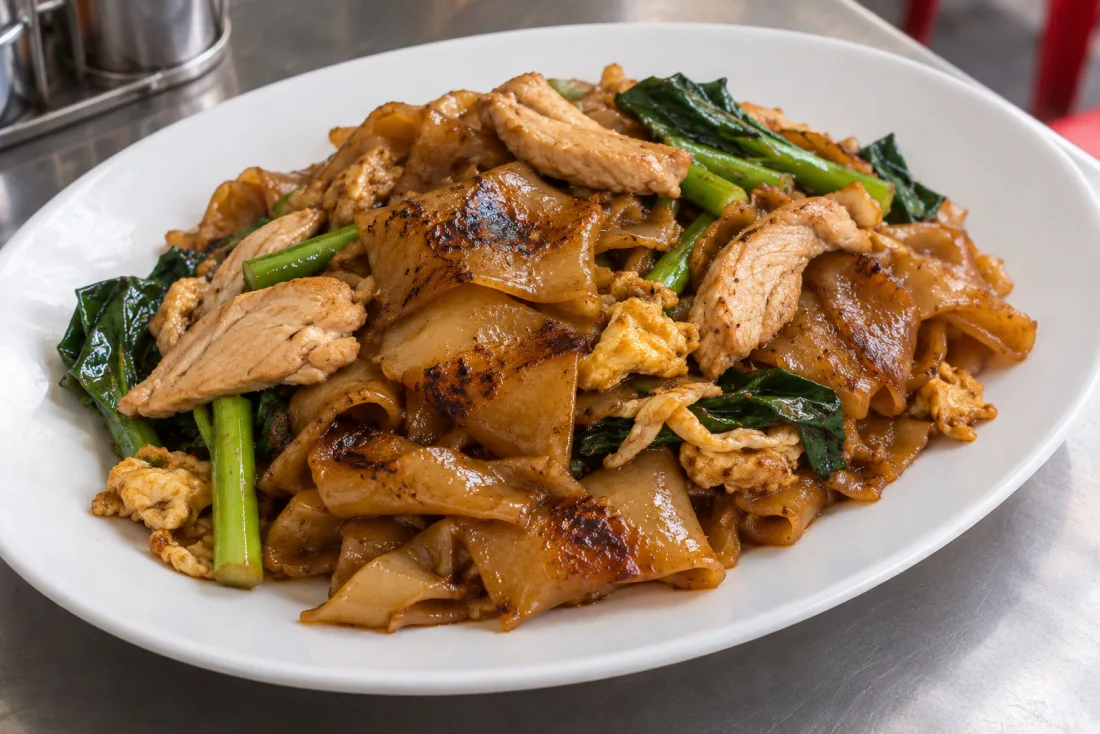
The name specifies soy sauce stir-fry with chicken. Wide rice noodles are typical, though other noodles can be offered. The dish draws on Chinese-style soy wok cooking in Thailand and does not require acid or chili as a base.
Preparing chicken and egg before the noodles
One home recipe separates the rice noodle sheets and mixes them with dark soy. Fry garlic, chicken and egg before adding Chinese kale, noodles, light soy, fish sauce and sugar. Briefly leave the noodles in contact with the hot wok for browned edges.
Savory-sweet sauce and a charred edge
Light soy seasons, and dark soy can deepen color and sweetness. A hot wok can leave browned, chewy edges on soft rice noodles. Egg and kale give different textures. Chili vinegar or fish sauce can be served on the side.
Serving and sharing the wide noodles
Portion chicken, egg, vegetables and noodles before adding condiments. Keep a side sauce separate for takeaway if desired. Ask whether fried egg is additional to the scrambled egg in the wok.
Comparing pad Thai, wok-fried chicken noodles and gravy noodles
Pad Thai usually highlights tamarind and can include sprouts and peanuts. Another Thai wok-fried chicken noodle dish may season more lightly. Noodles with gravy have sauce ladled on separately.
Allergens in egg, soy sauce and fish or oyster sauce
The featured recipe includes egg and fish sauce. Soy sauces can contain soy and wheat; oyster sauce may contain mollusks. Ask about noodle ingredients and shared equipment. Removing toppings cannot undo contact.
If you have a food allergy, tell the restaurant before ordering and ask about ingredients, sauces and shared cooking equipment.