
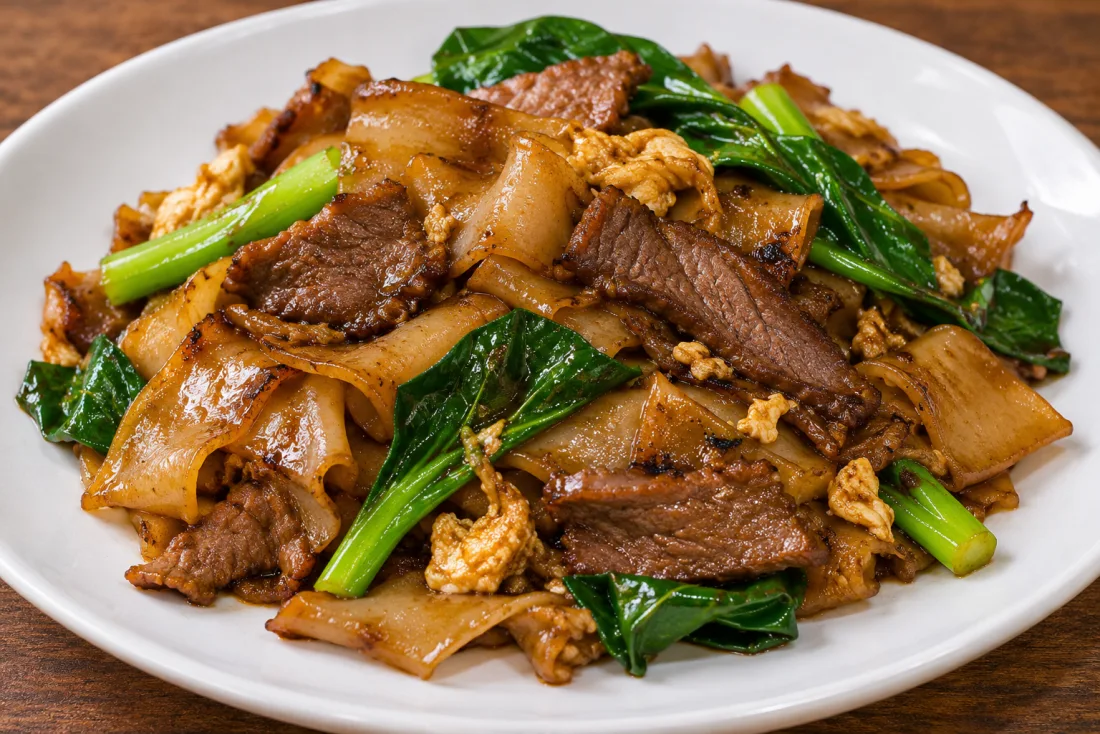

 beef
The beef version of Thai soy-fried noodles
Pad see ew neua uses beef in a Thai soy noodle stir-fry. A Bangkok food hall lists sliced beef with wide noodles. Thai cooks also document sliced and minced options, while greens and noodle types can vary.
Wide noodles, beef, Chinese broccoli and soy
A reference uses thin beef, wide rice noodles, egg, garlic, Chinese broccoli, carrot and light and dark soy sauce. Oyster sauce, sugar and a little vinegar can round out the seasoning. Oil can vary, and one reference suggests vegetable or peanut oil.
Cooking the beef and searing the noodles
Stir-fry garlic, beef and vegetables, then cook the egg against a free part of the wok. The cook can set those ingredients aside while the noodles are fried with sauce, then return them for a final toss.
Toasted soy, tender beef and crunchy stems
The noodles are soft with toasted edges. Beef and egg add savoury depth, and Chinese broccoli stems give a crunch. Dark soy and a little sugar bring mild sweetness. Pepper or chilli vinegar can change the finish.
Sliced beef, minced beef and other wide noodles
Some shops slice or marinate their beef, while others use minced beef. Rad na adds separate thick gravy over the noodles. Pad kee mao instead highlights chilli and holy basil. Order by both the seasoning style and the meat you want.
Allergens in soy, eggs and cooking oil
Reference recipes can contain soy, wheat, egg and oyster. Peanut oil can be used in some kitchens. Ask about the oil, noodle ingredients, beef marinade, other seasonings and shared woks or utensils if needed.
If you have a food allergy, tell the restaurant before ordering and ask about ingredients, sauces and shared cooking equipment.