

 shrimp
 squid
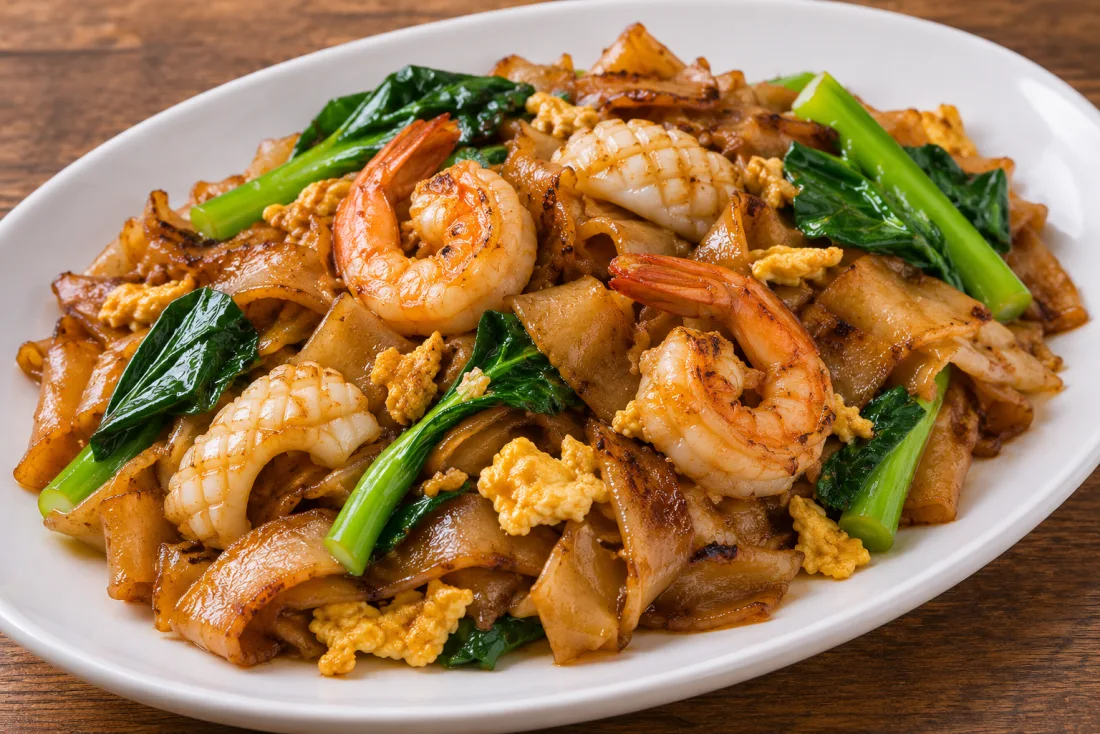
Thai soy-fried wide noodles with seafood
Pad see ew talay uses seafood in the Thai soy noodle stir-fry. Thai restaurant menus list shrimp and squid with Chinese broccoli. Published versions vary, and a KRUA example also adds marinated pork.
Shrimp, squid, Chinese broccoli, egg and soy
The reference combines wide rice noodles with shrimp, squid, greens, egg and garlic. Dark soy colours the noodles, while oyster sauce and a little sugar can round out the taste. Some cooks include light soy, carrots, shiitake or baby corn.
Quickly cooking the seafood, egg and noodles
Fry garlic, then cook shrimp and squid. Scramble egg against the hot wok and add the greens. The noodles can be fried separately or pre-coated with dark soy. Toss everything briefly with seasoning to keep the components distinct.
Wok fragrance, springy seafood and crisp greens
Noodles are silky with toasted edges, the shrimp has a firm sweetness and the squid is springy. Chinese broccoli gives a clearer crunch. Chilli vinegar or pepper can be added at the table depending on the shop.
Shrimp and squid and other seafood noodles
Some shops use shrimp and squid, while others add or substitute other ingredients such as fish or pork. Seafood pad kee mao highlights chilli and holy basil, seafood pad Thai uses tamarind, and rad na adds a separately made gravy.
Allergens in seafood, oyster sauce and egg
Reference ingredients include shrimp, squid, egg and oyster sauce. Soy sauces generally contain soy and may contain wheat. Ask about the seafood mix, stock or seasoning, noodle ingredients, and shared wok or blanching equipment if needed.
If you have a food allergy, tell the restaurant before ordering and ask about ingredients, sauces and shared cooking equipment.