
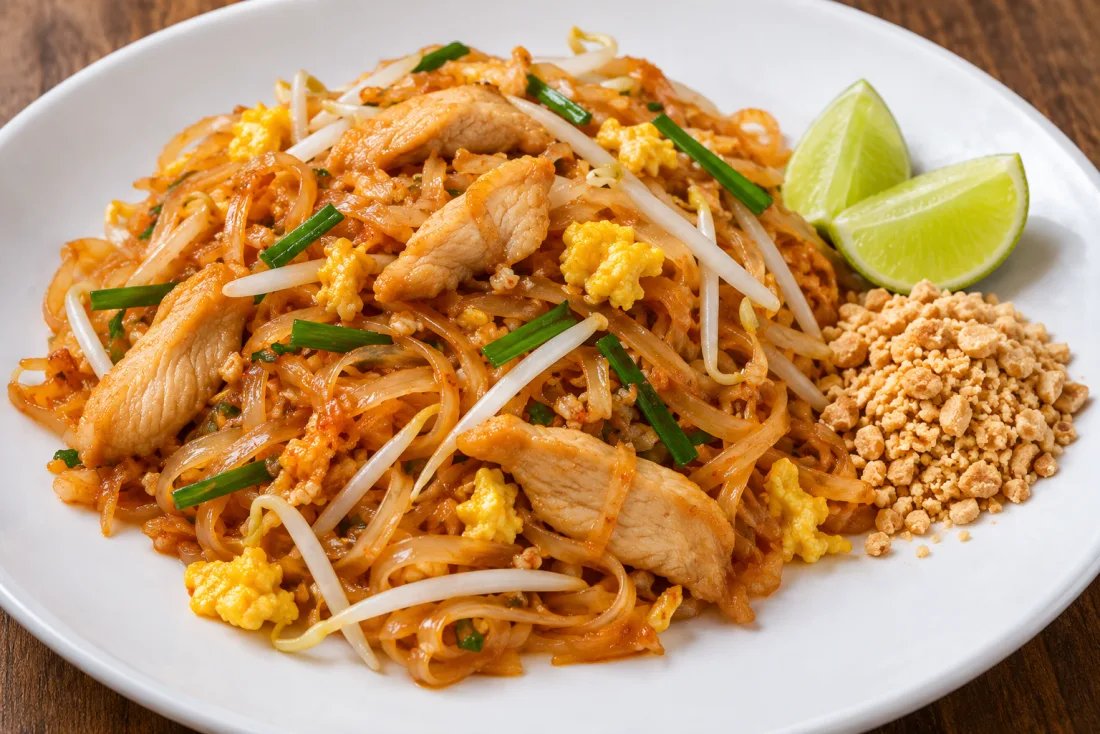

 chicken
 fish sauce
Why the chicken version is still Pad Thai
Gai means chicken. The rest of the name describes the Thai stir-fried rice noodle dish. Thai cooks publish versions with different main proteins, and a documented recipe explains how to substitute thinly sliced chicken. The noodles, sweet-sour seasoning, egg, sprouts and lime retain the character of Pad Thai. The documented chicken variation does not establish a separate birthplace for it.
What the noodles, chicken and sauce contribute
Soaked dry rice noodles take up the tamarind dressing. Thin pieces of thigh or breast cook quickly. Egg sets into soft pieces, and sprouts and garlic chives go in late for freshness. Chopped peanuts can be added when serving, with lime for extra acidity. A common sauce uses tamarind, palm sugar and fish sauce. Tofu, preserved radish or dried shrimp may also be used, and small pieces of dried shrimp can contribute a seafood flavour even when fresh prawns are absent.
Cook the chicken and let the noodles take up the sauce
Soak the noodles until pliable and mix the sauce separately. Briefly marinate the sliced chicken if using soy sauce, cook the meat and set it aside or move it to one side. Toss the noodles with the sauce, then fold in the chicken and egg. A short final toss keeps the bean sprouts and chives fresh. A crowded wok can trap moisture and clump the noodles, so a single portion can be easier to coat evenly.
A sweet-tart base with savoury chicken and roasted peanuts
Tamarind gives rounded tartness, sugar smooths it out, and fish sauce adds a savoury finish. Browned edges give the mild chicken more roasted flavour. Sprouts bring a crisp bite, peanuts a toasted crunch and lime fresh acidity. Chilli can be served to the side. The balance of sauce varies by kitchen, so the chicken and the characteristic sauce tell you more than the colour alone.
How to distinguish it from other chicken noodles
This can be a meal for one or a plate to share. Kuai tiao khua gai is a separate chicken noodle dish, commonly made with wide noodles, egg and a drier, wok-fried finish. A Thai chef also documents a hybrid with Pad Thai seasoning and a dry chicken-noodle technique. If a menu lists both, ask about the noodles and the sauce. Ask whether bean sprouts, peanuts and lime are served with your plate if you are looking for those accompaniments.
Allergens in the sauce and small additions
Chicken Pad Thai can contain egg, peanut, fish sauce and dried shrimp. Soy sauce in the marinade may bring soy and wheat, and tofu contains soy. Choosing chicken or omitting peanuts at the table does not establish whether those ingredients are present in the cooked dish or on shared equipment. Ask about the stir-fry sauce, marinade, dried shrimp, tofu, toppings and the wok or utensils.
If you have a food allergy, tell the restaurant before ordering and ask about ingredients, sauces and shared cooking equipment.