

 river prawn
 fish sauce
Recognizing the river prawns
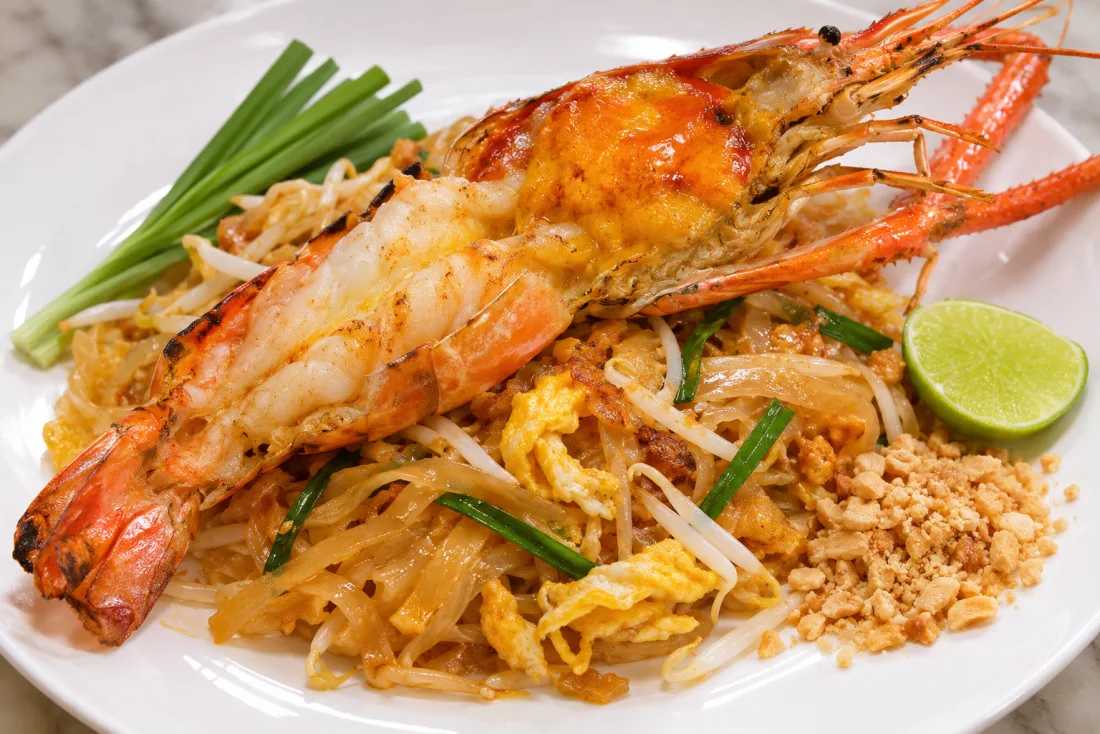
Kung maenam identifies large river prawns. The prawn may be placed beside the noodles or split and set on top. Portion and prawn size vary by establishment.
Noodles, sauce and additions
A Thai chef's version uses Sen Chan rice noodles, tamarind, sugar, fish sauce, dried shrimp, firm tofu, shallot, sweet preserved radish, egg, Chinese chives, bean sprouts and peanuts. Sauces and garnishes vary.
Three egg presentations
The prawn is fully cooked separately before serving. Prawn head fat can be stirred through the noodles. Egg can be scrambled through the noodles, laid over them, or cooked as a thin wrapper.
Sweet, sour and savory
Tamarind, sugar and fish sauce season the springy noodles. The prawn tastes sweet and its head fat adds richness. Peanuts and sprouts give crunch, while lime and chili are adjusted at the table.
Finding it in Thai restaurants
Thai restaurant menus distinguish river prawn Pad Thai from other prawn versions. Examples include Bangkok restaurants listing one prawn and a Phrae restaurant listing a river prawn version in an egg wrapper.
Allergens and shared equipment
River prawns and dried shrimp are crustaceans. Fish sauce, tofu, egg and peanuts contribute fish, soy, egg and peanut. Certain seasonings also add wheat or molluscs. Check whether the wok and tools are shared.
If you have a food allergy, tell the restaurant before ordering and ask about ingredients, sauces and shared cooking equipment.