
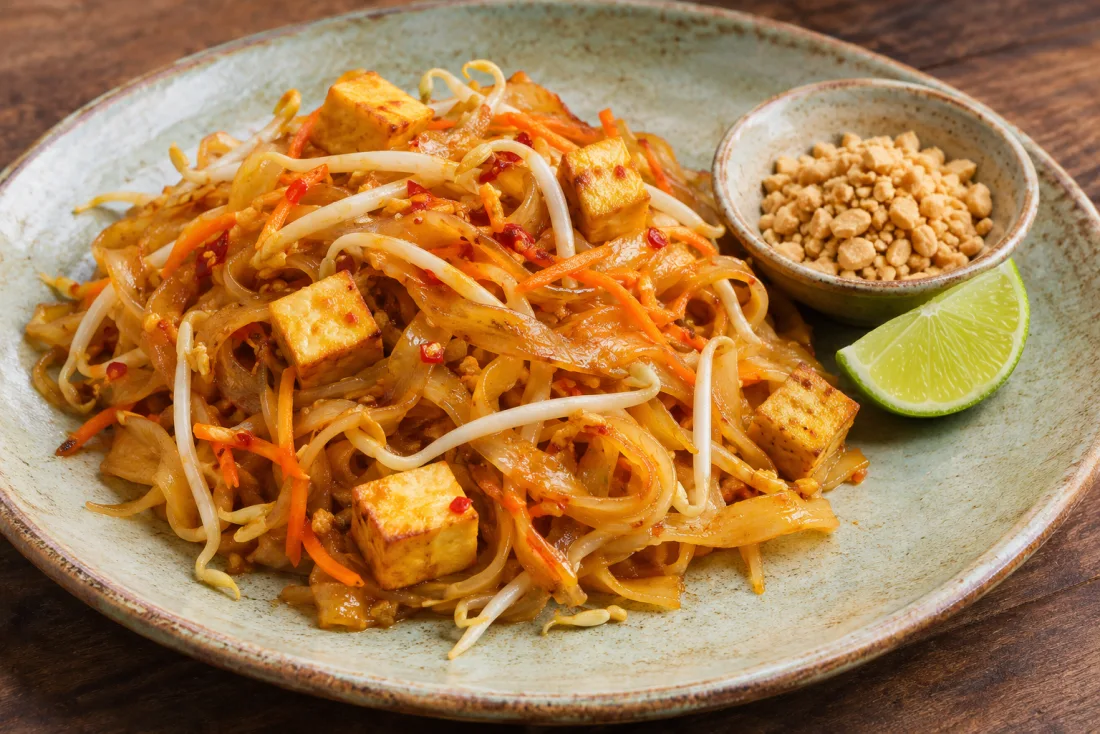

How pad Thai fits the Thai jay tradition
The Thai term pad Thai jay names a Thai dietary practice as well as the noodle dish. Thai sources document avoiding meat, egg, dairy and specified pungent vegetables such as garlic, onion and chives. A Bangkok restaurant lists jay pad Thai and a Saraburi recipe documents noodles with tamarind and soy seasoning. These show present day use without establishing a single historical origin.
Tofu, sprouts and tamarind on one plate
A reference uses thin rice noodles, firm tofu, shiitake, bean sprouts, preserved radish and crown daisy. Tamarind adds acidity and palm sugar gives sweetness. Fermented soybeans and light soy sauce add salt and savouriness. Peanuts and lime can finish the dish. Crown daisy or another permitted green can take the place of garlic chives.
Softening and coating the noodles
Soak the dried noodles until pliable and drain them. Fry tofu separately if desired. Stir-fry shiitake and preserved radish, then prepare the sauce with palm sugar and soy seasonings. Toss the noodles with the sauce and add sprouts and greens late. Add a little water only if needed. Finish with peanuts, chilli or lime according to the serving.
Soy savouriness and tamarind sweetness
Tamarind and sugar give the initial sweet-sour balance. Soy seasoning follows, with browned tofu, crisp sprouts and earthy mushrooms. The reference has a bean-ferment character compared with a shrimp version. Sauce colour can come from reducing the sugar and seasonings. Lime and chilli on the side let the diner adjust the finish.
Distinguishing strict jay and ordinary vegetarian menus
Some vegetarian pad Thai dishes still use egg or alliums. Strict jay avoids those ingredients as well as animal seasonings. Use the Thai menu name as a starting point and ask about the sauce, noodles and cooking method. Festival and specialist restaurants often list jay options. If peanuts or chilli appear on the side, ask whether they were also added in the wok.
Allergens in soy products, peanuts and shared equipment
The reference contains soy from tofu, soybean paste and soy sauce, and peanuts as a topping. Soy sauce and some seasonings may contain wheat. Woks, oil and measures may be shared with dishes containing shrimp, fish or egg. Ask about the sauce, topping and cookware if an ingredient matters. Removing visible peanuts cannot establish how the noodles were prepared.
If you have a food allergy, tell the restaurant before ordering and ask about ingredients, sauces and shared cooking equipment.