

 pork
 fish sauce
Pork in Thai tamarind stir-fried noodles
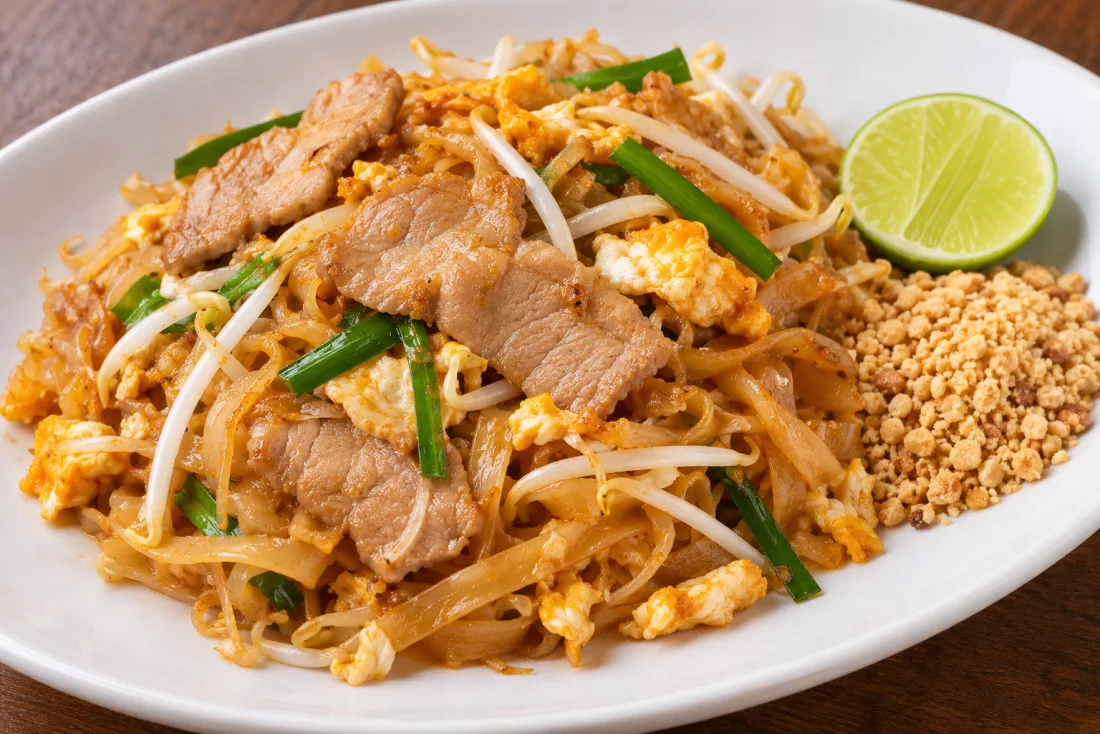
Pad Thai moo is pad Thai served with pork. Thai recipes stir sliced pork into the noodles, while some Bangkok restaurants offer grilled pork jowl or crispy belly as a topping. The sweet-sour noodle dressing is an important part of the dish across these versions.
Rice noodles, pork, tamarind and preserved radish
Fine rice noodles are dressed with tamarind, palm sugar and fish sauce. Egg, preserved radish, greens, bean sprouts and tofu can accompany the pork. Roasted peanuts, lime and chilli flakes may come on the side.
Cooking pork and egg before coating the noodles
Prepare the tamarind dressing and soften the noodles. Stir-fry the pork and egg, then toss the noodles and sauce until the noodles are coated. Add sprouts and chives near the end. If a cook uses separately grilled or crispy pork, it can go on top.
Tamarind tang, savoury pork and vegetable crunch
Tamarind supplies fruit tang, balanced by sugar and fish sauce. The noodles have a soft chew, the pork adds savoury flavour, and sprouts and peanuts supply crunch. Lime adds freshness and chilli can be adjusted at the table.
Sliced pork, grilled jowl and crisp pork
Some cooks stir-fry pork slices, while restaurant menus also feature grilled jowl and crispy pork belly. An egg wrapper is another presentation option. Pork pad see ew uses wider noodles and highlights soy rather than tamarind with peanuts.
Allergens in sauces, garnishes and the wok
Egg, fish sauce and peanuts are commonly used. Tofu adds soy, and seasonings can include oyster sauce, dried shrimp, soy or wheat. Ask about the pork marinade, sauces, toppings and shared woks or utensils if avoiding specific ingredients.
If you have a food allergy, tell the restaurant before ordering and ask about ingredients, sauces and shared cooking equipment.