
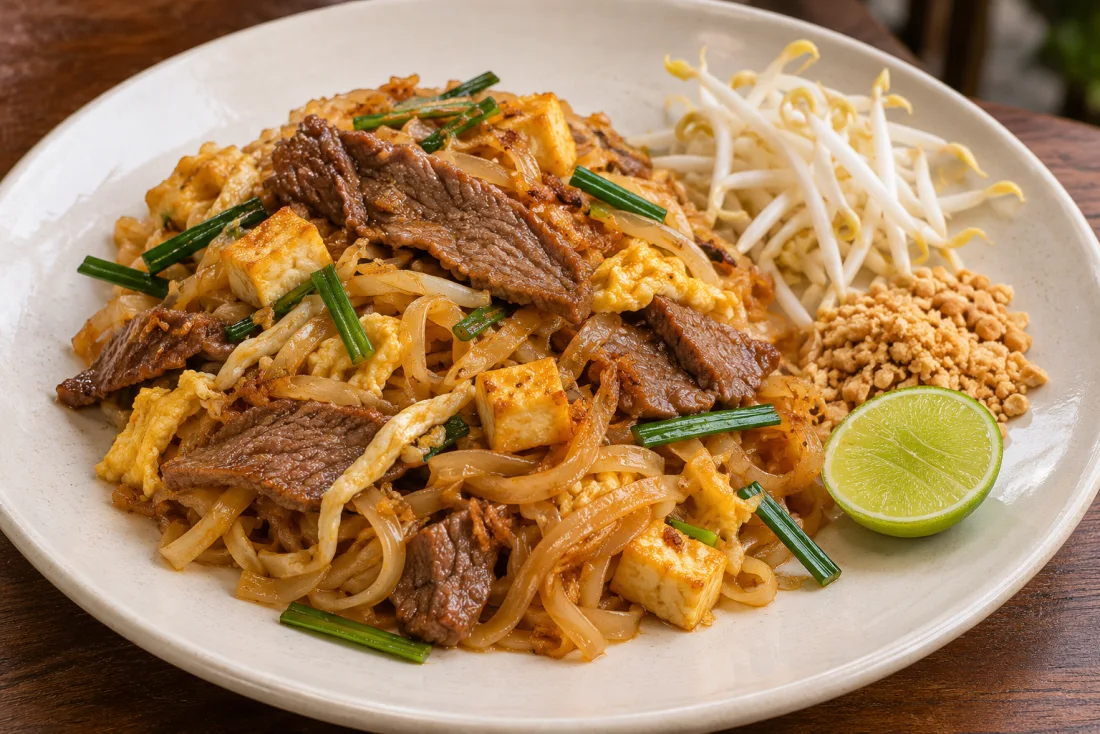

 beef
Beef as a pad Thai protein
Thai pad Thai can use beef alongside familiar alternatives such as shrimp and chicken. Cooks choose a tender cut for quick frying. The title identifies beef but does not rule out fish sauce or dried shrimp as seasoning.
How tamarind sauce coats the beef and noodles
One Thai cook makes the sauce with water, tamarind, palm sugar, sugar and salt. Fry shallots, yellow tofu and sweet preserved radish, then add beef, sauce and softened rice noodles, followed by egg, sprouts and chives. Another version adds fish sauce.
Savory beef, tamarind and roasted peanut
Tamarind gives a fruity tang that sugar softens. Beef adds savor, tofu and egg add different textures, and sprouts and peanuts bring crunch. Garlic chives contribute an allium note. Lime or chili can be added separately.
Serving with peanuts, lime and chili
Try a bite before adding toppings, then portion beef, tofu and noodles if sharing. Lime, peanuts and chilies can go separately for takeaway. Ask about an egg wrapper or the amount of beef if the menu offers variants.
Shrimp pad Thai, beef pad see ew and drunken noodles
Shrimp pad Thai keeps similar tamarind and rice noodle cues. Pad see ew usually highlights soy and wide noodles. Drunken noodles can bring holy basil and chili. Ask about the actual sauce and toppings.
Allergens in egg, peanuts, tofu and seasoning
The featured recipe includes egg, soy from tofu and peanuts. Fish sauce adds fish and dried shrimp adds crustaceans when used. Check oyster sauce, wheat in seasonings and shared tools. Removing toppings does not undo contact.
If you have a food allergy, tell the restaurant before ordering and ask about ingredients, sauces and shared cooking equipment.