
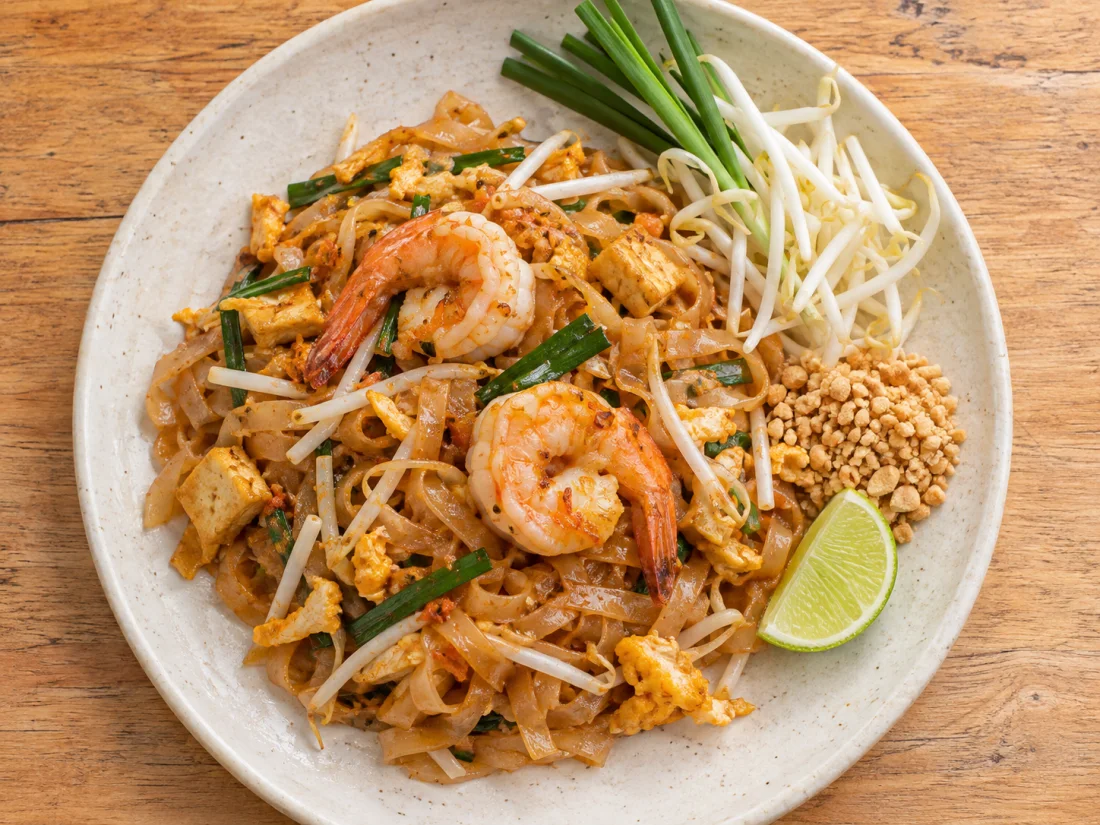

 prawn
Where does Pad Thai come from?
Pad Thai is found across Thailand. The preparation described here resembles a common central Thai style, with a tamarind-based sauce, egg, tofu, bean sprouts, and fresh or dried shrimp. Bangkok is one place where diners commonly encounter it, and cooks in other regions use different noodles and ingredients.
The Royal Thai Consulate-General in Shanghai places the dish's spread in the context of Thailand's promotion of noodle dishes around the Second World War and discusses the influence of Chinese noodle culture. That account helps explain how the dish became widespread. It is harder to identify the exact date when the modern recipe took shape or attribute it to a single inventor.
Ingredients and cooking
The base is dried rice noodles softened before they go into the pan. The noodles can be narrow or wide. In a reference preparation, tamarind provides sourness, palm sugar adds sweetness, and fish sauce supplies salt and savoriness. Shallots, tofu and dried shrimp add aroma and texture. Egg, bean sprouts and garlic chives bring different textures to the same bite.
A cook typically starts with the aromatic ingredients, then tosses the noodles in the pan until the sauce coats them. Egg can be cooked into the noodles or made into a thin omelette that wraps them. Bean sprouts and chives go in toward the end to keep some freshness. Some versions feature fresh prawns, with roasted peanuts, ground chili and lime served separately for diners to add.
What does Pad Thai taste like?
Tamarind supplies the sourness already present in the cooked sauce. Lime added just before eating contributes a fresher aroma and sharper acidity. Palm sugar and fish sauce bring these flavors together. Some kitchens make sweetness more pronounced, while others serve a more tart or savory version. The contrast matters as much as the sauce: chewy noodles, tender tofu, crisp bean sprouts and crunchy roasted peanuts can all share one bite.
Taste the seasoned noodles first, then add a little lime or ground chili if you like. When peanuts and chili come separately, diners can adjust both flavor and texture. Some kitchens use chili in the sauce itself. Ask about the seasoning if you have a low tolerance for heat.
Versions you may see on a Thai menu
Pad Thai kung sot names fresh prawns as the main topping. Pad Thai without prawns in the name can still use dried shrimp and fish sauce. Pad Thai ho khai uses a thin layer of egg to wrap the cooked noodles, giving it a different appearance from a version in which egg is stir-fried through them. The sauce and noodles still form the center of the dish.
In coastal eastern Thailand, documented versions use Sen Chan noodles and seafood. The consulate's account describes one sauce made with crab and pork belly. The Tourism Authority of Thailand describes a restaurant in Chanthaburi serving versions with toppings such as crab, squid and river prawns. Those examples describe regional and restaurant choices. The name Sen Chan tells you about the noodles, while the rest of the recipe depends on the kitchen.
How widely is Pad Thai served?
Thailand's Department of Agricultural Extension presents Pad Thai as a signature dish and describes its presence at street stalls and restaurants in Bangkok. The Thai consulate's food feature is another example of its use as an introduction to Thai cuisine for an international audience.
That range helps explain why a traveler may find it in several forms, from a straightforward plate of wok-fried noodles to a prawn-topped or egg-wrapped version. These examples establish where the dish appears and how it is presented. Comparing its popularity with other dishes would require a different kind of survey.
Allergens and what to ask before ordering
Ask about peanuts, egg, soy from tofu, fish from fish sauce, and crustaceans from fresh or dried shrimp. Ask about crab if it features in the dish. Prepared seasonings can introduce additional ingredients such as wheat in some sauces. People who need to avoid wheat or gluten should ask about the specific sauces as well as the noodles.
Skipping a peanut garnish does not remove peanuts already in the seasoning or prevent cross-contact from woks, spatulas or containers used for other dishes. A tofu version may still include fish sauce or dried shrimp, and the cooking fat can vary. If you have an allergy, tell the restaurant what you need to avoid before ordering and ask about the ingredients and shared equipment used for your dish.
If you have a food allergy, tell the restaurant before ordering and ask about ingredients, sauces and shared cooking equipment.