

What the name means and where it is eaten
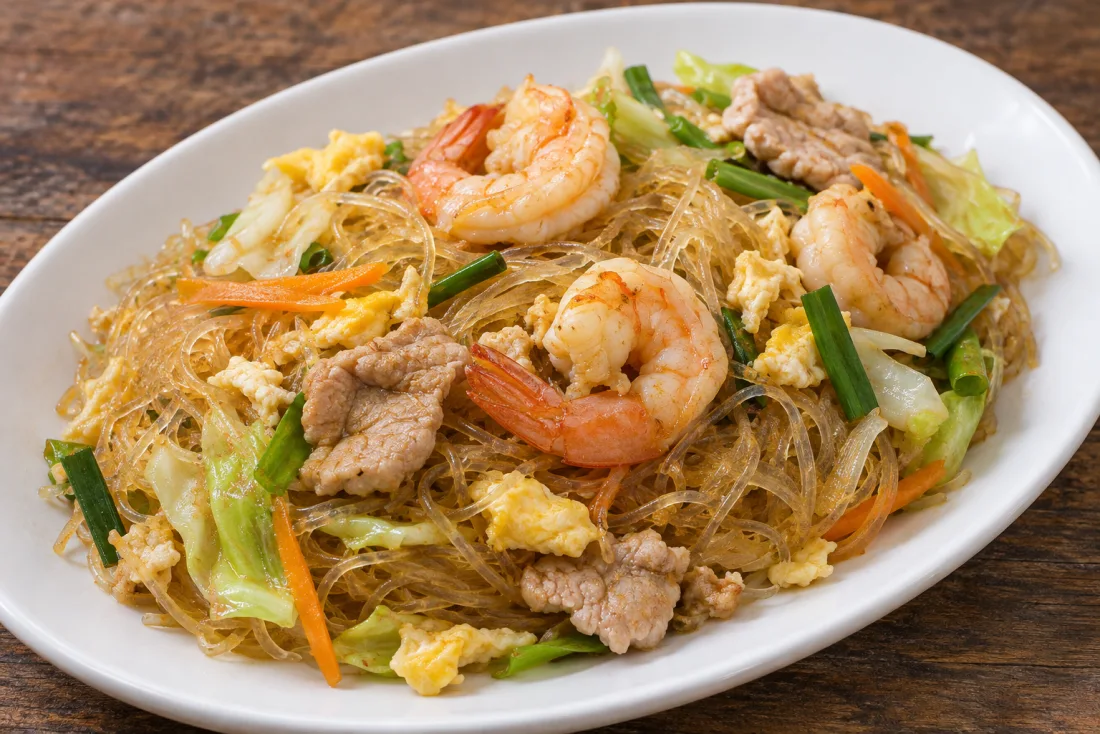
Pad means stir-fried and woon sen means glass noodles. Thai cook Pailin Chongchitnant describes it as home cooking that can be eaten with rice. Bangkok’s Salathip lists onion, cabbage, tomato and egg; a Khon Kaen menu offers pork or prawns. These are examples of where it is eaten today.
What the noodles, egg and vegetables add
Glass noodles are often made from mung bean starch, though other starches and blends exist. The slippery strands take up sauce. Cooked egg adds soft curds, cabbage and carrot provide crunch, and tomatoes add a little juice and acidity. Meat or prawns may be added as distinct pieces.
How the noodles take up seasoning
One reference method cooks the egg and vegetables in stages, then tosses softened noodles with the sauce. The strands absorb the liquid as they heat and become springy. Tomatoes added later can hold their shape. Timing changes the texture of the vegetables and how much sauce remains on the plate.
Its flavour and nearby noodle dishes
The flavour is generally mild and savoury, with egg and aromatic vegetables and a little acidity from the tomato. Glass noodles are finer than the flat rice noodles in pad see ew. Yum woon sen describes another preparation where glass noodles are tossed in a bright dressing; the word pad distinguishes this stir-fry.
How it is served and variants
It can come as a shared dish with rice or as a plate of its own. Pork, prawns and egg can vary with the kitchen. One documented Hainanese version includes dried shrimp. Menus may use the same basic name for different ratios of noodles, vegetables and protein.
Allergens and compound sauces
Egg is common. Ask about soy and wheat in soy sauce, molluscs in oyster sauce and fish in fish sauce. Prawns and dried shrimp are crustaceans. Check the noodle ingredients, premixed sauce and shared woks or utensils for the allergen you need to avoid.
If you have a food allergy, tell the restaurant before ordering and ask about ingredients, sauces and shared cooking equipment.