

Pandan and coconut in Thai bars
Bai toei means pandan leaf and maphrao means coconut. Bangkok’s Apsara lists raisin-infused aged rum, white port, coconut syrup, lime and coconut-pandan water. A Phuket bar uses rum, coconut and pandan syrups, lime and a foam. These are separate house recipes.
Aromatic bases and a citrus note
Pandan contributes herbal aroma through water or syrup. Coconut can appear as syrup, water or cream, with varying richness. Lime brings acid and rum brings a cane spirit finish. White port adds wine character in the Bangkok version. Egg white and sesame feature in the Phuket one.
Clear or softly foamed
Flavoured water and syrup can produce a nearly clear golden drink. A foam has a more delicate soft texture, with a slight toasted note if garnished with sesame. Colour does not establish whether a drink is dairy-free or whether it contains egg.
Serving one cocktail
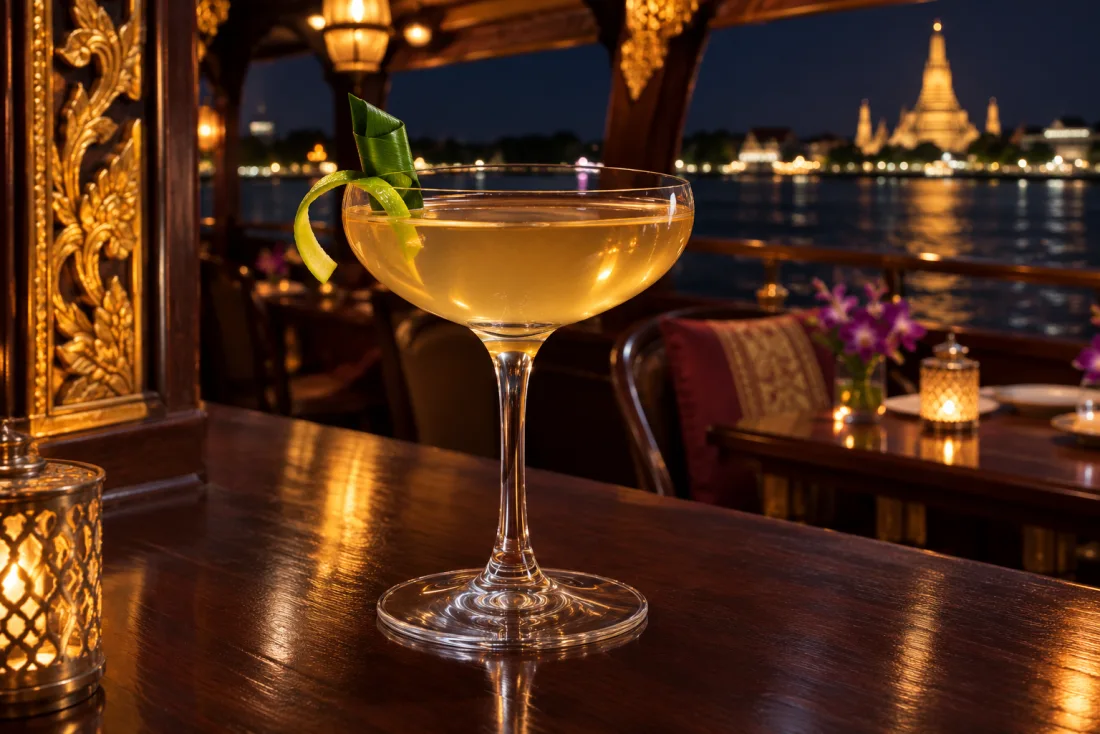
A chilled stemmed glass can show the clear drink, with pandan or a citrus twist as garnish. A fine foam can hold a few sesame seeds. A shorter glass over ice could be another presentation. Cup capacity does not tell you how much spirit was poured.
Related pandan and coconut drinks
An alcohol-free pandan coconut drink can use coconut water and pandan. The alcoholic recipes contain rum or wine and are not inherently frozen or carbonated. The term martini can indicate a different base or vessel. Ask about the alcohol and the kind of coconut.
Allergens and alcohol
The reference contains alcohol and coconut. The Phuket version contains egg white and sesame. Port and other wine products can contain sulphites. Ask about shared tools and any dairy, soy or nuts in other mixers, and confirm a separate alcohol-free recipe if needed.
If you have a food allergy, tell the restaurant before ordering and ask about ingredients, sauces and shared cooking equipment.