
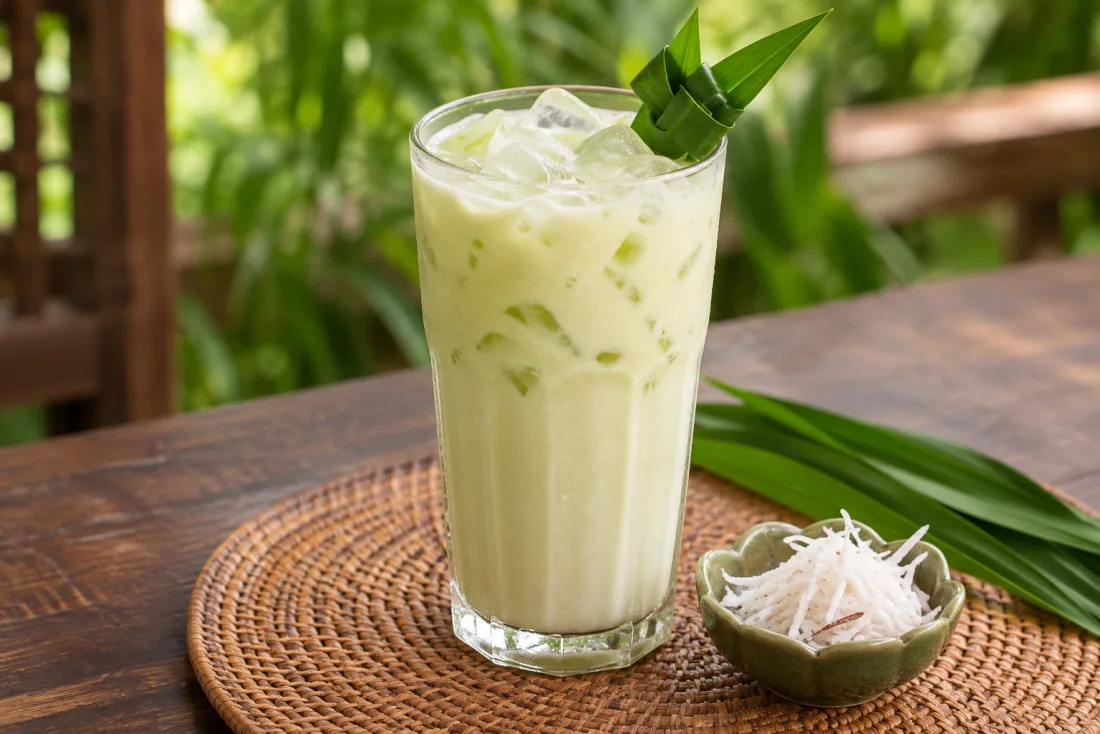

Bai toei supplies aroma and kati supplies coconut milk
The Thai name identifies pandan and coconut milk. Pandan is the fragrant leaf. Kati is opaque coconut milk extracted from the flesh, while nam maphrao is the clearer liquid inside the fruit. Plain pandan water is also lighter. Stir the pandan and coconut together for even color or leave a green ribbon through the pale drink. Both are drinkable without chewing leaves or coconut. Color does not establish whether the shop uses leaves, syrup or flavoring.
A Thai dessert pairing served as a cold drink
Thai cooks combine pandan and coconut milk in sweets. A Thai drink maker also pairs them in a frappe that includes a kale mix. A published cooler instead combines coconut milk, pandan syrup, ice and water. These examples show ways to build the flavor without giving a single Thai province of origin. It can be served plain or with separate chewy toppings. Ask whether the café serves it over ice or blends it, and whether a café-style latte also contains coffee.
Coconut milk, a pandan infusion or syrup, and ice
Pandan leaves can steep in water, which is then strained, or be added through food-grade syrup or extract. A cook may also steep them directly in warmed coconut milk and chill the liquid. The intensity of a sweetened syrup differs from that of an unsweetened infusion. Thin coconut milk makes a lighter drink. Thicker milk gives more body. Ice chills and dilutes the mix. Coconut shreds or young flesh are optional.
Strain and cool before mixing with ice
Wash and infuse the pandan and strain out fibrous material. If steeping it in coconut milk, heat gently. Chill the strained base. Stir chilled pandan and coconut milk before pouring for an even color, or pour one slowly into the other for a marbled effect. Stir briefly before drinking. Follow the product directions if using a powder or extract. Chill the coconut base and add ice at service.
Mild vanilla-like pandan and a creamy coconut finish
Pandan can smell green and faintly vanilla-like. Coconut milk coats the tongue and leaves its own aroma. A stronger syrup can concentrate at the bottom until stirred. Plain pandan infusion may taste lighter. Shredded coconut or pearls bring chew, while the basic cup can be smooth apart from the ice. Lower sweetness can make it easier to distinguish the leaf and coconut.
Allergens in coconut milk, drink mixes and additional milk
Coconut milk contains coconut. The base needs no dairy, but a café can also add condensed milk, fresh milk, creamer or another plant milk. Check for dairy, soy or nuts in the actual products. Syrups, powders, milk foam and toppings can have additional ingredients. Shared strainers, blenders and jugs can cause cross-contact, so ask about the preparation and ingredients when avoiding an allergen. A pandan-coconut base needs no caffeinated tea or coffee.
If you have a food allergy, tell the restaurant before ordering and ask about ingredients, sauces and shared cooking equipment.