

A familiar Thai leaf
Pandan scents Thai sweets, rice and drinks. Hot cha bai toey uses the leaf fragrance in a warm clear infusion. A plain version needs just leaves and water.
Leaves and colour
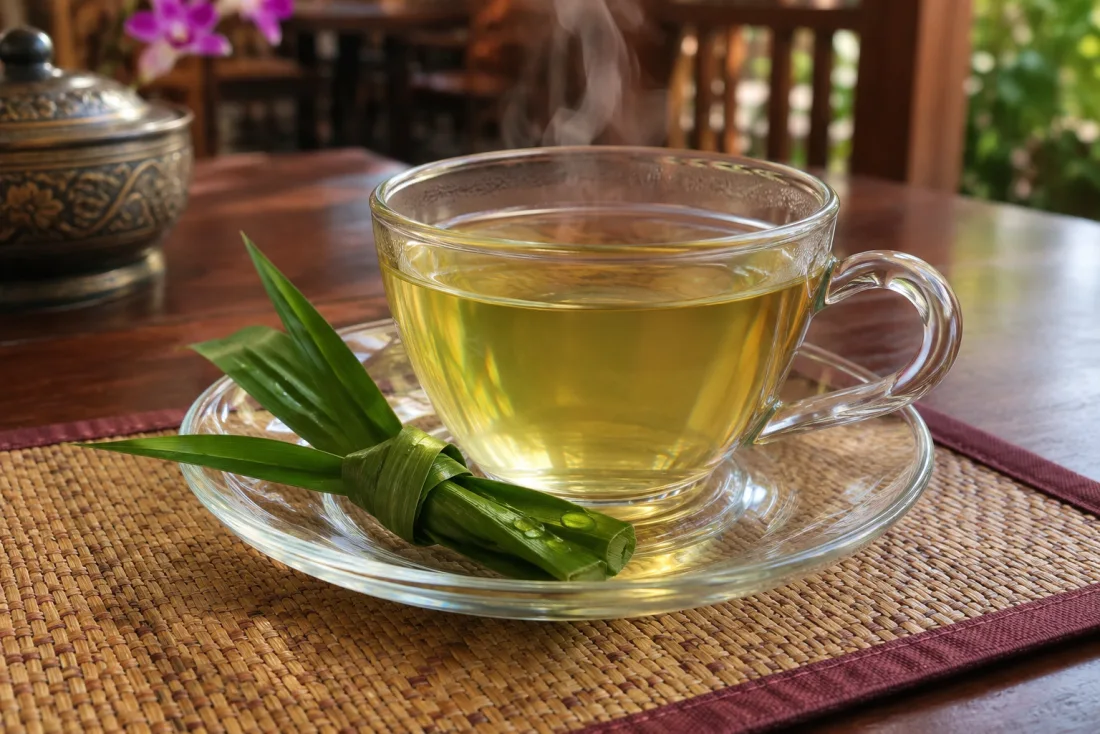
Long green pandan leaves are trimmed, folded or tied before cooking. The filtered infusion ranges from pale straw to yellow-green depending on concentration.
Simmer and strain
Thai cooks bring the water to a boil and simmer pandan briefly until fragrant. Strain out the leaves and pour while warm. A concentrated pot can be diluted at the table.
What it tastes like
Warm rice-like aroma comes first, followed by a light herbal finish. Some cafés sweeten the drink slightly. Plain tea can be served alongside sweet coconut or sticky rice desserts.
Two ways to serve
A clear handled cup shows off the light colour. A small ceramic cup and a glass pot suit shared refills. A tied leaf can sit beside the cup as a cue to the ingredient.
Allergens and dietary needs
Plain leaf infusion usually has no caffeine from tea leaves. Black or green tea blends can contain caffeine. Ask about dairy, plant creamers, flavourings and shared pots if allergies matter.
If you have a food allergy, tell the restaurant before ordering and ask about ingredients, sauces and shared cooking equipment.