
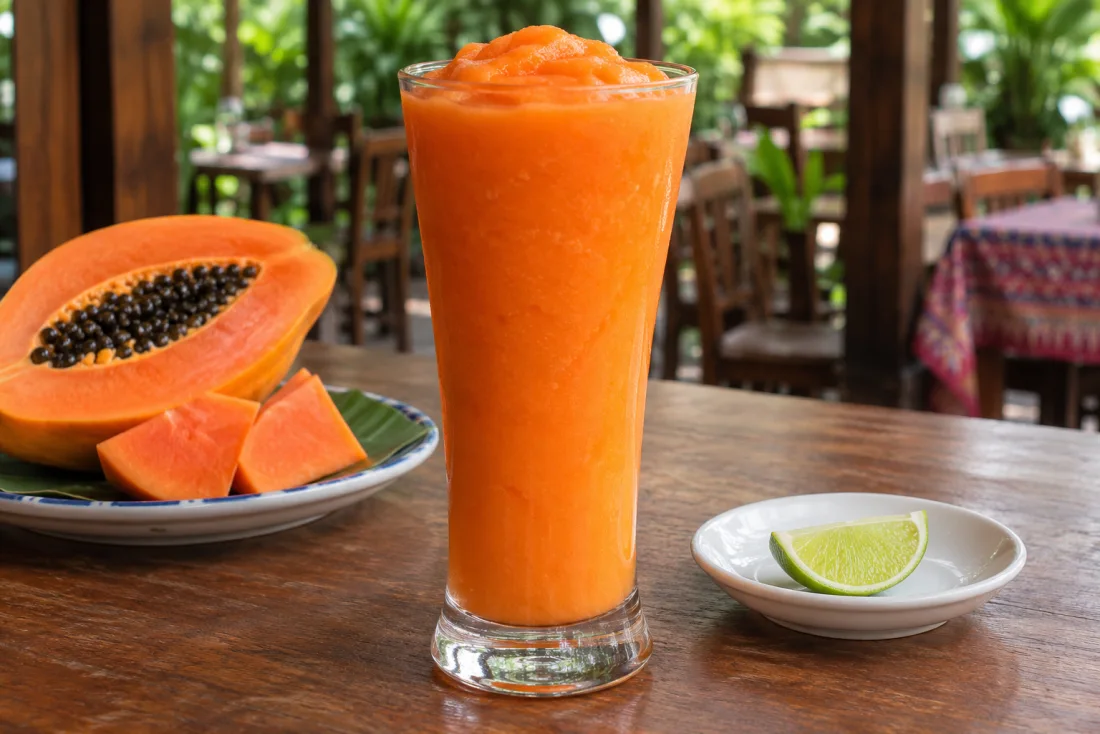

Ripe papaya on Thai menus
Mala-ko pan means blended papaya. A café identifies a 22-ounce serving, and a fresh-fruit stall describes ripe papaya with a little fresh lime. In som tam, green papaya is selected for firm, fine shreds. A smoothie starts with soft ripe flesh and its sweet aroma.
Orange flesh and blending
The skin and the cluster of large black seeds are removed. Soft ripe cubes blend to a smooth pulp with crushed ice, sometimes with a little water to help them move. Fresh lime brightens the finish. Frozen fruit can give body with less separate ice.
Soft sweetness and acidity
A fresh serving is orange with a little blending foam. Papaya has a gentle, persistent ripe aroma. Lime sharpens the tail, whereas plain yoghurt adds creaminess and a cultured tang. Honey drizzled on top can make the first sip sweeter.
Large cups and ice melt
One Thai café specifies 22 ounces for its cup. Sizes elsewhere vary, and the nominal cup volume includes blended ice, pulp and small air bubbles. A slightly domed fresh surface settles in transit. Stir before sharing for more evenly distributed pulp.
Yoghurt and honey
Another Thai menu explicitly combines fresh papaya, plain yoghurt and honey in a 22-ounce cup. A fruit-and-ice base instead keeps the fruit fragrance and colour more direct. Pan describes the method. The dairy, sweetener and possible additional fruit still depend on the recipe.
Allergens and shared equipment
The fruit-and-lime version does not require dairy. Yoghurt contains milk and a shop may add condensed milk or a premixed base. Ask about shared blender contact with milk, soy or nuts if relevant, and distinguish honey from simple syrup. Avoid ingredients to which you are personally allergic.
If you have a food allergy, tell the restaurant before ordering and ask about ingredients, sauces and shared cooking equipment.