
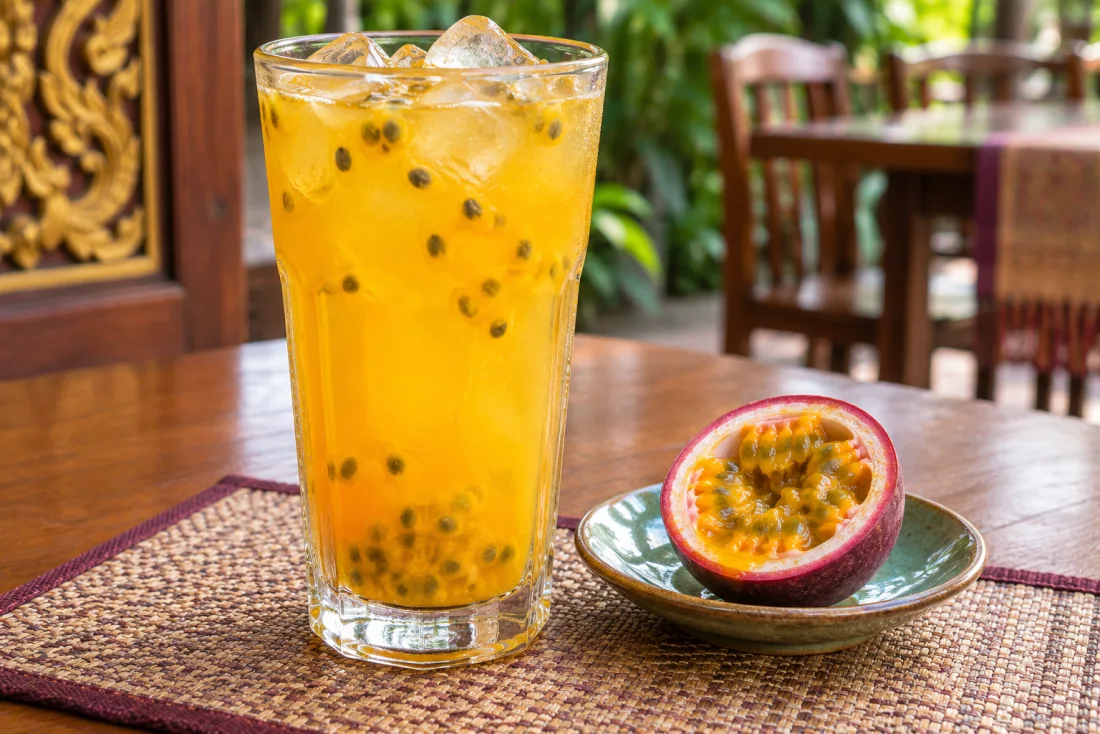

Pulp and seeds in the glass
Nam saowarot is passion fruit juice. The pulp surrounds little dark seeds. Some vendors strain them all out and others return a spoon of pulp. Regular size usually describes the volume. Straining changes the texture while the juice can stay noticeably tart.
Passion fruit in Thai drinks
Kasetsart University records a fruit drink with water, syrup, a little salt and crushed ice. Thai community references also describe iced passion fruit juice and mixed drinks. Shops may offer a plain juice, a fruit blend, soda or a blended ice drink. The records do not establish a place of origin for the plain cup.
Ripe pulp, water, sugar and a little salt
Water softens the strong acidity. Syrup and a little salt help balance the juice. A recipe can add thyme, while other drinks may use orange, pineapple or mint. A premixed fruit base can already contain sugar. Ask how much of the drink is passion fruit.
Strain as desired and pour over ice
Scoop out the pulp and combine it with water. A strainer removes seeds and fibrous pieces. Return some pulp to the drink if wanted. Crushed ice cools and dilutes the drink as it melts. Stir a settled glass to redistribute the pulp. Blending the ice gives a different texture.
Strong fragrance and bright acidity
The ripe fruit has a floral, tangy aroma with a sweet finish depending on the syrup. A strained drink feels smoother. Seeds give a light crunch and may settle at the bottom. Taste a plain version to identify the fruit before trying a mixed-fruit or sparkling version.
Allergens in fruit bases and equipment
Plain juice commonly uses passion fruit, water and syrup. Some variants use yogurt, milk or multiple fruits in a premix. Ask about the fruit blend and shared strainers, blenders and scoops. Straining seeds does not remove passion fruit from the drink.
If you have a food allergy, tell the restaurant before ordering and ask about ingredients, sauces and shared cooking equipment.