
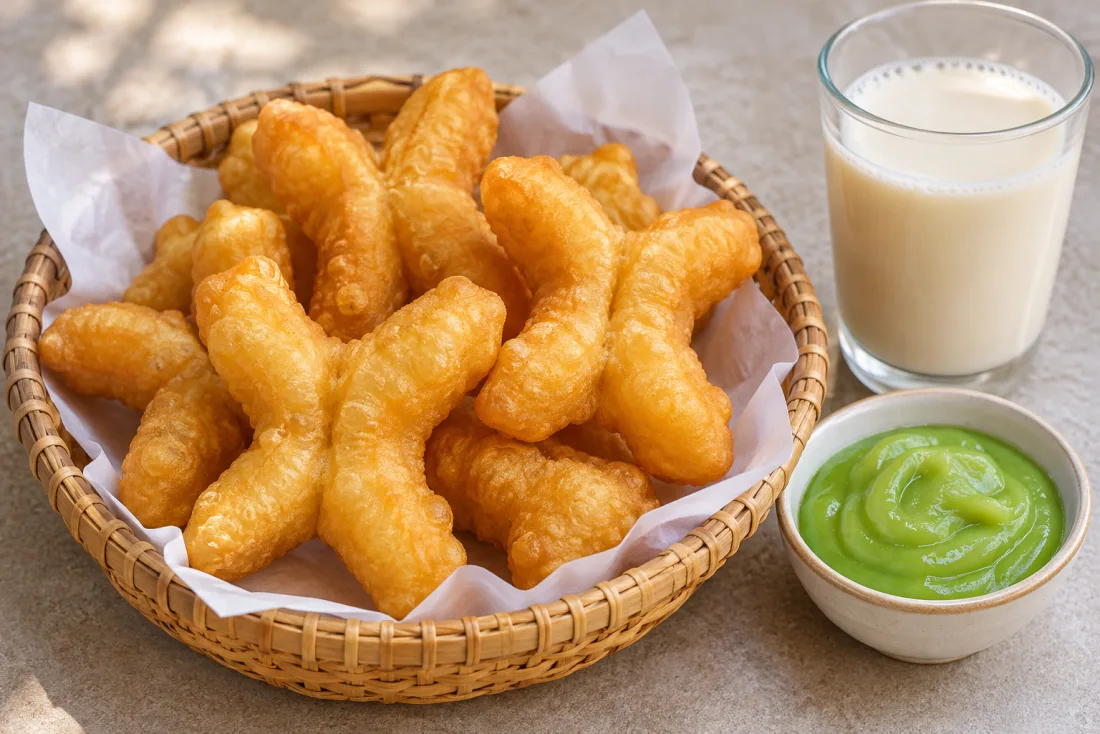

Paired fried dough sticks on the Thai breakfast table
Look for two short golden strips joined in the middle. Pull them apart to see an airy interior. Suan Dusit University’s culinary school links the shape to Chinese youtiao and describes the Thai size as shorter. In the South you may hear cha koi.
A government account of Trang breakfast uses that local name. Congee or soy milk stalls can serve fried dough alongside breakfast. Length and pairings vary. The records leave the first Thai stall open.
Wheat flour, water, salt and leavening
A Thai flour mill’s recipe uses wheat flour, water, oil, salt, sugar and several food leaveners, including yeast and baking powder. Flour and water form an elastic dough. Salt and sugar give it a little flavour and the leavening helps it become airy. Individual cooks use different formulas.
The dough needs to stay soft enough to stretch and firm enough to cut. Dough consistency and resting time affect how it puffs. Milk, soy and pandan flavours can also come from accompaniments.
How two strips come together and develop an airy centre
After mixing, let the dough rest. The cook spreads it out, cuts it into strips and sticks two together with a little water. They stretch slightly before frying. The joined seam often has a paler colour than the outer ridges.
As the strips heat they puff and set. Turning gives a more even golden colour. Let them drain on a rack so steam can escape. The crust softens if the sticks are packed while they are still steaming.
A crisp crust, an airy centre and sweet or savoury pairings
Fresh pa tong go are mildly salty with toasted wheat aromas. The shell breaks easily and the centre has open pockets. Tear a piece into congee or have it with soy milk. The outside softens in hot porridge.
For a sweet snack, dip in condensed milk or sangkhaya custard. Dip one end to keep some crisp bites plain. The frying and freshness affect the texture as much as the accompaniments.
Names, regional terms and versions on menus
Suan Dusit University distinguishes today’s Thai fried dough from the Chinese white sugar cake with a similar name. A story about the products being sold together and their names becoming mixed is one proposed explanation. The paired golden strips are easy to recognise at the stall.
English menus may say fried dough sticks or youtiao. Some are short and puffy, while longer ones are easy to pull into pieces. Ask whether fillings, sugar coatings or custards are included.
Allergens to ask about: wheat, soy milk, dairy and egg
The classic dough uses wheat flour. Ask about the shop’s flour and any prepared mixes if avoiding wheat or gluten. A plain dough can use water and oil. Ask about milk or egg in the shop’s own recipe. Condensed milk contains dairy, soy milk contains soy, and custards may contain egg, dairy or coconut.
Frying oil, tongs and dipping utensils can be shared. Ask whether sauces and drinks are served separately, and name the ingredient you need to avoid.
If you have a food allergy, tell the restaurant before ordering and ask about ingredients, sauces and shared cooking equipment.