
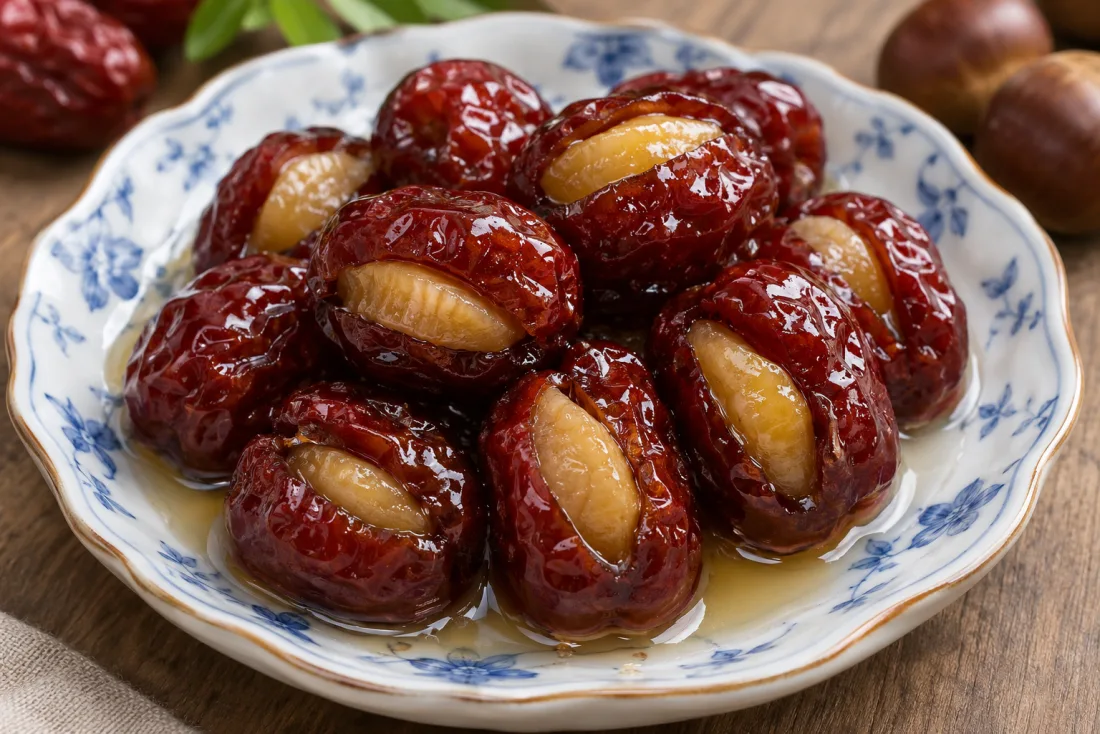

Jujube with a visible chestnut centre
The Thai name identifies Chinese jujubes cooked in syrup with chestnut filling. The cooked skin can be red-brown and glossy. A pale chestnut sits in the opening left by the pit and contrasts with the darker fruit.
A preparation preserved in a Thai cooking archive
A recorded Thai recipe pairs jujubes and chestnuts. The name does not establish a provincial origin or current popularity. The pieces can be presented on a glass plate or served individually with tea.
Four main ingredients
The recipe uses dried Chinese jujubes, chestnuts, sugar and water. Soaking softens the dry fruit, and sugar syrup coats the flesh. Cut chestnut pieces to fit the cavity. The recorded recipe does not call for milk or coconut.
Soak, pit, simmer and fill
Soak the fruit and remove each pit. Cook the fruit gently in strained sugar syrup until the syrup thickens. Cut peeled chestnuts and fit the pieces into the pitted fruit. Serve glossy with a little syrup or let the excess syrup drain.
Soft fruit and a floury chestnut bite
Jujube skin is mildly chewy and the flesh soft and sweet. Chestnut is drier and floury, with a gentle nutty aroma. Syrup gives a glossy surface. Unsweetened tea makes the contrast in sweetness easier to taste.
Chestnut and other allergens
The filling contains chestnut. Removing it cannot undo contact with the fruit. Vendors may share tools with other nuts, peanuts, sesame, dairy or wheat products. Ask about mixed dessert boxes and prepared fruit ingredients.
If you have a food allergy, tell the restaurant before ordering and ask about ingredients, sauces and shared cooking equipment.