
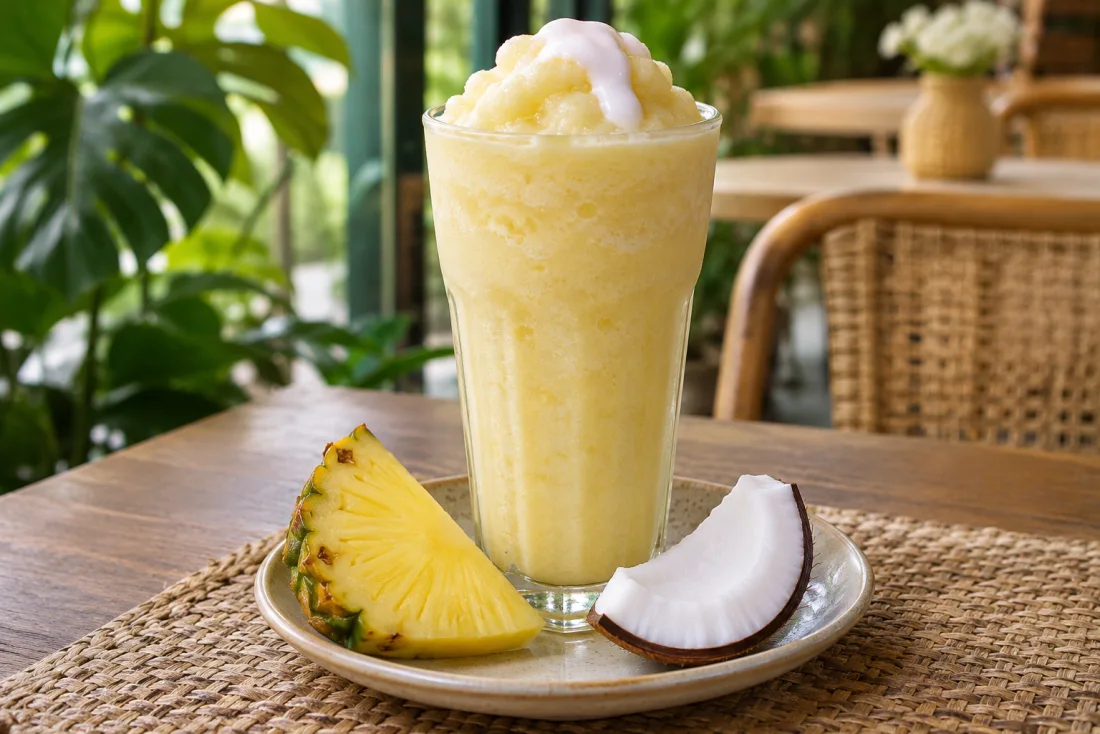

Sapparot kati pan describes pineapple blended with coconut milk
Sapparot means pineapple, kati is coconut milk, and pan tells you the drink is blended. Khanat pokkati means regular size, which varies with the café. Either a tall glass or a shorter glass with coconut shreds and pineapple pieces can hold the same basic drink. Plain pineapple juice is thinner, as is a version made with coconut water. Coconut milk gives the drink pale color and body. Ask whether a milkshake-style glass contains dairy milk or ice cream.
Pineapple and coconut in a Thai café-style blend
A Thai chef's nonalcoholic frappe takes inspiration from a pineapple-coconut cocktail and uses pineapple, coconut milk, ice, condensed milk and jelly. Another published preparation blends pineapple, pineapple juice, coconut milk and ice without dairy. The examples establish two preparations without assigning an origin in a Thai province. Choose by size if the menu offers several. Check the menu description if distinguishing an alcohol-free frappe and a cocktail.
Fruit, coconut milk, ice and optional garnishes
Ripe pineapple gives sweet acidity and some fiber. Juice helps the blender circulate the ingredients. Coconut milk adds aroma and body, and ice chills before gradually diluting the drink. Frozen pineapple can thicken a smoothie with less ice. The Thai chef's version includes both kinds of condensed milk and fruit and coconut jellies. Shredded coconut or pineapple pieces can be optional garnishes. Taste the fruit before adding syrup.
Blend fruit with coconut milk until the ice is fine
Peel the pineapple and remove any tough core before cutting it into pieces. Blend the fruit, coconut milk and ice to the thickness desired. Adjust with a small addition of juice or coconut milk if too thick. Add sweetener or condensed milk when the recipe uses it. Pour and garnish promptly. Melted ice reduces the thick texture and can allow separation. Serve garnish separately if you want to try the smooth and chewy textures on their own.
Bright pineapple with a round coconut finish
The first sip brings pineapple acidity and sweetness, with coconut aroma holding after swallowing. Fine ice provides a cold, slushy texture, and more fruit may leave a little fine fiber. Condensed milk adds dairy aroma and sweetness when used. Coconut shreds, fruit pieces and jelly each give a separate bite. More coconut milk softens the impression of acidity. Drink while the ice is finely blended to appreciate the original consistency.
Allergens in coconut, dairy and shared blenders
Coconut milk contains coconut. The Thai chef's version also uses dairy condensed milks, while a pineapple, coconut milk and ice base needs no dairy. Check any creamer, ice cream, yogurt or plant milk for dairy, soy and nut ingredients. Toppings, syrups and jelly may have their own ingredients. Ask about a shared blender, utensils and preparation surfaces when avoiding an allergen. Removing a visible topping does not remove ingredients already blended into the drink.
If you have a food allergy, tell the restaurant before ordering and ask about ingredients, sauces and shared cooking equipment.