

 cooked shrimp
 fish sauce
Recognising the prawns and herbs
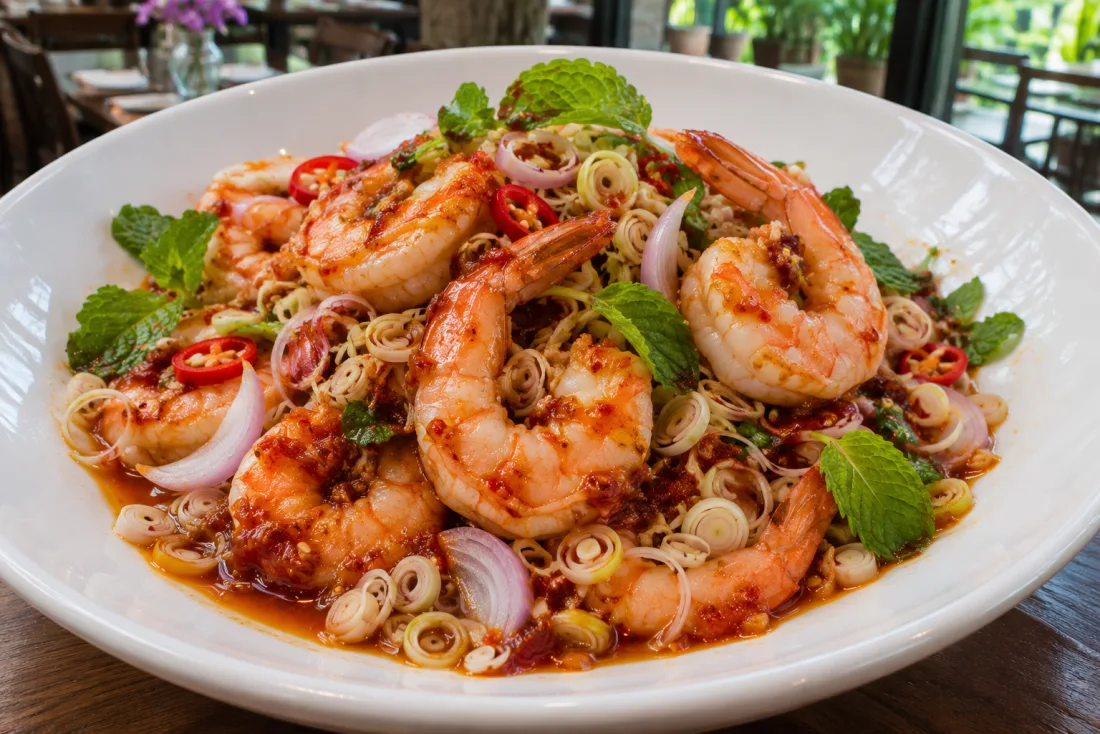
The cooked prawns curl and turn pink outside and opaque white within. Lemongrass rings, shallot slices and mint remain visible. A light dressing glistens on the plate, while roasted chili paste can make the prawns look redder and more glossy.
Pla on a Thai seafood menu
Pla describes a Thai salad style with acidic dressing and fragrant herbs. Fresh prawns can be blanched fully, but fresh and blanched can also be separate menu choices. Ask whether the prawns are cooked through. Eastern coastal menus and Thai cooks document aromatic pla with prawns.
Two ways to dress the salad
Lime juice, fish sauce and chili make a light dressing with optional sweetness. Drain the cooked prawns, then toss with sliced tender lemongrass, shallot and mint. Makrut lime leaf is another option. Roasted chili paste gives a thicker dressing with a deeper colour and a sweet roasted note.
Acid, herbs and cooked prawn texture
Lime and fish sauce frame the sweetness of the prawns. Tender lemongrass and fresh shallot add crunch, while mint and makrut leaf add fragrance. Chili paste deepens the sweet and spicy notes. Plain rice balances the dressing. Ask about chili in premixed sauce when ordering.
Checking the serving
Prawn size and number vary. Ask if all the prawns are cooked through, whether chili paste is included, and how hot the dressing is. A clear herb-led plate and a glossy chili-paste plate suit kitchens using those respective dressings. Name the actual prawn and serving size when available. Reserve an undressed steamed-prawn photo for the plain steamed dish.
Allergens in prawns and dressing
Prawns and shrimp ingredients in paste contain crustaceans. Fish sauce contains fish. Prepared sauce can contain soy, wheat or other seafood ingredients. Shared strainers, bowls and boards may also transfer allergens. Ask the kitchen about sauce ingredients and shared equipment.
If you have a food allergy, tell the restaurant before ordering and ask about ingredients, sauces and shared cooking equipment.