

 fish sauce
The name and where it is served
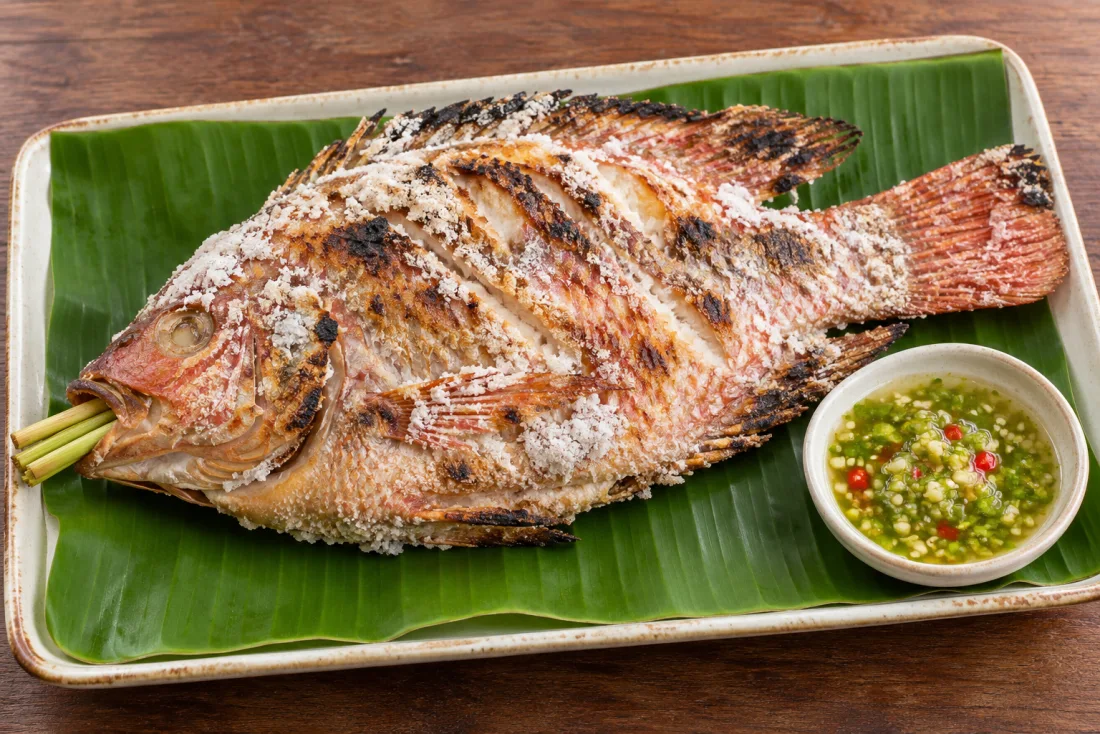
Pla means fish and pao refers to grilling. Pla pao kluea specifies the salt treatment. KRUA.CO documents a whole fish stuffed with herbs, and Eating Thai Food shows an Isan restaurant serving grilled tilapia in Bangkok. The same technique can be used for red tilapia or snakehead.
The fish, crust, aromatics and sauce
Whole fish can be grilled with the skin and scales left on. Lemongrass, galangal, garlic or makrut lime leaves can perfume the cavity. A reference seafood dip combines garlic, chilli, lime, sugar and fish sauce. Some salt coatings use a little flour to help them adhere.
What charcoal grilling does to the fish
The coating dries and browns as the fish cooks. The flesh is covered by the skin until diners lift it away, and aromatics smell strongest near the cavity. Fish size and fire change the result. Lift portions away from the bones and watch for smaller bones.
How fish and dip taste together
The flesh can taste mild and juicy with lemongrass and charcoal notes. The lime-and-garlic dip adds a stronger salty, tart and hot flavour. Taste the fish plain first. A leaf wrap, cucumber or soft rice noodles can change the texture in the same bite.
Market servings and restaurant options
Stalls may offer whole fish with a bag of dip, while restaurants serve it on a platter with vegetables. Ask which fish is available, and whether vegetables, rice or noodles come with it. The salt crust is usually lifted away.
Allergens, the crust and shared grills
Fish is present in the main dish and may also be in the sauce. Some preparations use wheat flour in the crust. Ask about the dip, coating and equipment shared with shellfish. Tell the kitchen the ingredient you need to avoid.
If you have a food allergy, tell the restaurant before ordering and ask about ingredients, sauces and shared cooking equipment.