

 freshwater fish
The Tai Lue Method in Chiang Kham
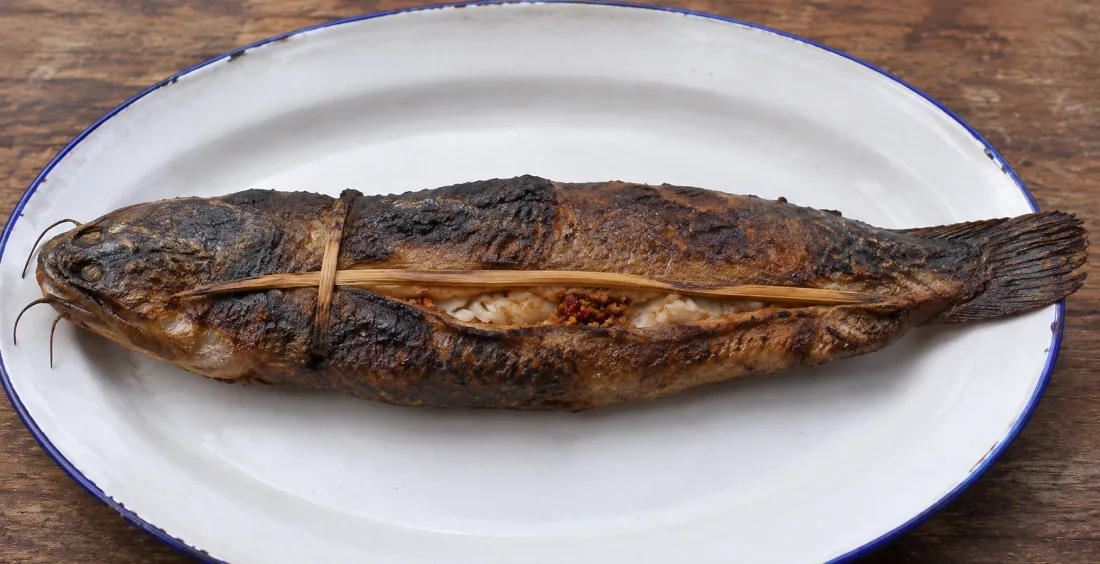
The Thai name pla ping op describes grilling the fish so the aromatics cook inside it. Thai Ministry of Culture interviews document a version in Chiang Kham with catfish, chili, lemongrass, garlic and shallot. A separate field study illustrates catfish and silver barb and describes Tai Lue versions from several communities. The fish and seasoning vary by place and what cooks have at hand.
Freshwater Fish and Aromatics
Catfish is longer and smooth-skinned, turning darker on the grill, while silver barb is flatter and can retain a golden-silver scale pattern. In the Chiang Kham example, dried chilies, lemongrass, garlic and shallots are pounded together. Other field descriptions include fresh chili, ginger leaves, spring onions, and turmeric. The stuffed seasoning remains visible where the skin and flesh part.
Folding, Grilling, and Plating
The aromatic paste goes inside the opened fish. For a long, thick fish, one documented method folds it across the middle and clamps it between split bamboo. A local term, pla mop, describes this fold. The fish cooks over gentle heat until done. It can be served with the bamboo still recognizable or opened to display the flesh and seasoning.
Smoke, Fish Texture, and Heat
Lightly charred skin gives the first smoky aroma, and the seam can smell of lemongrass, garlic, and chili. The inner fish remains moister than the grilled surface. A bite from the seam carries more salt and heat than plain fish flakes. The variety and quantity of chili determine how hot the serving tastes.
Market Portions and Accompaniments
The fish can be served whole, opened on a plate, or portioned, depending on its size and the kitchen. Steamed rice or sticky rice can accompany the fish and take up a little of the juices. A menu description that gives the fish species and whether it is whole or portioned helps diners anticipate the size and bones. A dipping sauce can be described separately when it is served.
Allergens, Bones, and Sauces
Fish is the main allergen. Fish sauce or fish powder also contains fish. A version seasoned with salt and pounded aromatics has a simpler seasoning list, while shrimp paste, soy sauce, and prepared sauces can add crustaceans, soy, or wheat. Ask about the actual sauce and shared grates or utensils. Whole fish and thick pieces can contain fine bones, and the bamboo clamp can remain on the plate.
If you have a food allergy, tell the restaurant before ordering and ask about ingredients, sauces and shared cooking equipment.