
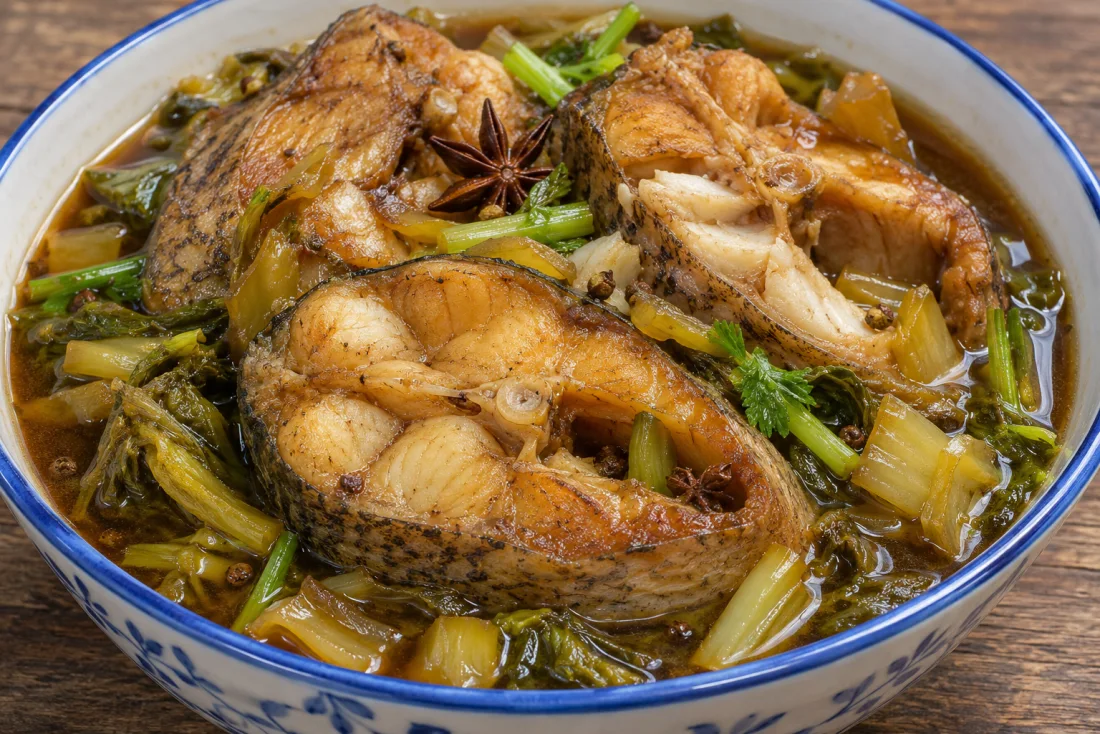

 snakehead fish
Snakehead and salty braising
Pla chon is snakehead in Thai. Tom khem describes a salty simmered preparation. Thick sections often show a dark skin ring and central bone. Pickled greens and brown broth are characteristic. The name does not establish an exact fish species or mean the fish was necessarily cured.
Two preserved vegetables in a Thai cookbook
The historical Bangkok recipe names both kiam chai and kong chai. The first is commonly a preserved mustard green and the second is another preserved green in the old recipe. Modern products differ. Share the fish with rice and check which greens are used.
Fish, greens and phalo seasoning
The recipe lists snakehead, two preserved greens, phalo seasoning, red long chilies, garlic and frying oil. Prepared phalo blends can differ. Garlic and greens are fried with seasoning before the fish is simmered. The preserves already contribute salt.
Fry first, then simmer through
Fry fish sections until browned, then simmer with the greens and seasonings until thoroughly cooked. Browning does not establish the center is cooked. Use clean tools, handle bones carefully and keep raw fish away from cooked food. Store cooked fish appropriately.
Savory broth and dense fish meat
Fried edges are toasty and the fish has a firm flake. Preserved greens bring depth and can taste lightly tart. Garlic and phalo herbs add warmth, while red chilies vary in heat. Rice gives a mild break from the broth.
Allergens in fish, seasonings and preserved greens
Snakehead contains fish. Preserves and prepared phalo blends can contain soy, wheat or other additives. Oyster is a mollusk and shrimp is a crustacean. Ask about frying oil and shared tools. Removing fish does not undo its contact with the broth.
If you have a food allergy, tell the restaurant before ordering and ask about ingredients, sauces and shared cooking equipment.