
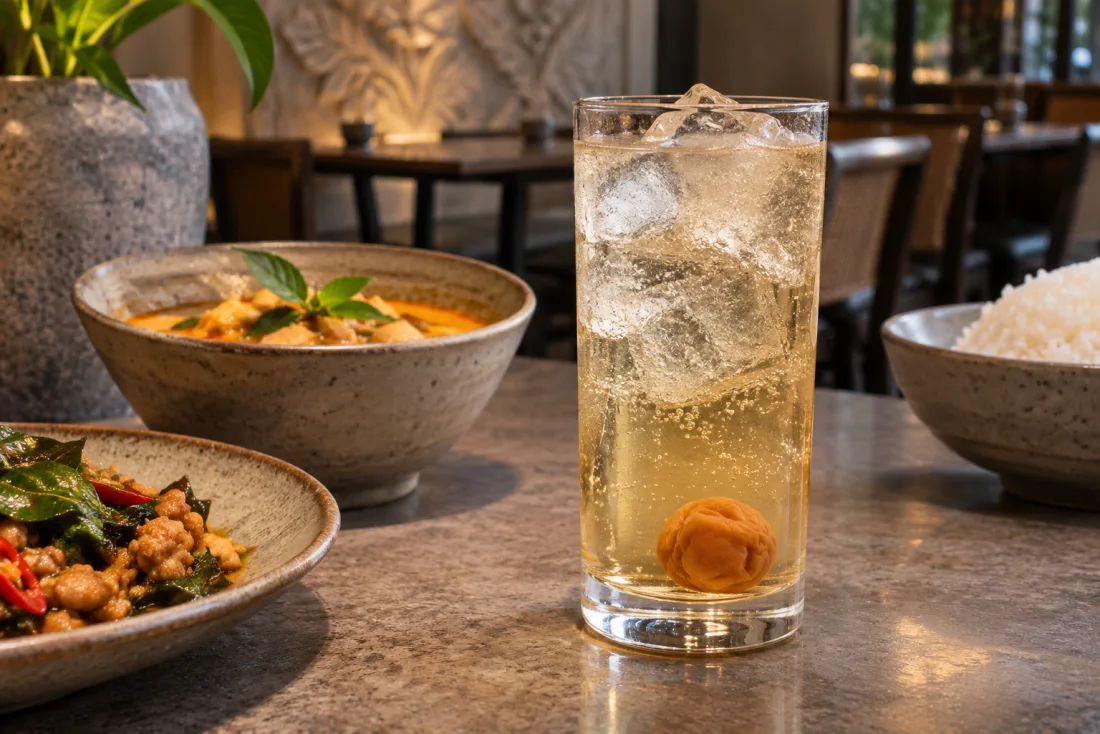

Umeshu on Thai menus
Thai bars use both umeshu and lao buai for plum liqueur. A Bangkok venue serves it with soda or on ice and a preserved ume. Another makes a sparkling mixed drink with cherry liqueur, peach and vanilla. These are Thai service examples of a Japanese spirit preparation.
Liqueur and fruit garnish
Ume is steeped with sugar in an alcoholic base to make the liqueur. A simple serve uses soda and ice. A whole soaked fruit provides extra flavour and can still contain its stone. A fruit garnish does not replace the liqueur.
Sweet-tart aromas and bubbles
A plain soda version can be light gold or amber, with ume acidity balancing its sweetness. Cherry and peach can add a rosier tint and fuller fruit character. Fine bubbles and temperature affect the aromas. Colour does not identify the recipe.
Ice and glass style
A tall glass shows the bubbles and ice, while a short glass can hold a smaller serve. Add soda and stir gently. A soaked ume can sit at the bottom or on a pick. Capacity includes ice and mixer and does not identify alcohol content.
Related plum drinks
Plain soda brings the ume liqueur forward. Cherry and peach make a different bar mixture. Mint, lime and ginger ale are optional in other versions. A mocktail can use nonalcoholic ume syrup or juice instead.
Allergens and alcohol
Both umeshu and cherry liqueur contain alcohol. The simple soda recipe needs no dairy, egg or nuts, but prepared mixers vary. Ask about stone fruits, sulphites where wine is used and shared tools if needed. Confirm an alcohol-free preparation separately.
If you have a food allergy, tell the restaurant before ordering and ask about ingredients, sauces and shared cooking equipment.