

What the Thai menu name tells you
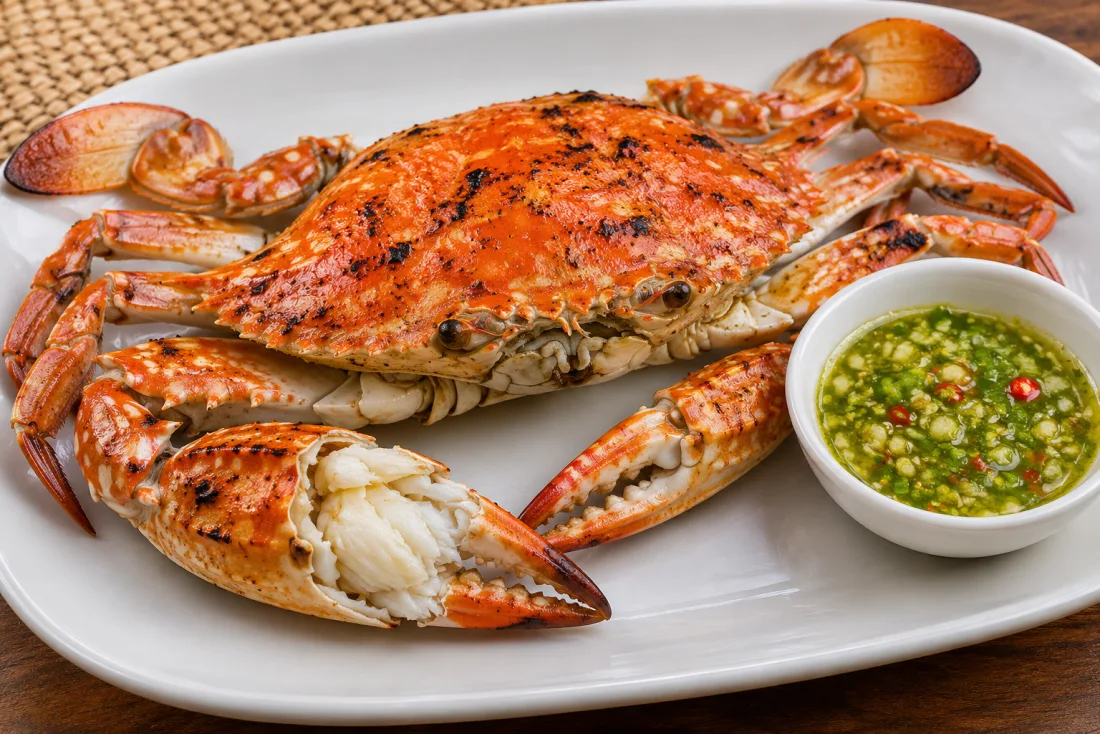
Pu yang means grilled crab. Pu phao is also used for crab cooked over heat. Pu ma identifies blue swimming crab on menus that specify the type. The plate can show a whole connected crab or opened claws and sections with pale meat. Shell color varies by crab and cooking method, so check the description rather than identifying the species from a picture.
A Thai seafood restaurant dish
A Thai seafood restaurant's menu lists grilled blue swimming crab with other grilled and steamed seafood. The catch influences the size and price, and restaurants may sell by weight or as a fixed portion. The dish is well suited to a shared table. Guests can separate the claws and body and eat the meat piece by piece alongside rice and vegetables.
Crab and a separate dipping sauce
A representative order starts with blue swimming crab. Basic grilling can use little seasoning. A Thai cooking studio's lime seafood dip combines bird's eye chilies, garlic, cilantro, fish sauce, lime and syrup. Red or green chilies can work. Serving the dip separately gives each diner control over its heat and preserves the choice to try the crab plain.
Cooking the meat through
A browned or red shell cannot confirm that the thickest part is cooked. The FDA describes cooked crab flesh as firm, pearly or white, and opaque. Grill position and whole versus cut pieces affect even heating. Open the hard shell carefully and pick out fragments. Keep trays and tools used for raw crab away from the cooked serving.
Roasted shell and sweet meat
The shell smells roasted and may carry a trace of smoke, depending on the grill. Claw meat is firm and the smaller flakes in the body are delicate. Lime increases brightness and fresh chili brings a faster heat. A light touch of the sauce lets the crab's own fresh sweetness remain clear.
Allergens and shared grills
Crab is a crustacean allergen. Prawns are also crustaceans. Squid, oysters and clams are mollusks, and finfish is separate. Ask whether the restaurant shares grills, brushes or tongs. Fish sauce may be in the dip, while a brush-on seasoning can contain soy, wheat or oyster. Removing a sauce cannot remove the crab allergen.
If you have a food allergy, tell the restaurant before ordering and ask about ingredients, sauces and shared cooking equipment.