
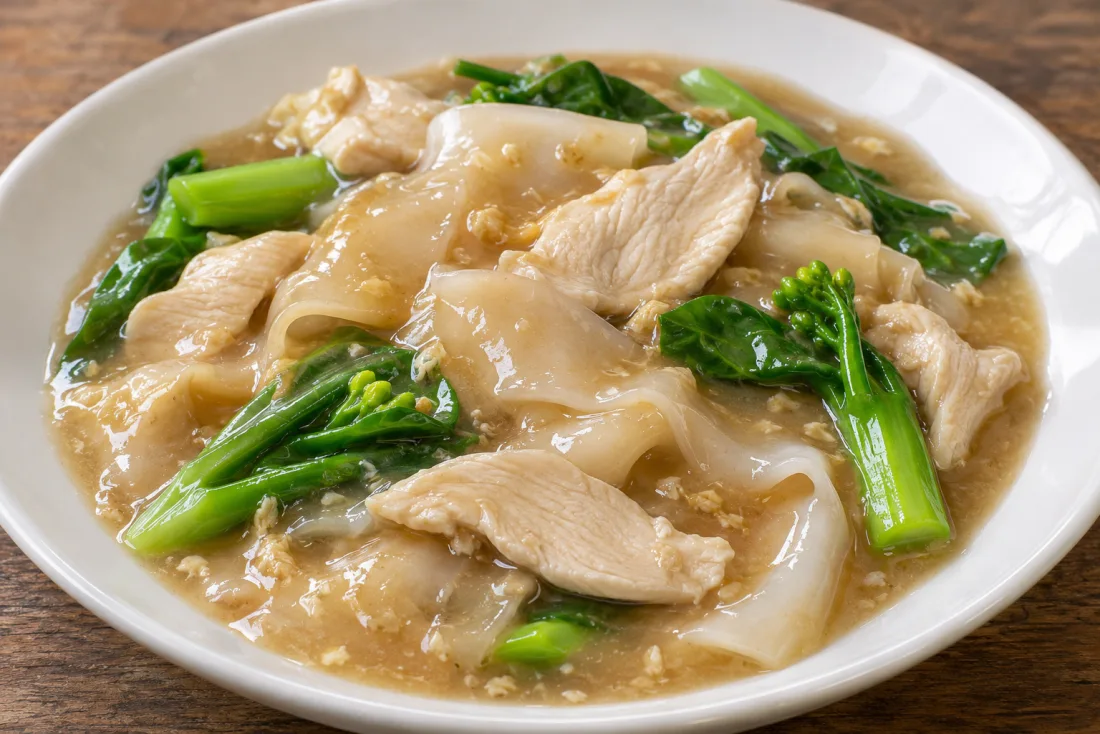

 chicken
How to recognise chicken rad na
Rad na refers to pouring a sauce over the noodles, and gai identifies chicken. The two components are cooked separately before serving. Toasted wide noodles may show darker patches, while chicken and greens sit in a glossy gravy. Thai cooks describe rad na in the context of quick wok stalls and food courts.
Wide rice noodles, chicken, Chinese broccoli and soybeans
Wide rice noodles hold up to the gravy. Thinly sliced chicken and Chinese broccoli are common, and some recipes add carrots or baby corn. Thai fermented soybean paste, soy sauce, fish sauce or oyster sauce can season the stock. A starch slurry gives it body.
Toasting noodles and cooking the chicken gravy
The cook fries the wide noodles briefly, sometimes with dark soy sauce, then sets them aside. Garlic, soybean paste, stock, chicken and vegetables make a separate sauce. Once the chicken is cooked, slurry thickens the hot sauce, which is poured over the noodles.
Savoury soy, tender chicken and toasted noodles
Wide noodles are soft with some toasted edges. Chicken stays tender and Chinese broccoli provides a crunch. The fermented seasoning supplies depth, and pepper or chilli vinegar can add a different kind of heat or tang. Crisp noodles soften where they touch the gravy.
Wide noodles, crisp noodles and related plates
Sen yai means wide rice noodles, while mi krop can indicate a crisp noodle base. Some restaurants use fried yellow egg noodles. Pad see ew is tossed in the wok with its seasoning. Chicken rad na has a separate finished gravy poured over the noodle base.
Allergens in sauces, marinade and noodles
Fermented soybean paste and soy sauce contain soy and may contain wheat. Fish and molluscs can enter through fish sauce or oyster sauce. Marinades may use sesame oil, and crisp egg noodles can contain wheat and egg. Ask about the actual noodles, stock, seasoning and shared cookware.
If you have a food allergy, tell the restaurant before ordering and ask about ingredients, sauces and shared cooking equipment.