
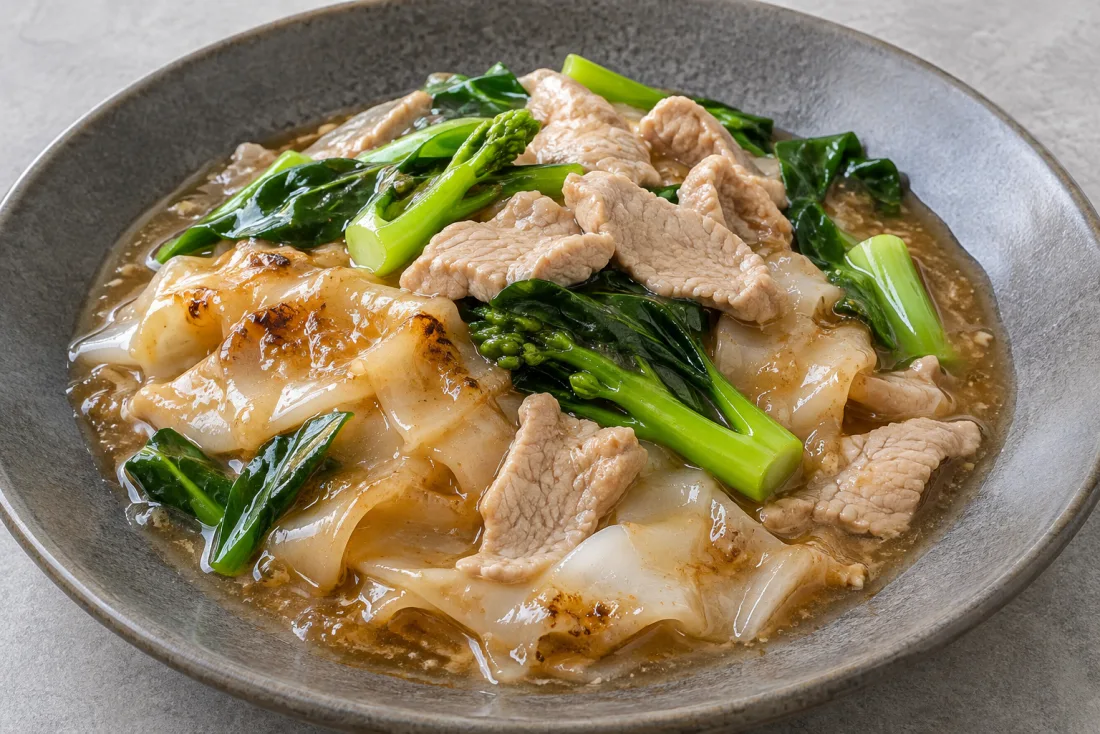

 pork slices
The name describes gravy poured over the noodles
Rad na describes pouring sauce over something and moo means pork. A menu may spell it lad na or add moo mak for marinated pork. Gravy noodles describes both the noodles and the sauce added at serving.
This is a Thai cooked-to-order noodle plate found at stalls and noodle shops. Wide rice noodles, Chinese broccoli and gravy flavored with fermented soybean seasoning are useful clues. Chinese-style wok cooking and gravies help describe the techniques without establishing a particular town or first maker.
Wide noodles, marinated pork and Chinese broccoli
Fresh rice noodles are tossed in the wok, sometimes with dark soy sauce, to brown their edges. They are then transferred to a plate. Thin pork slices can be seasoned with fish sauce, soy sauce, oyster sauce, pepper or sugar. The cut and thickness vary.
The gravy may use stock, garlic and fermented soybean paste with other seasonings. Tapioca starch or another starch thickens it. Chinese broccoli has firm stems and softer leaves, which retain different textures when cooked. The pork, greens and hot gravy are poured over the toasted noodles.
Wok aroma, silky gravy and crisp stems
The gravy usually tastes savory, a little sweet and fragrant with fermented soybean paste. A noodle at the side can taste toasted. Where gravy covers the noodles, it gives a soft, silky texture. Pork slices are tender, while stems of Chinese broccoli offer a crisper bite.
White pepper may be added at serving. Chilli vinegar, dried chilli, fish sauce and sugar are possible table seasonings. Try some of the original gravy first, then adjust it. Brown color can come from soy sauce and toasted noodles.
How a hot plate is served
The shop can prepare noodles and gravy separately and put them together at the last minute. Hot gravy clings as it cools a little. Pick up a noodle alongside a spoonful of pork, greens and gravy. Separating folded noodles lets more sauce into the folds.
Noodles, meat and vegetables make this an individual meal. A takeaway shop can pack the noodles and sauce separately so you pour the gravy at the table. Extra broccoli, different noodles and a lighter serving of gravy depend on what the shop offers. Some plates leave enough gravy to spoon up, while others apply only a thin layer.
Wide, thin or crisp noodles and pad see ew
Sen yai is wide rice noodle and sen mi refers to fine rice noodles. Some shops also offer crisp-fried noodles, which soften after sauce is added. Ask about toasted or fried noodles if you want a particular texture. Rad na without moo can also be made with other meat or vegetables.
Pad see ew can use wide rice noodles, pork and Chinese broccoli. In that dish the ingredients are stir-fried together without the distinct layer of gravy poured over rad na. Ask if the noodles come with thick gravy when the names are unfamiliar.
Allergies in the soybean paste, marinade and noodles
Fermented soybean paste and soy sauce contain soy. Some soy sauces also contain wheat. The pork marinade may contain fish sauce or oyster sauce, which can introduce fish or mollusks. Some recipes use sesame oil. Egg noodles can introduce egg and wheat. A rice noodle base still needs checks of the gravy and marinade.
Ask about shared woks, marinade containers and serving ladles. Using less gravy does not remove seasonings from the meat. Ask the kitchen to confirm the noodles, gravy, pork and whatever condiments are served.
If you have a food allergy, tell the restaurant before ordering and ask about ingredients, sauces and shared cooking equipment.