
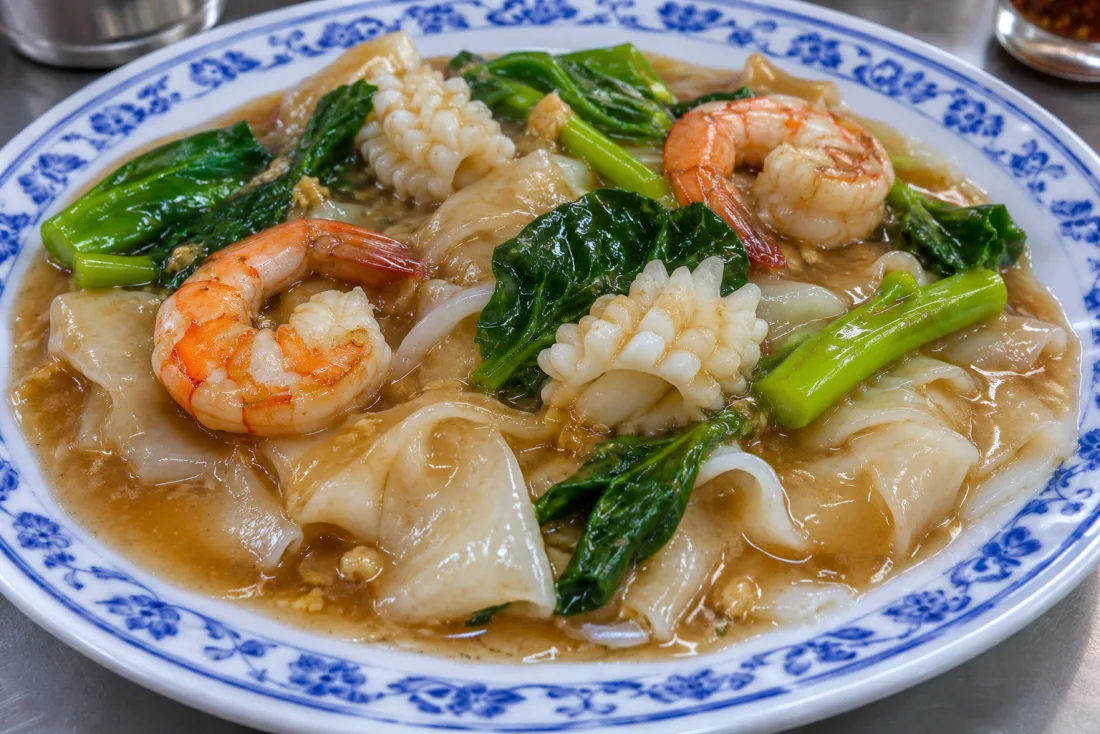

 shrimp
 squid
A Thai made-to-order noodle dish
Rad na describes pouring the sauce over the noodles, and talay names the seafood edition. Shrimp and squid make a familiar pairing. A recipe can add fried fish, or a shop can use a different seafood mix. The style appears at made-to-order stalls and Thai-Chinese restaurants.
Broad rice noodles and Chinese broccoli
The wide rice ribbons get lightly seared before the sauce goes on. Dark soy can give them a deeper colour, while their folds carry a good amount of gravy. Chinese broccoli offers crisp stems and tender leaves alongside sweet shrimp and springy squid. Some versions add a piece of fried fish.
Where the gravy gets its flavour
Stock can be made with pork, chicken, fish or shrimp shells, depending on the cook. Garlic, fermented soybean paste, soy sauce, sugar and pepper build savoury depth. Starch thickens the simmering stock enough to coat the noodles and seafood.
Crisp yellow noodles
The crispy variant uses fine fried yellow noodles. The hot gravy softens the base while exposed edges keep their crunch for a time. Wheat is typical of this noodle, and some products contain egg. Carrot or greens can vary. Separate packaging lets a diner keep the crisp texture until serving.
How to recognise and order it
A visible pool of glossy gravy separates rad na from dry wok-fried noodle dishes. Chilli vinegar, ground chilli and pepper can adjust a generally savoury base. Ask which seafood is included, whether fish contains bones, and which noodle choices are available.
Seafood, wheat and other allergens
Shrimp is a crustacean, squid a mollusc, and some recipes add fish or use fish stock. Soybean paste and soy sauce bring soy and may contain wheat. Oyster sauce can add mollusc, while crisp egg noodles can include egg. Picking seafood out of prepared gravy does not remove its ingredients. Ask the shop about stock, oil and equipment.
If you have a food allergy, tell the restaurant before ordering and ask about ingredients, sauces and shared cooking equipment.