

Meaning of the name
Sato is a Thai fermented rice beverage, commonly made from glutinous rice. Samunphrai refers to the plant aromatics. A local producer documents aged glutinous rice or, alternatively, aged jasmine rice. Only the glutinous example belongs to the narrower label here. The actual label identifies the rice and type.
Surin and Ubon ingredients
A producer group in Surin documents old glutinous rice or jasmine rice with local roots. A producer in Ubon Ratchathani describes lemongrass and pandan in its herbal sato. The botanicals vary by product and are not an exhaustive standard. Visible grains are not necessary in the finished wine.
Taste, aroma and colour
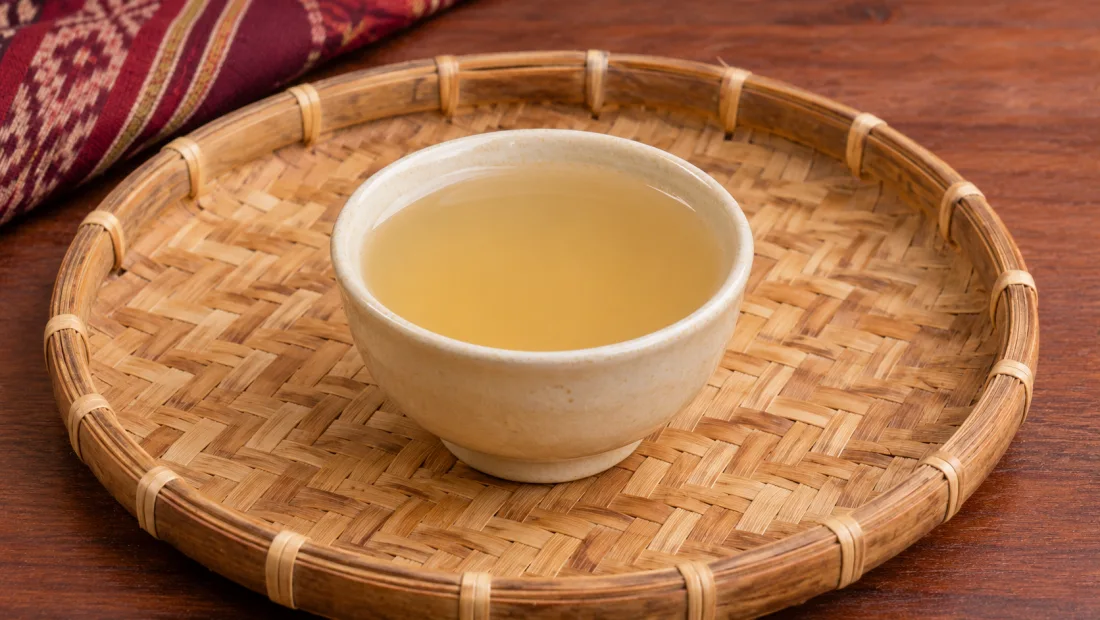
Fermentation can give gentle tartness and residual rice sweetness. A root recipe may have earthy or warm notes. Lemongrass and pandan can add citrus-like and soft grassy aromas. Grains, botanicals and filtration influence the pale gold to straw appearance and clarity. A sweet smell cannot establish sugar or alcohol content.
Northeastern Thai context
Thai food research describes sato made with white or black sticky rice. The documentary herbal examples here are from Surin and Ubon, without implying an inventor or national popularity. The name may be used with the actual herb on a menu. Which herbs are supplied depends on the producer.
Plain sato, infused spirits and tea
Plain sato brings rice and fermentation to the foreground. A herbal sato also expresses plants. Ya dong on a distilled rice base is a separate type of alcoholic drink. Water infusions of lemongrass and pandan can smell similar. The liquid appearance and glass do not identify the beverage type.
Allergens and the label
Representative ingredients include glutinous rice, water, starter and plant aromatics. Ask which starter or grain is used and check whether sulfites or additional gluten-containing cereals appear on the actual label. Mixed drinks may add fruit, honey or other ingredients. The finished sato contains alcohol. Check actual ingredients and shared equipment.
If you have a food allergy, tell the restaurant before ordering and ask about ingredients, sauces and shared cooking equipment.