
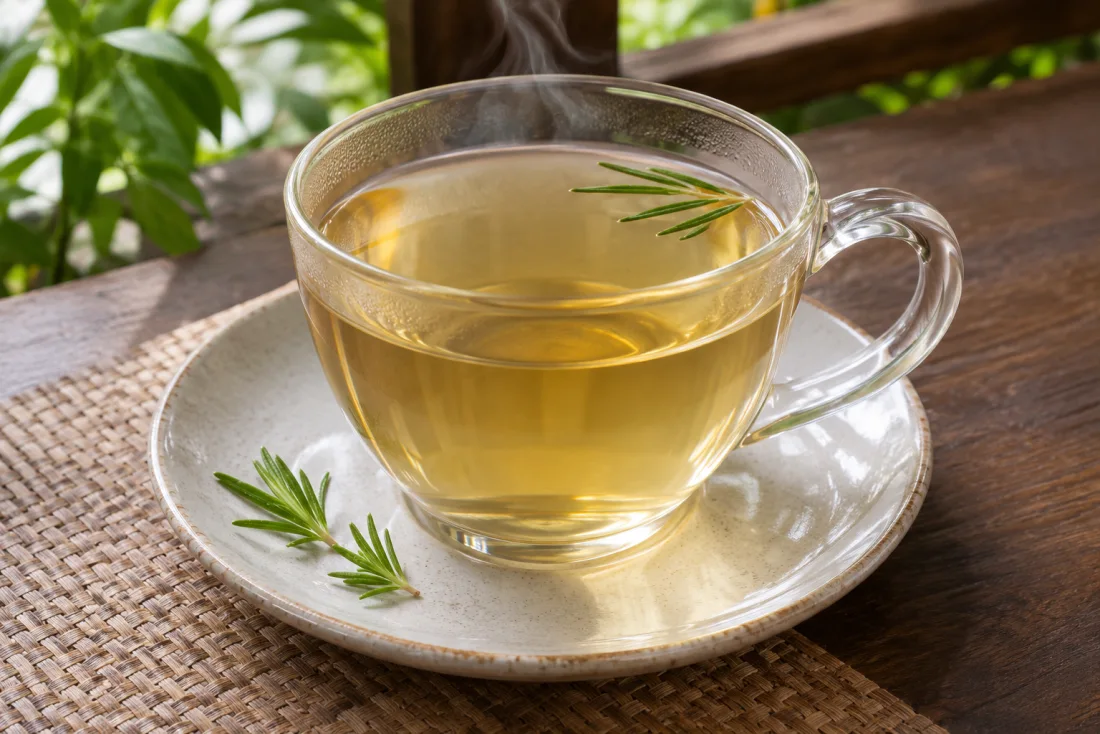

Cha rosemary ron is a hot herb infusion
The Thai name identifies rosemary and hot service. The plain version needs rosemary and water. Needle-shaped leaves can be steeped on the sprig or removed first. The water may take a pale green-yellow or amber shade, depending on strength and light. The name tea can also appear on a blend. Ask whether leaf tea, mint or another herb has been added if you want just rosemary.
Serving a familiar cooking herb as a hot drink
Rosemary flavors baked goods and savory dishes. A published recipe steeps sprigs and offers lemon and honey to taste, making the herb easy to taste on its own. The Thai name describes a way to list it on a café menu. It gives no basis for assigning a province of origin. The tea can come in a single cup or from a pot, with an optional sweetener. A plain cup can go with a sweet pastry.
Food-grade rosemary, water and optional seasoning
Wash fresh culinary sprigs and steep them whole or use the leaves. Dried culinary rosemary has a different strength. Adjust the quantity for the product. Honey adds fragrance and sweetness, while syrup mostly adds sweetness. A lemon slice or a little juice brings citrus and acidity. Keep additions separate to make plain, sweet or tart cups from the same pot. A sprig left in the cup continues to flavor it.
Steep in hot water and strain the leaves
Pour hot drinking water over washed rosemary. Taste when its woody fragrance develops, then strain or lift out the sprigs. A longer steep may taste bitter. Use a tea bag or a fine mesh for small pieces of dried rosemary. Stir in optional sweetener a little at a time and add lemon by the cup. Let the infusion cool to a comfortable drinking temperature.
Woody aroma with a light herbal bitterness
A sip can recall pine needles or fresh herbs, and the clear liquid has little thickness. A stronger brew makes the herbal edge and slight bitterness more pronounced. Lemon brightens it and honey softens it. Taste the plain cup first to judge its strength. A plain infusion beside pastry leaves the toasted sweetness of the pastry and the woody herb easy to distinguish.
Allergens in flavorings and shared equipment
Rosemary and water need no added dairy, soy, nuts or wheat. Ask about other herbs if you already know you need to avoid one. Plant milk, creamer, syrup or a powdered mix can bring other allergens. Honey is optional. A plain herb infusion contains no tea-leaf caffeine, whereas a blend with green or black tea can. Ask about shared filters, pots and measuring spoons when avoiding cross-contact.
If you have a food allergy, tell the restaurant before ordering and ask about ingredients, sauces and shared cooking equipment.