
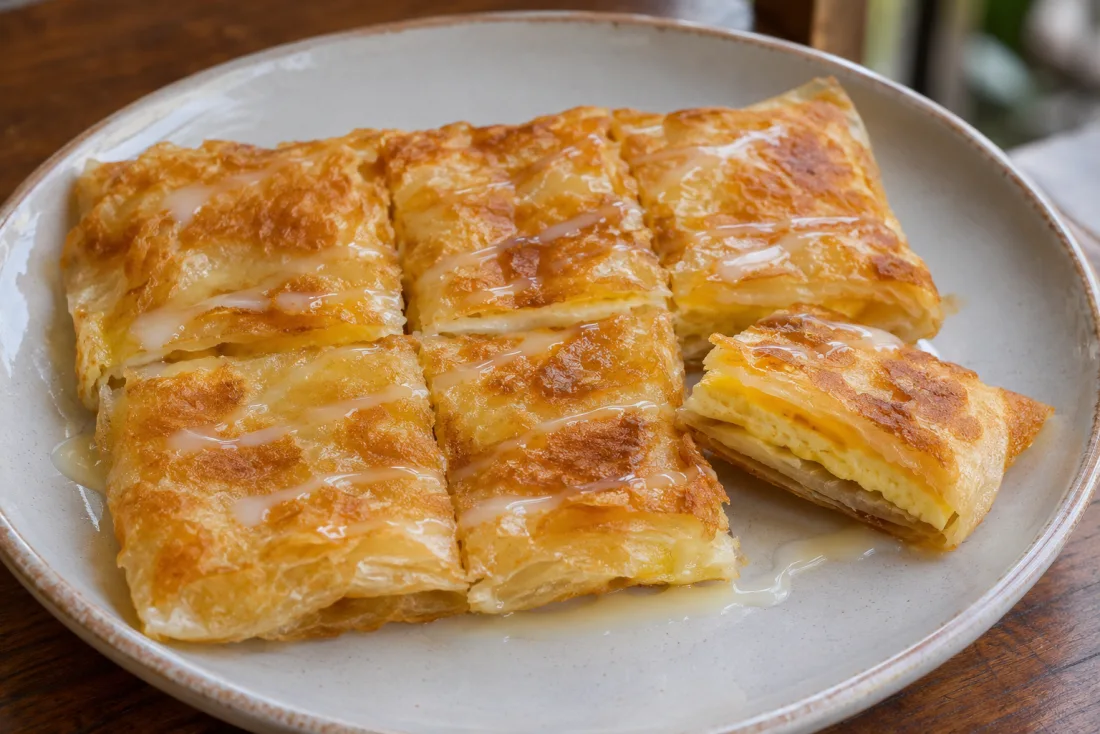

A thin wrapper around cooked egg
Roti sai khai literally means roti with added egg. The egg sets between folded layers, leaving a soft yellow centre and crisp golden edges. Shops also roll the cooked roti or cut it into smaller bites. A cross-section helps distinguish egg roti from a similar-looking banana roti.
A street snack served with tea
Egg roti is sold at Thai markets, night stalls and roti shops. Southern-style shops often serve it with tea; Bangkok menus also list versions with different toppings. Records from those locations establish examples of the dish, while its individual place of invention remains uncertain.
Dough, filling and toppings
Wheat flour, water and salt make a basic dough. Some recipes also use egg, milk, butter or condensed milk in the dough. The filling is an additional egg. Sweetened condensed milk or sugar can be offered separately, and chocolate, banana or cheese are optional additions.
How the two faces turn crisp
The rested dough stretches thin before it reaches the griddle. Egg goes in the centre before the edges are folded. Moderate heat lets the filling set while both faces brown. Cut the finished roti into squares or serve it rolled. Separate takeaway toppings help preserve the crisp edges.
Warm crisp edges and a softer middle
A freshly served corner has the strongest crunch. The egg makes the middle tender. Condensed milk softens only the part it touches at first and sugar adds a light crunch. Unsweetened tea pairs readily with the sweet topping. Steam in a closed package gradually softens the wrapper.
Wheat, eggs, milk and shared tools
The filling contains egg and the usual dough contains wheat. Milk may be present in dough, butter or condensed milk even when one topping is omitted. Shared griddles, knives and spatulas may touch nut spreads, soy-containing sauces or other toppings. Ask about both ingredients and equipment if avoiding an allergen.
If you have a food allergy, tell the restaurant before ordering and ask about ingredients, sauces and shared cooking equipment.