
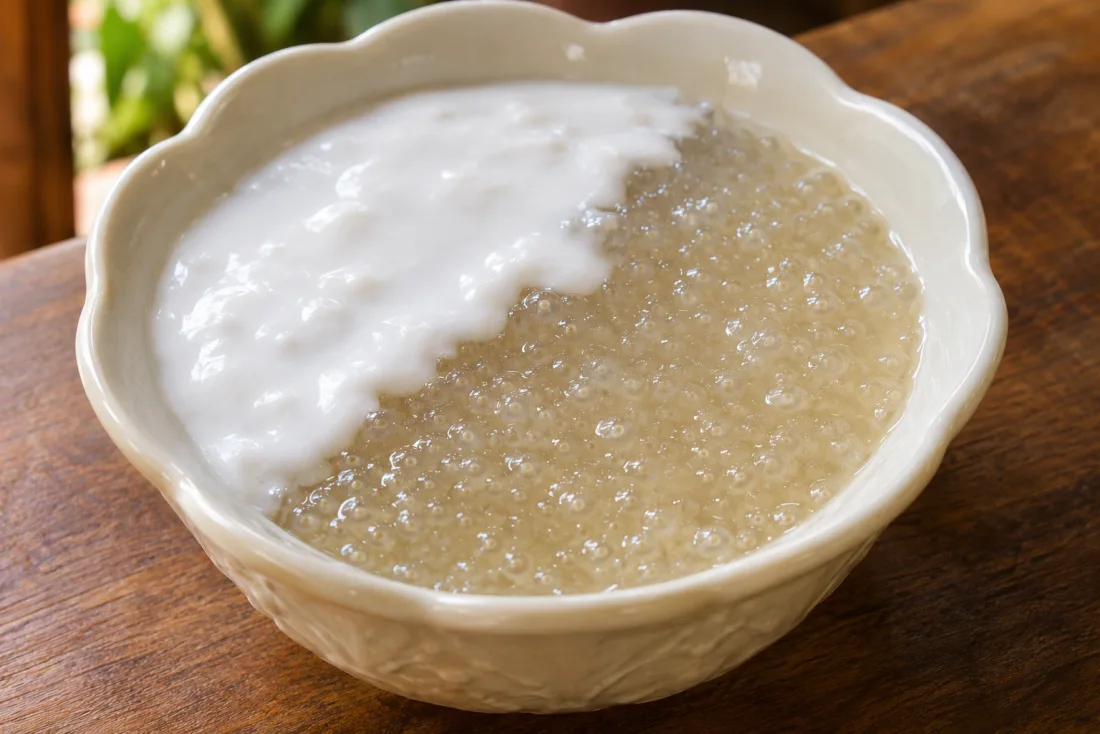

Sago cooked until spoonable
Sakhu names the pearls and piak describes a thick, wet dessert. Thai versions can use sago palm pearls or tapioca pearls. The small pieces are softer and less chewy than large bubble-tea pearls. Sarim may also be served in coconut milk but uses strands instead of pearls.
Southern palm sago and market alternatives
Southern Thailand is an important local source of sago palm starch. It is extracted from the trunk and processed into small, sometimes brownish pearls. Tapioca starch pearls are also common in Thai recipes. The starch source varies, and it does not establish a single origin for the dessert.
Pearls, coconut milk and soft additions
Recipes may use water or coconut water, sugar, and a lightly salted thick coconut topping. Cooked taro, sweet corn and young coconut give different bites. Pandan, longan or a little extra starch for thickening are options in different recipes. Ask which ingredients are in the bowl.
Cook the pearls and prepare the topping separately
The edges of the pearls turn translucent before the pale centres become small. Stir gently to separate them and let the liquid thicken. Sugar timing varies with the recipe. Add cooked taro, corn and coconut as needed. Spoon salted coconut milk over the top at serving.
Soft pearls with sweet and salty layers
The pearls are slippery with gentle spring. The topping gives a lightly salty richness over the sweet starch. Taro is soft and floury, the corn bursts gently, and young coconut feels smooth. A warm bowl is aromatic, while a cooled pudding may be thicker.
Allergens in the pearls, milk and additions
Coconut can be in the topping and the pudding layer. Ask which starch the pearls use and whether premixes contain other ingredients. Dairy, nuts, legumes or egg can be present in other desserts in the same kitchen. Ask about corn or taro if relevant and about shared ladles and utensils.
If you have a food allergy, tell the restaurant before ordering and ask about ingredients, sauces and shared cooking equipment.