
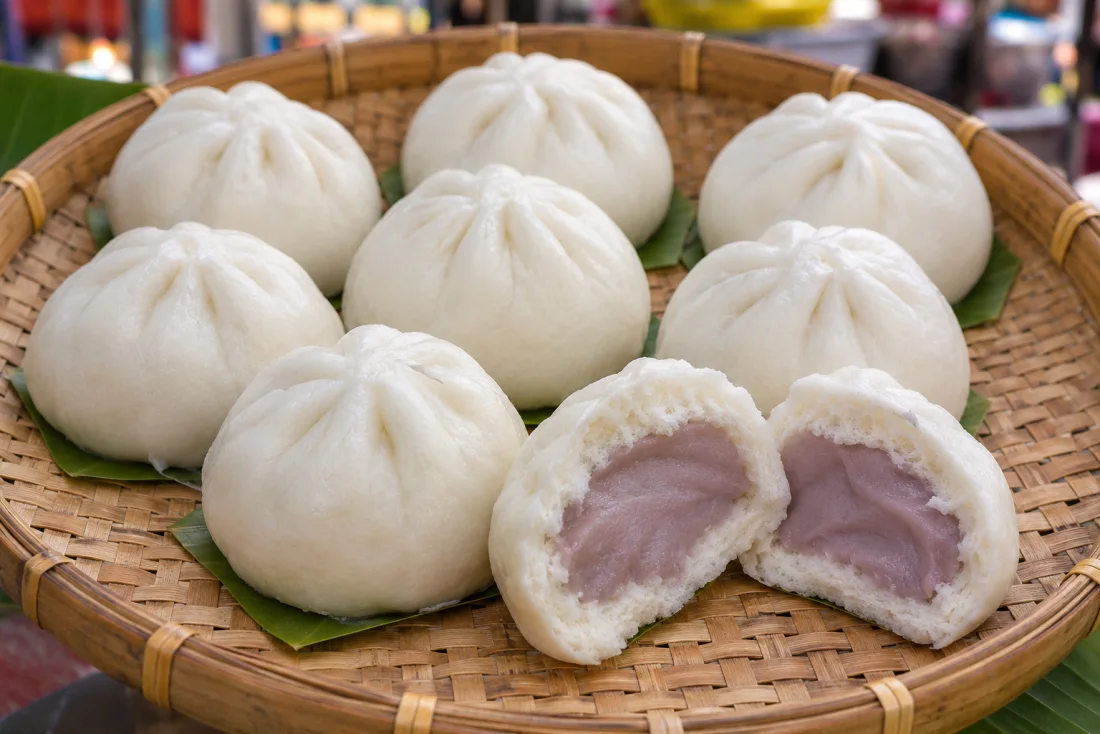

Recognizing sweet buns
Sai wan specifies a sweet filling. Some buns have a pleated top and others are smooth. A cut bun can reveal grey-purple taro, dark black bean or light yellow mung bean.
Dough and sweet filling
Wheat dough forms the steamed wrapper. Cooked taro can be mashed and cooked to a firm paste. Beans are cooked, ground and sweetened. Some Thai recipes use coconut milk in the filling.
Shaping and steaming
The dough is gathered around the filling and steamed. Small paper squares help the buns lift cleanly. They can be sold individually or together in a mixed tray.
Taste and texture
The wheat wrapper is mild and springy. Taro has a delicate aroma, black bean is earthier, and peeled mung bean gives a finer, mellow paste.
At Thai bun counters
Thai-Chinese bun and dim sum shops sell both sweet and savory buns. Shops commonly name each filling and a mixed tray is convenient for sharing or taking with tea.
Allergens and fillings
Wheat is typical in the wrapper. Check for milk, egg, soy or sesame depending on the filling and dough. Verify shared equipment and the actual bean rather than assuming all sweet bean buns contain soy.
If you have a food allergy, tell the restaurant before ordering and ask about ingredients, sauces and shared cooking equipment.