
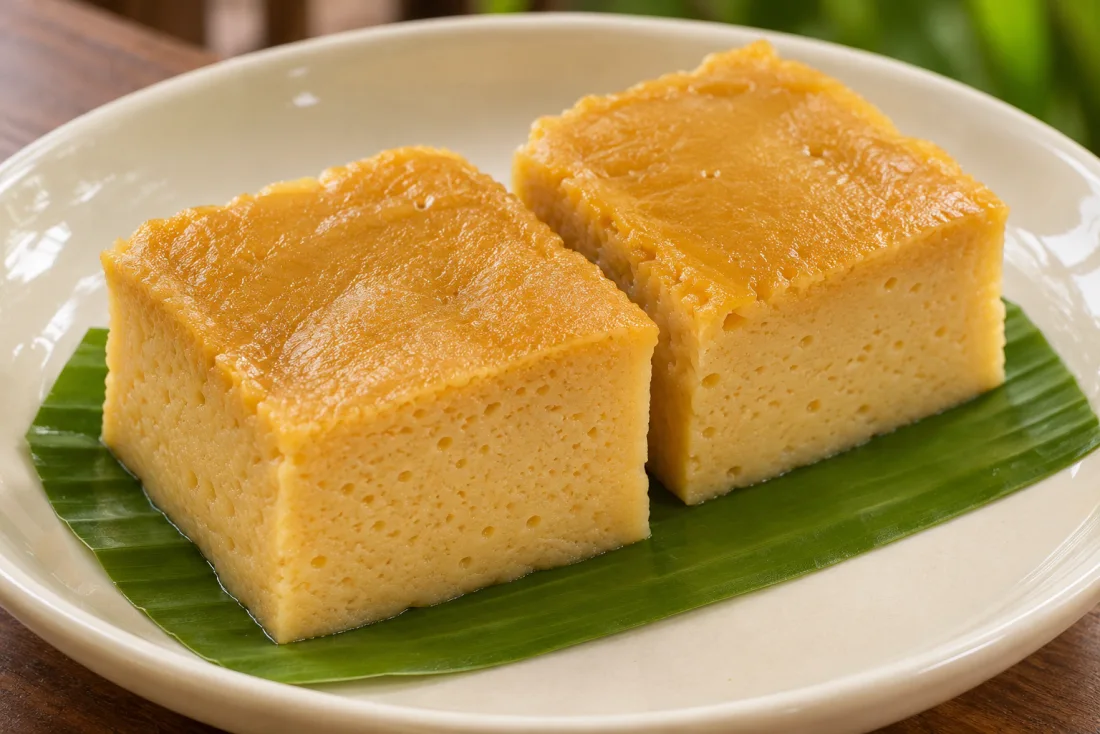

A custard that sets in the steamer
Sangkhaya can name several Thai custards. This version sets firmly enough to be cut from a tray or spooned from a cup. A softer custard for dipping bread can use the same name. Ask whether a menu means steamed custard, with or without sticky rice or pumpkin.
Thai steamed sweets and sticky rice
Thai community recipes show the tray-steamed method, and cups are also used. Dessert vendors may lay a piece on coconut sticky rice or steam the custard in a hollowed pumpkin. The documented versions do not establish a single province for this broad dessert name.
Duck eggs, thick coconut milk and coconut sugar
One representative tray version uses duck eggs, coconut sugar, coconut cream and pandan. The eggs set the mixture, coconut gives richness and pandan lends fragrance. Recipes can use other eggs or a little rice flour. Colour alone does not identify all ingredients.
Strain the mixture, then steam
Mix the eggs, sugar and coconut milk and strain out pandan pieces and strands of egg. Pour into a tray or cups and steam until set. A deeper tray can take longer than a cup. Gentle, even heating tends to produce a finer texture, while hot steam can leave small holes.
A smooth bite with egg and coconut aromas
A slice holds together and gives way easily when bitten. Coconut and pandan soften the substantial egg flavour. The type of sugar changes aroma and colour. Sticky rice gives a chewy contrast, while pumpkin adds a floury, sweet edge.
Egg, coconut and other allergens
The custard contains egg and coconut in the representative version. Ask whether dairy, creamer, wheat flour or premix is used. Bread, other custards, toppings or nuts may share cutting and serving utensils. Removing a topping or bread does not remove ingredients in the steamed mixture itself.
If you have a food allergy, tell the restaurant before ordering and ask about ingredients, sauces and shared cooking equipment.