

Reading the large pack
Thai retail lists 700 mL, alongside a separately sold 300 mL bottle. Some retailers group it under Thai whisky while the producer calls it special rum. Use the actual pack for capacity, alcohol strength and any export differences.
Molasses and maturation
The cane molasses base and the maker’s account of distillation and at least four years in oak explain parts of its aroma. Tasting references to spice, orange or wood describe sensations, and do not establish added ingredients.
What a table service changes
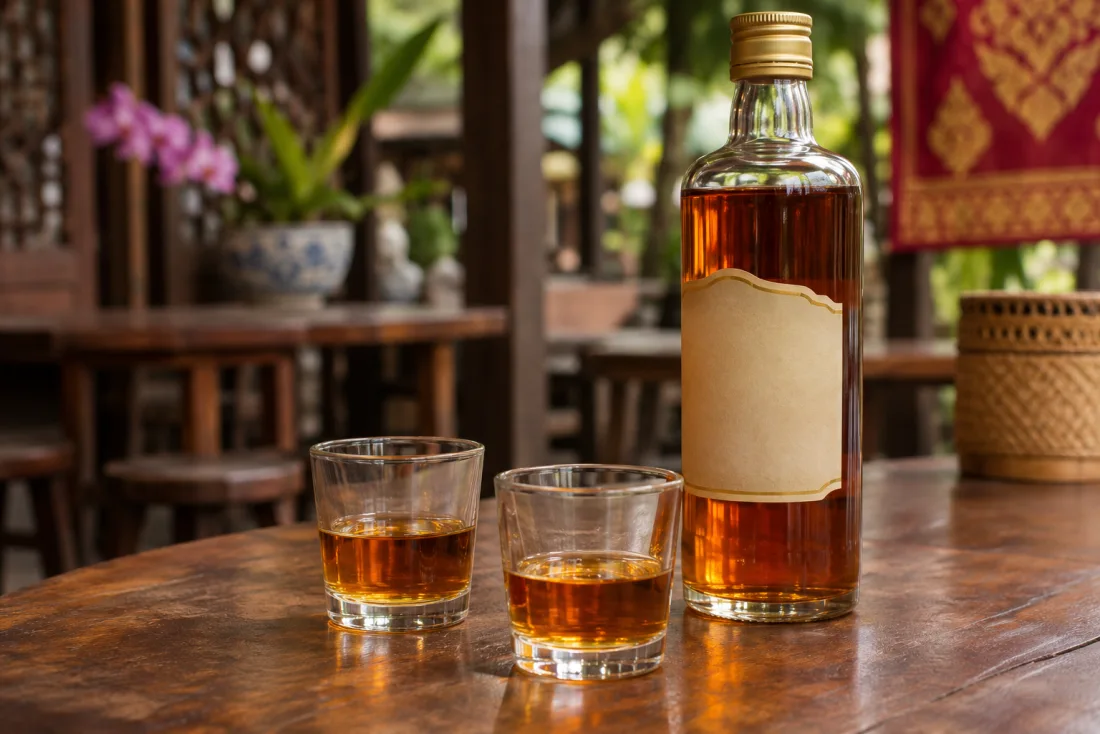
A restaurant can serve the bottle with empty glasses, ice or soda separately. Straight rum has concentrated oak and cane aromas, while ice cools and gradually dilutes it. Soda adds bubbles, and cola adds its own flavour and sweetness.
Writing the bottle size on a menu
Give the bottle volume and indicate any mixer or extras served with it. A measured pour or an already mixed cocktail has a separate volume and recipe. Alcohol strength on the bottle refers to the unmixed spirit.
Reading the rum and whisky names
Whisky may be used as a broad spirits shelf label, but brand and competition materials identify SangSom as rum. Colour and a similar label are insufficient to infer grain ingredients or the sizes of other Thai spirits.
Allergens, mixers and alcohol
Read the bottle for ingredient restrictions. Juice, citrus garnishes, dairy and shared tools can change an individual serving. The maker’s stated 40-degree rum contains alcohol, including when cooled or diluted.
If you have a food allergy, tell the restaurant before ordering and ask about ingredients, sauces and shared cooking equipment.