
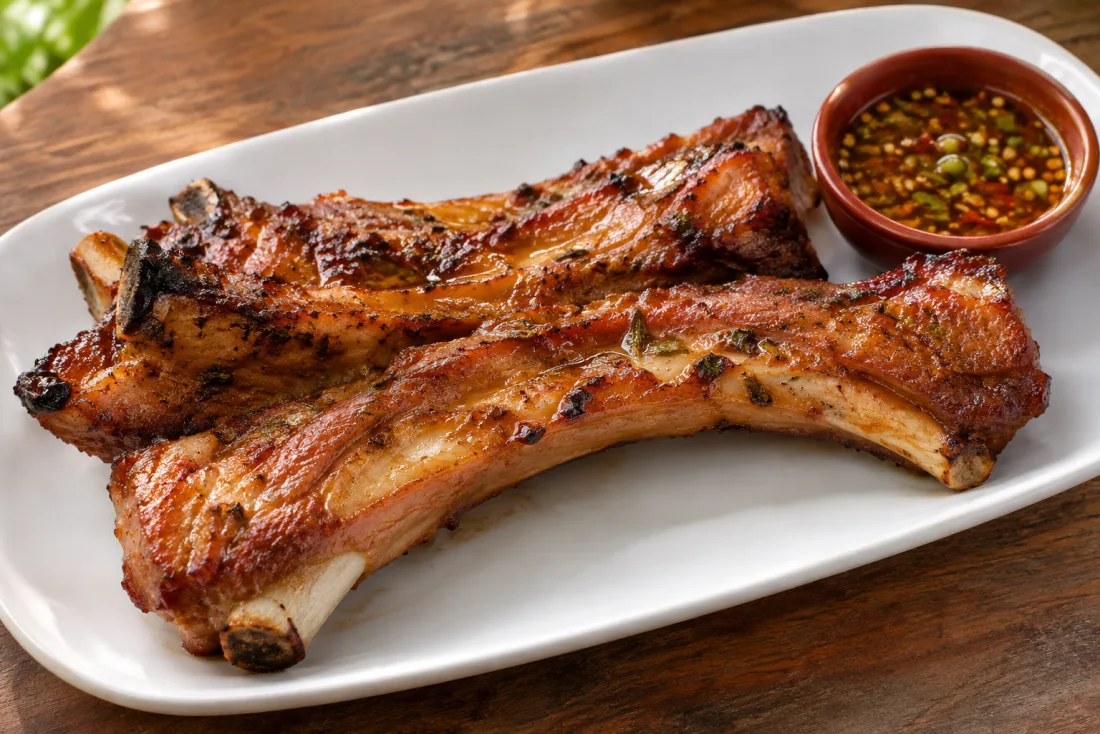

 pork ribs
 fish sauce
Bone-in ribs on a Thai menu
Si khrong mu means pork ribs and yang means grilled. Thai market stalls and Isan restaurants can sell a small rack or cut it into individual pieces. Jaew on the menu signals a separate spicy dip, alongside sweeter glazed options at some shops.
Ribs, the aromatic marinade and the dip
A recipe uses coriander root, garlic, pepper, light soy, oyster sauce and honey. The dip can use fish sauce, chilli, lime and toasted ground rice. Shallots, sawtooth coriander or tamarind may also appear. Sticky rice or cucumber can be served alongside.
Grilling a rack or individual ribs
A rack can cook gently before browning. Individual ribs have more edges exposed to the heat and marinade. Sugar darkens quickly, so cook the thick parts through. Some vendors glaze the ribs again for a shinier finish.
Browned aromas and the bite around the bone
Garlic, pepper and a touch of sweet glaze scent the surface. Meaty parts can be juicy and the meat by the bone offers a firmer bite. A sour, chilli-hot dip can cut the richness. Taste first with a little sauce.
Serving with sticky rice or fresh vegetables
Ribs can be eaten with sticky rice or shared with papaya salad and greens. Choose a dip on the side to adjust heat. Fried ribs have a different crust. Sweet barbecue versions also exist, so check which glaze or sauce is used.
Allergens in the marinade and dip
Soy sauce, oyster sauce and commercial glazes may include soy, wheat or molluscs. Fish sauce brings fish, and shrimp paste adds crustaceans when used. Check for sesame or dairy and shared grill equipment if relevant. Separate dip does not remove the marinade. Watch for small bone fragments.
If you have a food allergy, tell the restaurant before ordering and ask about ingredients, sauces and shared cooking equipment.