
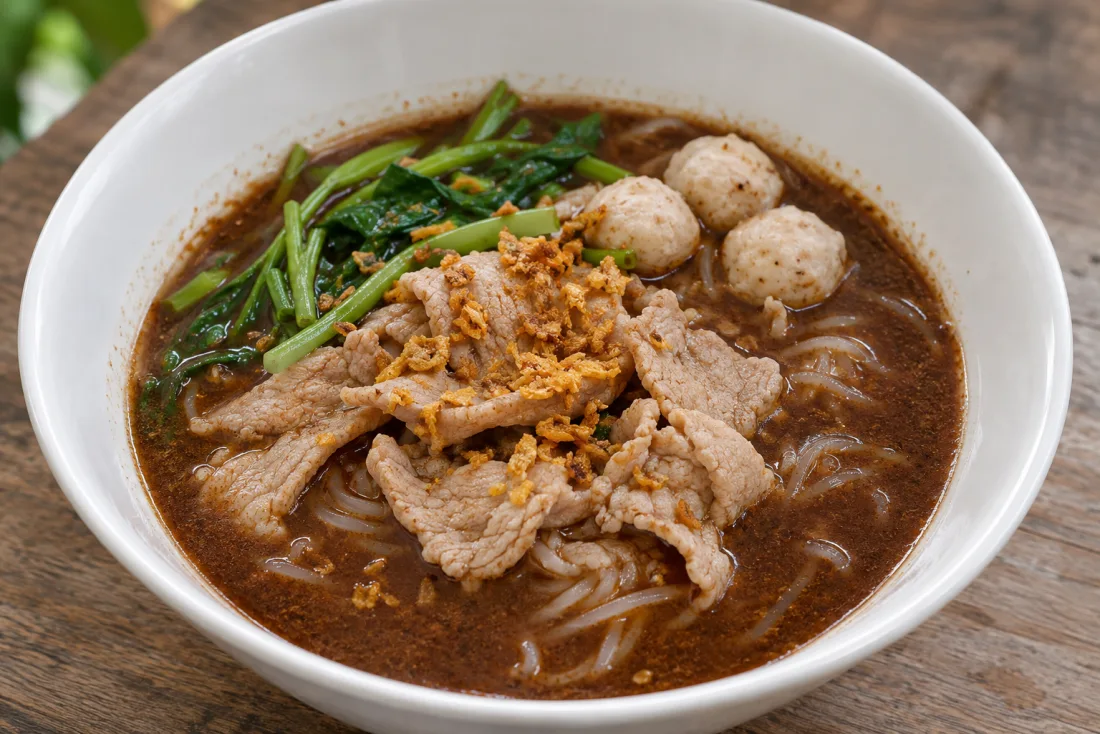

 pork
Sen lek names the narrow flat noodle
Sen lek identifies a narrow flat rice noodle. It is distinct from the thinner round rice vermicelli called sen mee and from wheat egg noodles. Moo identifies pork. Nam tok commonly refers to broth thickened with cooked blood, but a particular shop may offer a separate stock without it. The same Thai phrase can name grilled meat salad in another context. Read the full noodle order when choosing rice noodle width, protein and soup.
Choosing noodles and toppings at Thai boat-noodle shops
Thai restaurant menus offer the exact sen lek nam tok moo. One lists pork slices, stewed pork, liver or meatballs. Another notes that its broth is usually spicy and can be modified. These menus explain how ordering works without establishing one origin for every serving. Pots and toppings vary. Ask whether the shop can leave off liver, provide broth separately or let you choose a different stock if avoiding pork blood.
Narrow rice noodles, cooked pork and fragrant stock
The common components are rice noodles, pork broth and cooked pork. Bean sprouts and water spinach can go into the bowl, with toppings such as fried garlic and herbs. Aromatics can include garlic, cilantro root and pepper. Cinnamon, star anise and premixed spices depend on the broth. An authentic blood preparation uses food-grade pork blood cooked completely into the stock. Sliced pork, meatballs, liver and stewed pork are different options, so ask what is included.
Cook pork and any blood broth thoroughly
Simmer the stock and cook every pork ingredient through. A broth using blood needs thorough cooking in the pot. Merely splashing hot stock onto raw blood in a serving bowl is unsuitable. Thai disease control authorities advise thorough cooking for pork and separate tools. Blanch narrow rice noodles and vegetables thoroughly in a separate pot, drain, then add hot broth and cooked pork. Pack soup separately for a takeaway if desired.
Narrow ribbons hold savory stock and warm spice
Flat narrow noodles carry a thin layer of seasoned broth while retaining a springy center. The broth can smell of warm aromatics. Pork slices, meatballs or stewed pieces give distinct bites. Greens add freshness and newly added fried garlic adds toastiness. Chili and vinegar are separate from the choice to use blood in the broth. Taste first before adjusting seasoning and heat.
Allergens in broth, seasonings and meatballs
This bowl uses pork and a traditional broth can contain pork blood. Soy sauce contains soy and may contain wheat. Fish sauce contains fish. Oyster sauce or squid can add molluscs, and shrimp paste adds crustaceans. Meatballs can contain egg, soy or other binders. Ask about shared noodle baskets and water, especially with egg noodles. Chili topping can also contain peanuts or sesame. Confirm the stock, noodles, meatballs and table sauces separately.
If you have a food allergy, tell the restaurant before ordering and ask about ingredients, sauces and shared cooking equipment.