
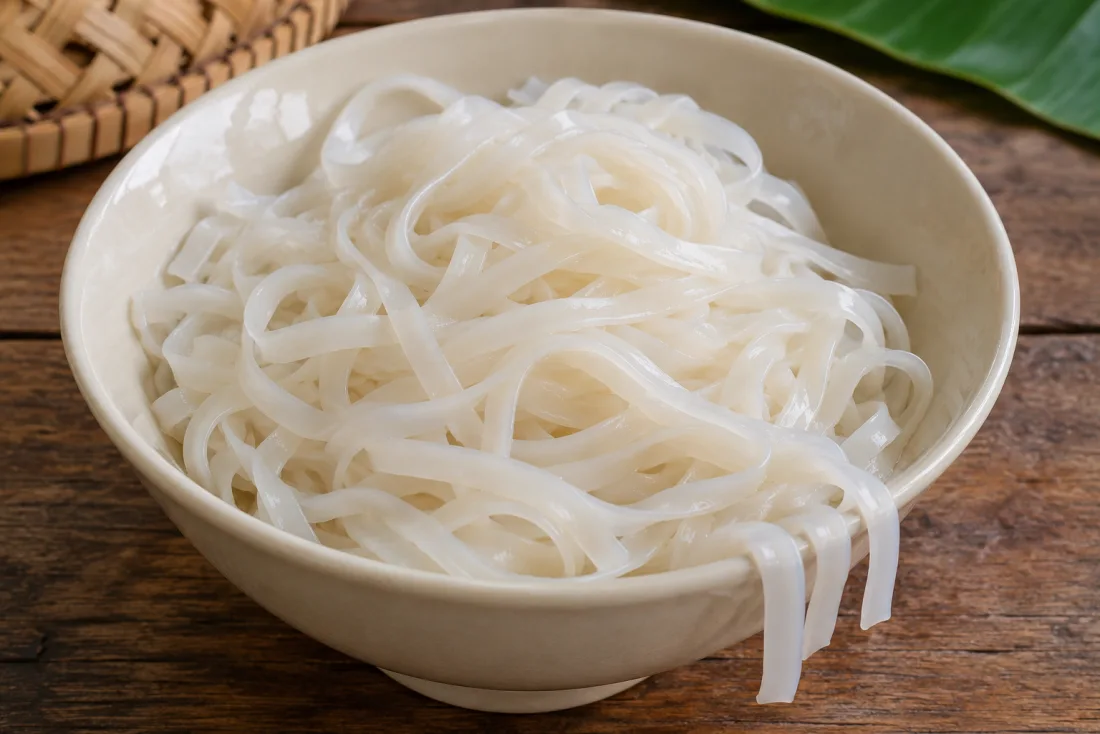

A narrow flat shape
The broad face is small but readily visible on the cooked strand. Round white vermicelli looks more like thread, while a wide noodle folds in broad ribbons. The exact width varies by producer.
Rice and formats
Thai makers sell fresh, semi-dried and dried small flat noodles. Rice is the principal ingredient. Additional starches and how much water the noodle already contains affect preparation.
Soup and the wok
Small flat rice noodles are familiar in clear soup and boat noodles. In the wok, a suitable product continues to soften as it absorbs the sauce. Some Pad Thai cooks favor a slightly wider product.
Mild aroma and soft chew
The plain strands smell mildly of rice. They offer a tender chew and carry broth or sauce along their flat faces. Soaking and service temperature change how soft they feel.
Choosing a noodle at the stall
Small noodles are commonly offered beside rounded vermicelli, wide rice noodles and wheat egg noodles. The guest then specifies broth or dry dressing and the desired toppings.
Allergens and the complete dish
Read the actual rice noodle label and ask about shared blanching water. Fish, soy, wheat, egg, peanuts, crustaceans and molluscs can come from the flavorings or toppings in individual dishes.
If you have a food allergy, tell the restaurant before ordering and ask about ingredients, sauces and shared cooking equipment.