

 chicken
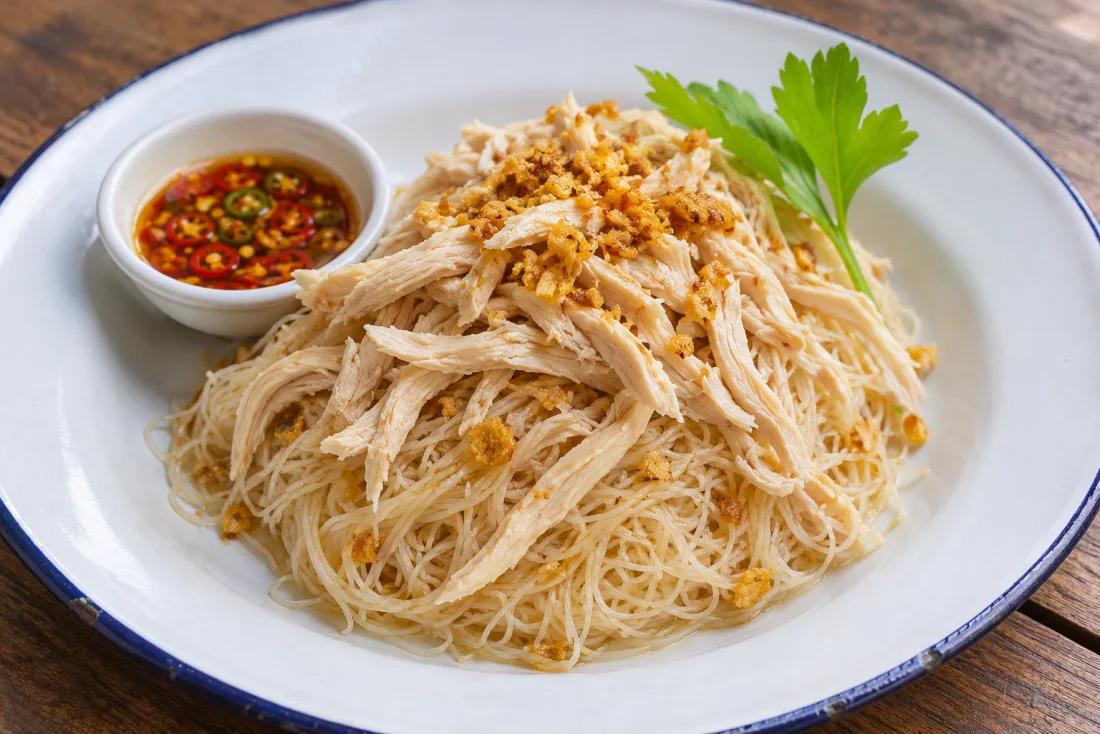
Thin rice vermicelli and shredded cooked chicken
Sen mee is the thin rice noodle used here, and gai chik means pulled chicken. Khluk haeng describes a dry-tossed serving. The noodles are cooked and drained before seasoning. A separate bowl of stock is possible, but the plate is not submerged in broth. Ask for haeng if the menu also offers soup. Thin rice noodles differ from glass noodles and wheat egg noodles in texture and ingredients.
A dry noodle dish at Thai shops and to take away
One Thai café lists blanched vermicelli, fried garlic oil, a sauce and chicken on top. A Thai chef tosses part of the shredded chicken through the noodles and leaves the rest as a topping. These describe current shop and home versions without establishing a province of origin. A takeaway can pack chili separately. Pork cracklings, meatballs and other toppings should be determined from the menu.
Vermicelli, chicken breast, garlic and dressing
A representative preparation uses thin white rice noodles and chicken breast. Fry garlic and use both the garlic and some of its oil. Some cooks fry garlic in rendered chicken fat. A dressing can use light soy sauce, oyster sauce, seasoning sauce and a little sugar. Scallions or greens add freshness. Mushrooms, sesame oil and chili oil vary. Lime can be added at service rather than mixed in ahead.
Cook the chicken through and toss warm noodles
Cook chicken thoroughly before pulling it apart. The USDA gives 74°C as the minimum internal temperature for poultry. Separate raw chicken and its utensils from cooked components. Soften or cook rice noodles according to their directions, then drain. Toss the warm noodles with garlic oil and dressing. Drain any blanched greens before adding. Top with chicken, scallions or separately packed chili. Eat a takeaway promptly according to the restaurant's instructions.
Garlic aroma, savory noodles and mild chicken
Garlic and the dressing are apparent on the first bite. Fine noodles are smooth and lightly chewy. Shredded breast has lean fibers, while thigh meat can be softer. Soy and a little sugar balance savory and sweet. Fresh greens or fried garlic add texture. Plain dry vermicelli can be mild, with chili provided to add as desired. If broth is served separately, sip it between bites.
Allergens in the sauce and optional toppings
Rice noodles usually use rice, but check the product. Soy sauce commonly contains soy and can contain wheat. Oyster sauce may contain oyster, which is a mollusc. Fish sauce contains fish. Sesame oil and seeds contain sesame. Some chili toppings can contain peanuts. Ask about sauce and stock separately from the visible chicken and vegetables. Shared strainers or bowls can cause cross-contact. Egg noodles offered as a substitute bring egg and commonly wheat.
If you have a food allergy, tell the restaurant before ordering and ask about ingredients, sauces and shared cooking equipment.