

 shrimp
 fish sauce
The fine strands in the Thai name
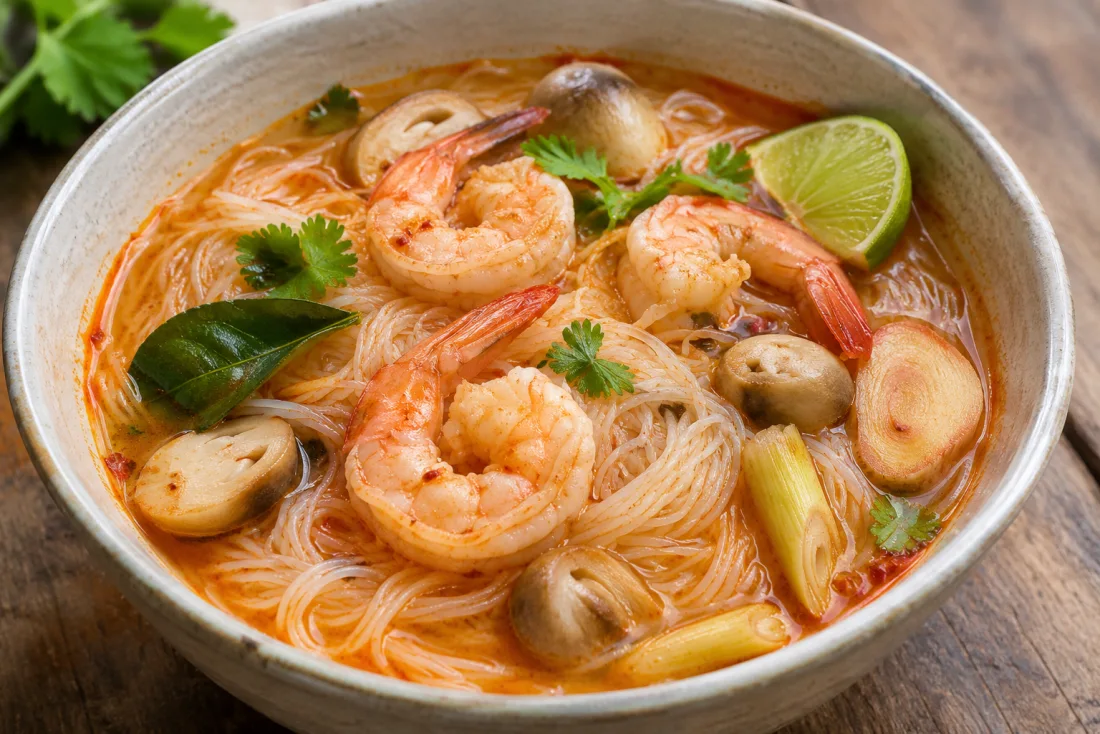
Sen mee refers to thin rice vermicelli. Tom yum kung specifies shrimp tom yum. The fine round white strands take up the soup readily. Menus may also offer flat rice noodles or egg noodles. Ask whether the soup is clear or creamy.
A noodle choice in Thai restaurants
A Thai restaurant menu lists shrimp tom yum with rice vermicelli alongside other noodles. The dish can be a full single bowl. Thai recipes also show different prawn sizes and broth styles. A restaurant menu does not establish a single origin for the noodle variant.
Shrimp, thin noodles and herbs
A clear tom yum version can use shrimp, lemongrass, galangal, makrut lime leaf, chili, lime and fish sauce. Thai noodle recipes also use mushrooms and sometimes milk with chili paste. Prawn head juices and chili paste can change broth color. Garnishes vary.
Cook the noodles separately and the shrimp through
Prepare the rice vermicelli according to its form and drain it. Cook shrimp until firm and opaque through the thickest part. Keep raw shrimp tools apart. Finish with hot broth and washed herbs near serving and store appropriately if taking away.
Silky noodles, fresh lime and shrimp sweetness
Fine noodles carry the bright sour soup, while shrimp is springy and mushrooms are tender. Lemongrass and lime leaf give fragrance. Milk or coconut can soften the texture of the broth, and chili amount determines heat. Enjoy before the noodles soften too much.
Allergens in shrimp and broth
Shrimp is a crustacean and fish sauce contains fish. Some broths contain milk, peanuts, soy, wheat or oyster. Ask about the chili paste and shared noodle water or cookware. Plain rice noodles do not prevent cross-contact with other foods.
If you have a food allergy, tell the restaurant before ordering and ask about ingredients, sauces and shared cooking equipment.