
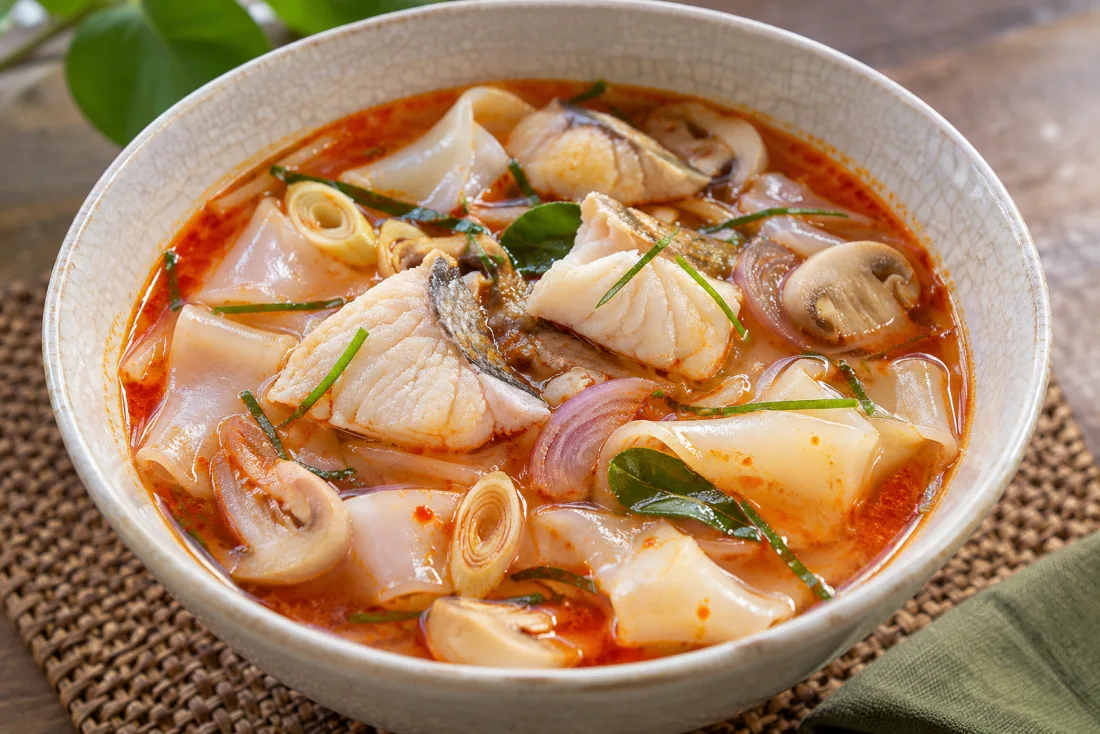

 fish fillet
Look for wide noodles and pale fish
Sen yai are broad rice noodles with soft folds. Cooked white fish becomes opaque. A light orange broth can show mushrooms and lime. The broad ribbons differ in texture from slender glass noodles. Ask which noodles are included.
A Thai fish soup ordered with wide noodles
Thai recipes document both clear and creamy fish tom yum. Thai noodle shops let diners choose wide noodles for fish tom yum. Fish balls and fish fillets appear in different bowls. The full menu description gives the best clue.
Fish, aromatics and a sour broth
One example uses wide rice noodles, white fish, lemongrass, galangal, makrut lime leaves, mushrooms, lime, fish sauce and chili. Different fish and mushrooms change the texture. Chili paste, tomato or evaporated milk can change the sauce.
Soft ribbons in bright, hot broth
The rice noodles carry lime and savory fish sauce across a wide surface. Fish is tender, with galangal warmth and a fresh citrus-leaf finish. Chili heat varies. The noodles soften as they sit in broth.
How to order and eat
Ask for sen yai and specify fillets, balls, clear or creamy broth as preferred. Use a spoon to catch a short fold with some fish. Leave tough aromatics and bones to the side. Ask for broth separately if packing to go.
Allergens, bones and broth
Fish fillets and fish sauce contain fish. Prepared fish balls can contain egg, soy or wheat. Chili paste and stock can contain crustaceans, and creamy versions may contain dairy. Ask about the noodles and shared strainers. Watch for bones.
If you have a food allergy, tell the restaurant before ordering and ask about ingredients, sauces and shared cooking equipment.