

Rice sheets and ribbons
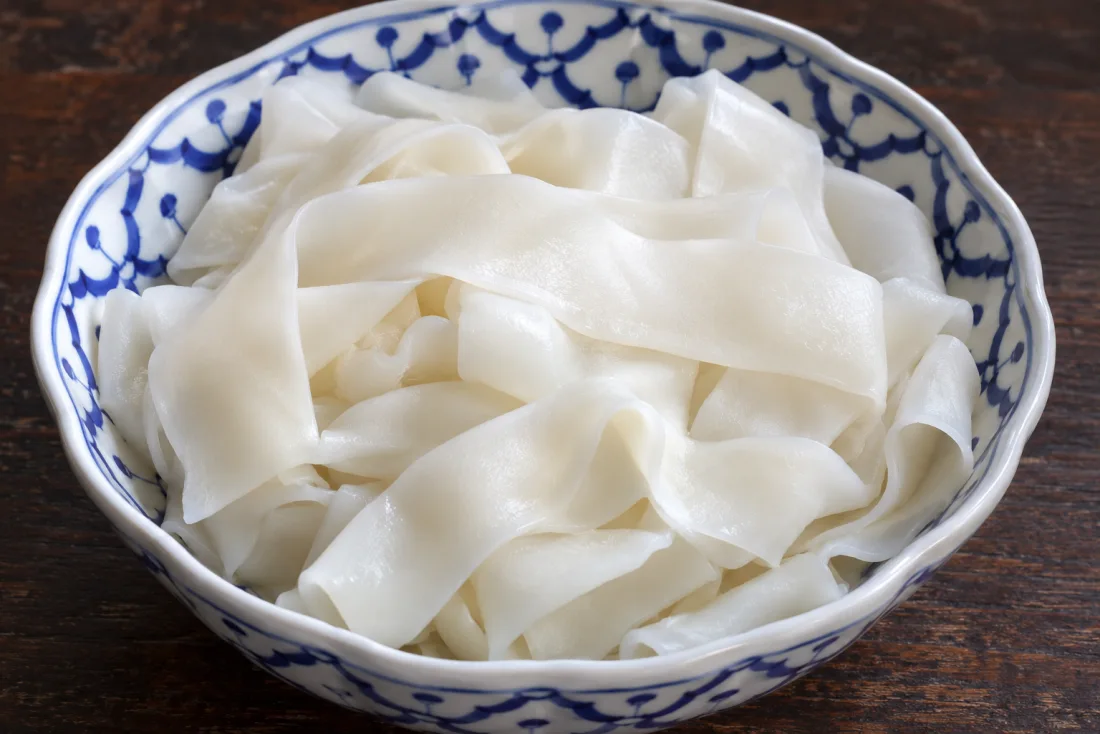
A bowl of cooked noodles shows overlapping folds and broad, thin strips. The dimensions vary by maker. Their shape is similar to Cantonese ho fun noodles.
How fresh sheets are made
A documented Thai home recipe steams a thin batter of rice flour, tapioca starch and water, oils the sheets lightly and slices them after cooking. Other formulations and dried wide noodles exist.
In soups and woks
Wide noodles take on a few seared edges and soy sauce in pad see ew. They soften under the gravy in rad na. They also carry sauce in drunken noodles or fill a spoon in soup.
Silky texture and mild rice aroma
Plain strips smell lightly of rice and feel soft, smooth and faintly springy. A wok can add browned edges. The sauce and seasonings bring the sweetness, heat and salt.
Choosing wide noodles in Thailand
Sen yai is familiar on Thai noodle menus. It specifies the shape of the rice noodle. Broth, gravy, wok seasonings and proteins remain separate choices.
Allergens and oil
Check the noodles and their oil. Wok sauces and broth may contain egg, soy, wheat, fish, crustaceans or molluscs. Ask whether the wok, oil or noodle station is shared.
If you have a food allergy, tell the restaurant before ordering and ask about ingredients, sauces and shared cooking equipment.