
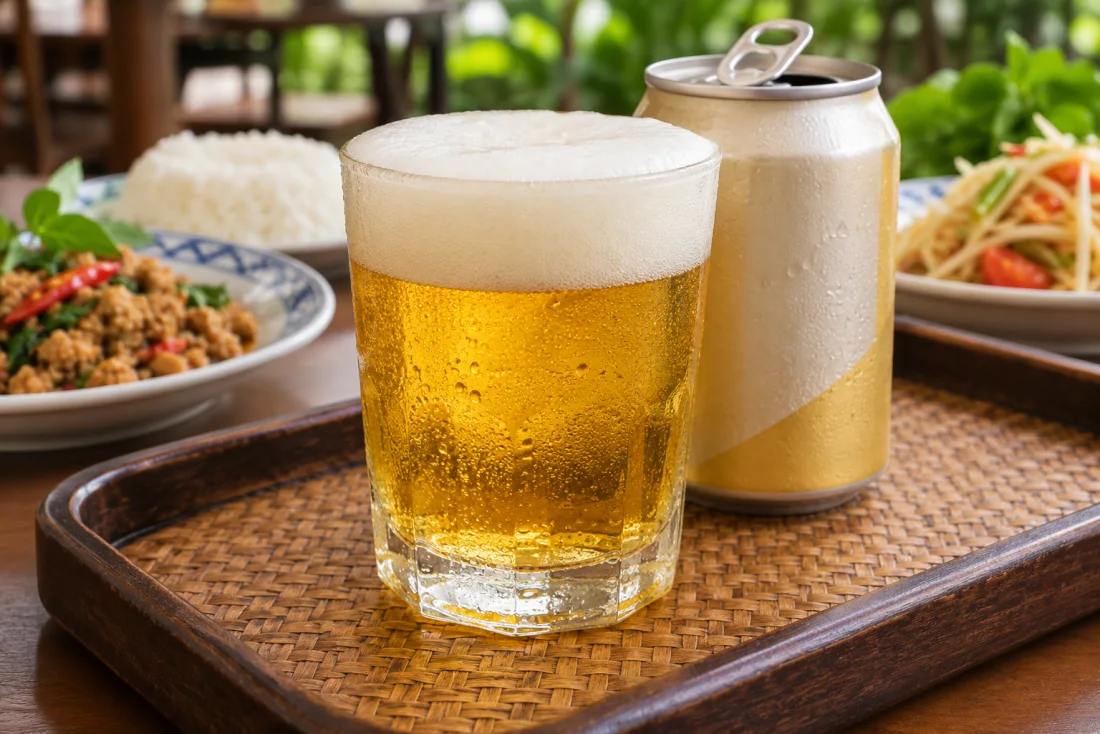

Krapong is the can format
Bia Singha krapong means canned Singha beer. Look for the brand, the word for can and a millilitre quantity. Standard, Reserve and Lite are separate brand variants, and the lion by itself cannot identify the brew. A can's marked net volume tells you how much beer it holds. Once poured, the visible colour and foam cannot provide that information.
Thai retail packs and other labelled sizes
A Thai retailer lists standard Singha in 320 and 490 mL cans. Another brand page shows 330 and 490 mL for regular cans, demonstrating that packaging descriptions can differ by market or period. The brand's chronology records that it began producing Singha cans in 1989. Restaurants may sell one particular size by the can or serve the beer in a glass. The package served is the best reference.
The regular barley malt lager in a can
The maker lists regular Singha as a 5% lager brewed with barley malt and mentions hops. A can is a format for that product. Malt supplies a fermentable base, yeast turns sugars into alcohol and hops influence aroma and bitterness. These are general brewing roles, not a full proprietary recipe. Use the actual can for ingredient and brewing declarations.
Opening, pouring and serving by the can
Use the pull tab and pour into a clean glass if desired. A cold can and a cold glass cool the beer, while melting ice dilutes the pour. A tilted glass can leave space at the top for foam. Two cans of different capacities at the same strength contain different total amounts of alcohol. Their percentage strength is independent of how much is poured.
Golden colour with rounded malt aroma
The brewer describes a full-bodied lager. A pour can show rounded grain aroma, gentle hop bitterness and carbonation. Drinking from a can and tasting from a glass can present different aromas. Ice can make the profile seem lighter after it melts. The size of the can does not make a different style. Food on the table brings its own chilli, acid and texture.
Allergens on the can and glassware
The brewery confirms barley malt, a cereal source of gluten. Check the product label if avoiding barley or gluten. Adding ice, chilling or changing the package cannot remove the malt ingredients. Batter or mixed drinks made with the beer can still carry gluten. Check shared glasses or equipment if necessary, and read the alcohol declaration independently.
If you have a food allergy, tell the restaurant before ordering and ask about ingredients, sauces and shared cooking equipment.