

Identifying Singha Draught
Moxy Bangkok lists a 330 mL glass and a one-litre jug. Orchid Cafe lists 320 mL and one litre. The listed portion is a venue choice. A bottle poured into a glass is a different service.
Barley malt and hops
Boon Rawd highlights barley malt, and the UK draught distributor describes hops. Malt gives cereal aroma and body while hops add light bitterness. Use actual Thai keg information for current ingredients and strength.
Gold colour and foam
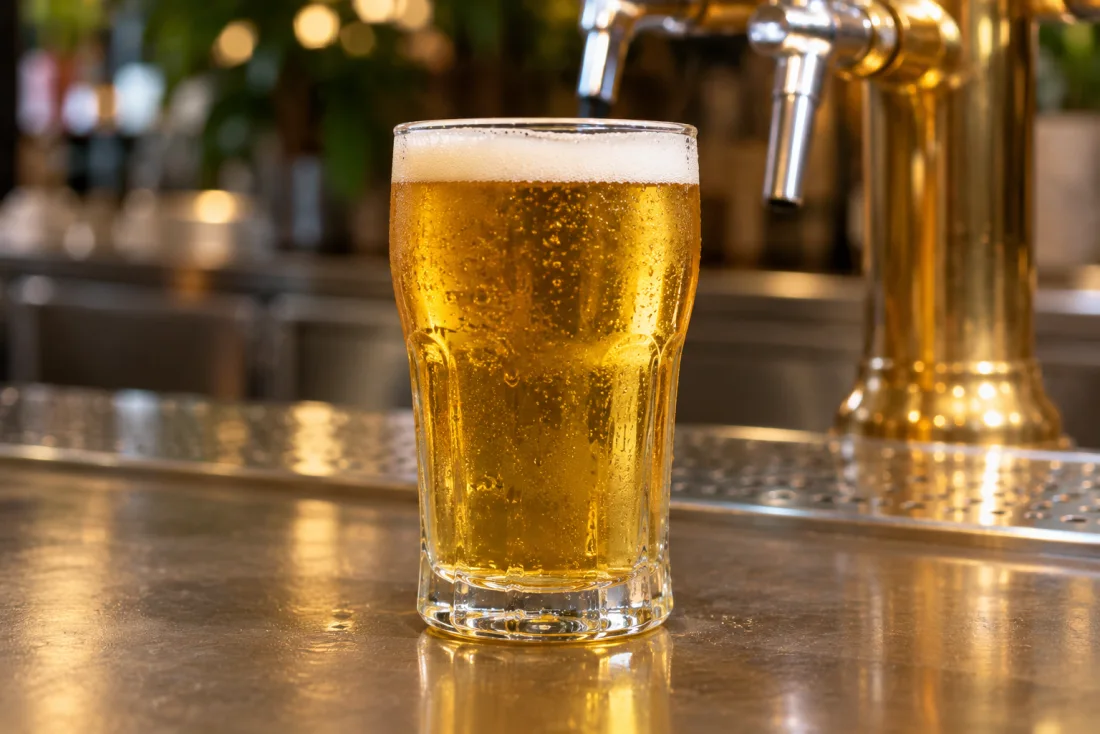
The tap pour is clear gold with a white head, light bubbles, rounded malt and a clean bitter edge. Glass, temperature and time affect the head. A pitcher can gradually lose carbonation.
Glasses, jugs and kegs
A Thai trade document records a 30-litre Singha keg. It is cellar equipment, while a one-litre jug is a restaurant serving. Foam and an unfamiliar glass shape do not supply exact volume.
Distinguishing related Singha items
The tap, packaged lager and a Light product have their own labels and service. Draft and draught are alternate spellings rather than separate flavours. Use the specific serving choice on a menu.
Allergens and additions
Barley malt contains gluten. Ask about the actual keg and shared equipment. Garnishes and mixed drinks have additional ingredients. Check the venue’s ABV and remember that ice or sharing does not remove alcohol.
If you have a food allergy, tell the restaurant before ordering and ask about ingredients, sauces and shared cooking equipment.