

 fish sauce
 dried shrimp
Which kind of green papaya salad is it?
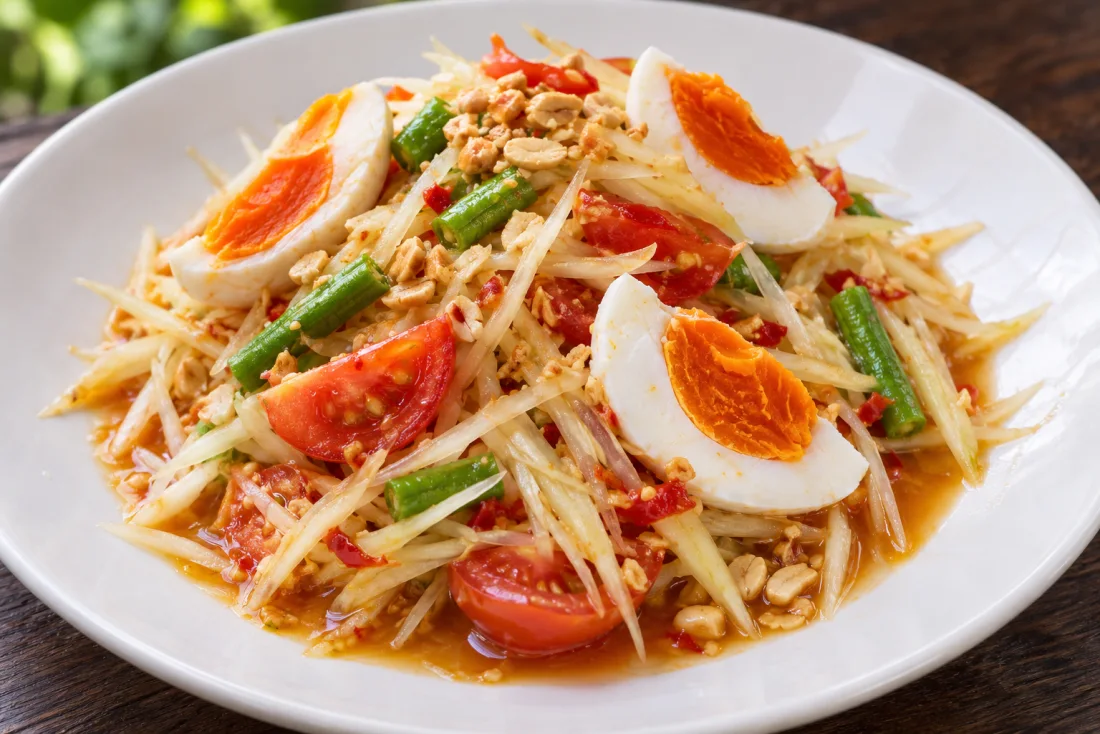
Thai menus call it som tam khai kem or tam Thai khai kem. The latter points to a sweet-sour tam Thai base with salted egg added. Bangkok restaurants specialising in northeastern-style salads list it alongside other mortar-made salads. A documented tam Thai-style menu uses the dressing without fermented fish paste. These menus give examples of where it is served today without establishing the precise place or date it was invented.
What the papaya, salted egg and dressing contribute
Shredded unripe papaya is mild and crisp. Chopped long beans and cut tomatoes introduce different textures and add moisture. Cooked, peeled salted egg is cut into wedges. The white is firm and salty, while the yolk crumbles and flavours some of the strands. Dried shrimp and roasted peanuts add seafood savouriness and a nutty crunch in the reference recipe. Fish sauce supplies salt and savouriness. Palm or coconut sugar softens the acidity. Lime goes in during mixing, while tamarind can be part of the cooked dressing.
Pound gently and add the egg last
Start by lightly crushing chilli and garlic, then bruise the cut beans and tomatoes. Add the dressing and papaya, turning the strands through the liquid with a spoon and a light touch from the pestle. The strands should still hold their shape. Fold in the salted egg at the end, allowing just some of the yolk to break up and leaving pieces intact. The salt and sugar draw water from the papaya and tomatoes over time, so it is often mixed one portion at a time just before serving.
How the sour, sweet, salty and hot notes come through
Lime and sugar come through first against the cool strands. Fish sauce and dried shrimp give a savoury finish, while individual bites of egg or peanut give a salty crumble or a roasted crunch. The amount of chilli varies by kitchen and can sometimes be adjusted. Compared with ordinary tam Thai, the yolk makes some of the dressing cloudier and gives individual bites more salt. Eat it while the strands retain their snap to appreciate the different textures.
Where it is served and what to ask for
Northeastern-style restaurants may list regular tam Thai, this salted-egg version and a fermented-fish papaya salad on the same menu. Grilled chicken and sticky rice make good table companions. Corn can be used in a separate salted-egg salad, marked khao phot in Thai. Its sweet kernels feel quite different from the pale papaya strands. If you want green papaya, point out the relevant Thai-style salted-egg item. Ask whether the chilli can be reduced if you prefer it milder.
Allergens and shared mortars
Salted egg contains egg. The reference recipe also uses fish sauce, dried shrimp and roasted peanuts, so it contains fish, crustaceans and peanuts. A restaurant may serve the peanuts separately, but check whether there are any already in the dressing or mixture. Mortars, pestles, spoons and containers may also be shared with mixtures containing crab, shrimp or fermented fish. Ask about the dressing, toppings and whether the kitchen can use clean equipment. Removing visibly separate toppings or reducing the chilli does not settle the question of cross-contact.
If you have a food allergy, tell the restaurant before ordering and ask about ingredients, sauces and shared cooking equipment.