

 pork
 fish sauce
Reading the Thai pork salad names
Thai som tam shops can list crispy pork and grilled pork papaya salads separately. Green papaya salad has strong roots in northeastern food culture and comes in many variants across Thailand.
Papaya and two choices of cooked pork
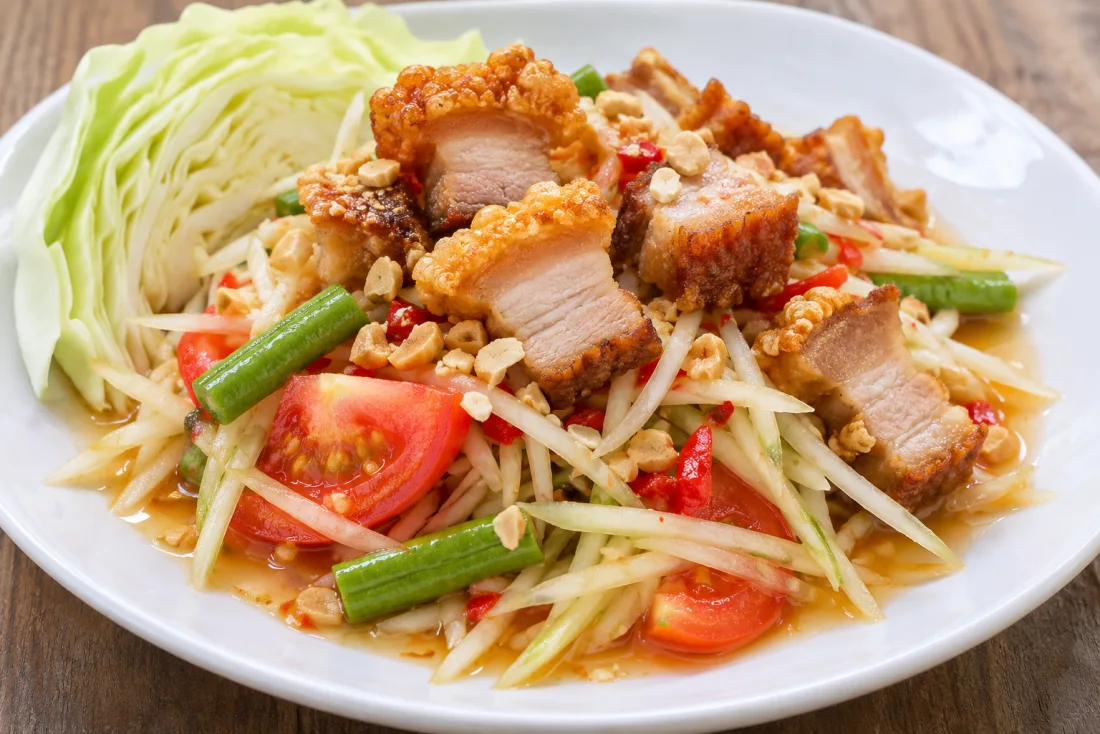
Green papaya, long beans, tomatoes, garlic, lime, chilli and fish sauce make a representative base. Dried shrimp and peanuts can be used. Cooked pork belly has a crisp skin, while grilled pork shoulder or neck can be sliced. A specific marinade can also contain egg, milk, soy and oyster sauce.
Crunchy papaya, tart dressing and pork
The papaya remains crisp after light pounding. Lime and fish sauce give tart and savoury notes. Pork belly has crackling skin over soft layers; grilled pork gives a smoky, firmer bite. Chilli and sweetness vary with the dressing.
Pound the vegetables and add the pork
Pound garlic, chilli and beans, stir in seasonings and toss the papaya with a spoon and pestle. Cook and cut the pork separately. Add it close to serving so crispy belly stays crisp. Keep raw pork equipment away from washed salad ingredients.
Choosing the pork and heat
Ask for mu krop for crispy pork or mu yang for grilled pork. Check the level of chilli and whether sticky rice is a side. Ask for separate pork and dressing if taking away and preserving crispness.
Allergens in dressing and marinade
Fish sauce can contain fish, dried shrimp contains crustaceans, and some recipes use peanuts. Pork marinades may include soy, wheat, oyster sauce, egg or milk. Check shared oil, utensils and mortars as well as the ingredients.
If you have a food allergy, tell the restaurant before ordering and ask about ingredients, sauces and shared cooking equipment.