

What je means on a Thai menu
Som tam is a family of pounded salads. The word je can identify a preparation that follows Thai plant-based observance. The documented bowls omit fish sauce, fermented fish, dried shrimp and crab, and stricter recipes also leave out garlic or other pungent alliums. A menu saying only no fermented fish sauce is a different request.
Papaya, long beans and tomato
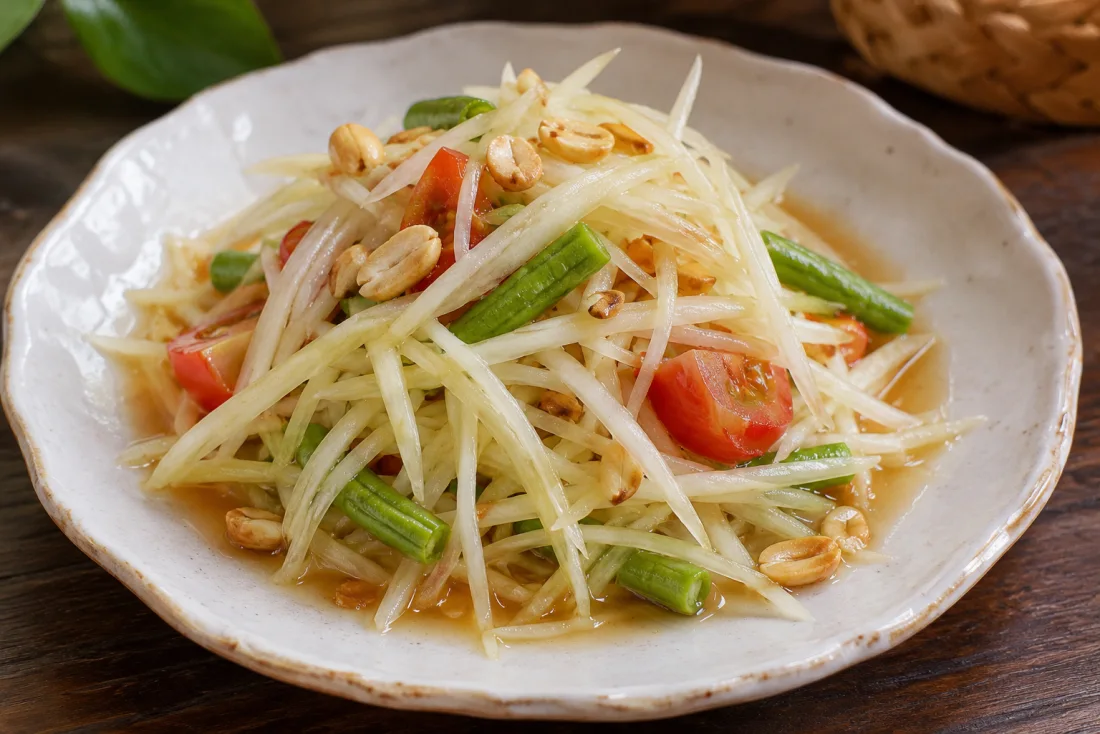
Unripe papaya gives a crisp bite. Shredded carrot can add sweetness and colour. Chopped long beans stay crisp when lightly crushed, while tomatoes offer juice. Roasted peanuts bring a nutty bite and can be left whole or crushed.
A plant-based dressing
Lime, palm sugar and light soy sauce or a plant-based fish-sauce alternative make a bright, balanced dressing. The maker decides which condiment goes in. A little liquid coats the strands as the vegetables are pounded and tossed.
Two styles and different levels of heat
A papaya-forward plate can have red tomatoes, green beans and peanuts. Others mix orange carrot throughout, sometimes with thicker strands. Ask about chilli before pounding. An extra squeeze of lime or a separate chilli can change the finish.
What to say when ordering
Ordinary som tam Thai may use fish sauce and dried shrimp even when it omits fermented fish. Ask for som tam je and clarify the seasonings, garlic and preparations that matter to you. Shared mortars can be an important detail at a shop selling several versions.
Allergens in a je preparation
Peanuts are common. Soy sauces or plant-based seasonings may contain soy or wheat. A plant-based recipe does not guarantee separate tools. Ask about fish, crustaceans, molluscs and other ingredients as relevant, and check whether peanuts are in the dressing or added later.
If you have a food allergy, tell the restaurant before ordering and ask about ingredients, sauces and shared cooking equipment.