
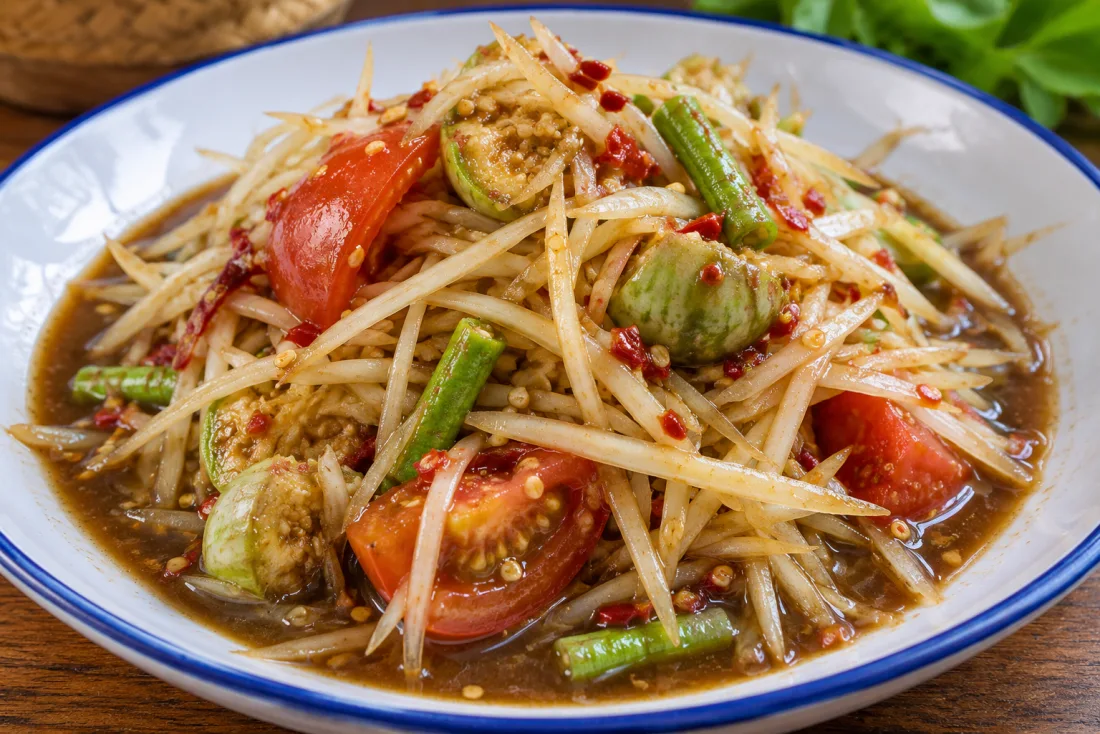

 fermented fish sauce
What pla ra means on the menu
Pla ra is fermented fish seasoning, often added as a cooked liquid. Green papaya is shredded and tossed with chilies, tomato and long beans. A simple pla ra version need not contain crab. Pu pla ra explicitly adds crab, so check the actual dressing and toppings if avoiding shellfish.
Isan som tam and its accompaniments
Green papaya som tam and fermented fish cooking are associated with Northeastern Thailand and nearby Lao communities. The cooked pla ra variant can be served with Thai rice noodles, raw vegetables, grilled meat or sticky rice. A menu supplies an example rather than a single place of origin.
Green papaya, cooked pla ra and tart fruit
A Thai recipe uses green papaya, beans, tomato, fresh and dried chilies, lime, tamarind, boiled pla ra, fish sauce and sugar. It can also add Thai olive. Sourness, sweetness and depth depend on the seasoning and fruit. Peanuts, dried shrimp and crab vary by kitchen.
Use thoroughly cooked fermented fish seasoning
Choose a reliable, appropriately heat-treated product and follow storage directions. Thai health guidance advises fully cooking fermented freshwater fish. Salt and citrus cannot substitute for heat. Bruise chilies and beans, mix the dressing and gently toss the shredded papaya with clean equipment.
Crisp, sour and deeply savory
Papaya and beans are crisp, lime is bright and fermented fish gives savory depth. Tamarind adds a rounder tang. Rice noodles or sticky rice carry the sauce, and cucumber can soften the heat. Ask for less chili before the dressing is made.
Allergens and shared mortars
Pla ra and fish sauce contain fish. Dried shrimp and crab are crustaceans, and squid, oyster and clams are mollusks. Peanuts or soy and wheat in mixed sauces may also occur. Ask about ingredients, garnishes and shared equipment separately.
If you have a food allergy, tell the restaurant before ordering and ask about ingredients, sauces and shared cooking equipment.