
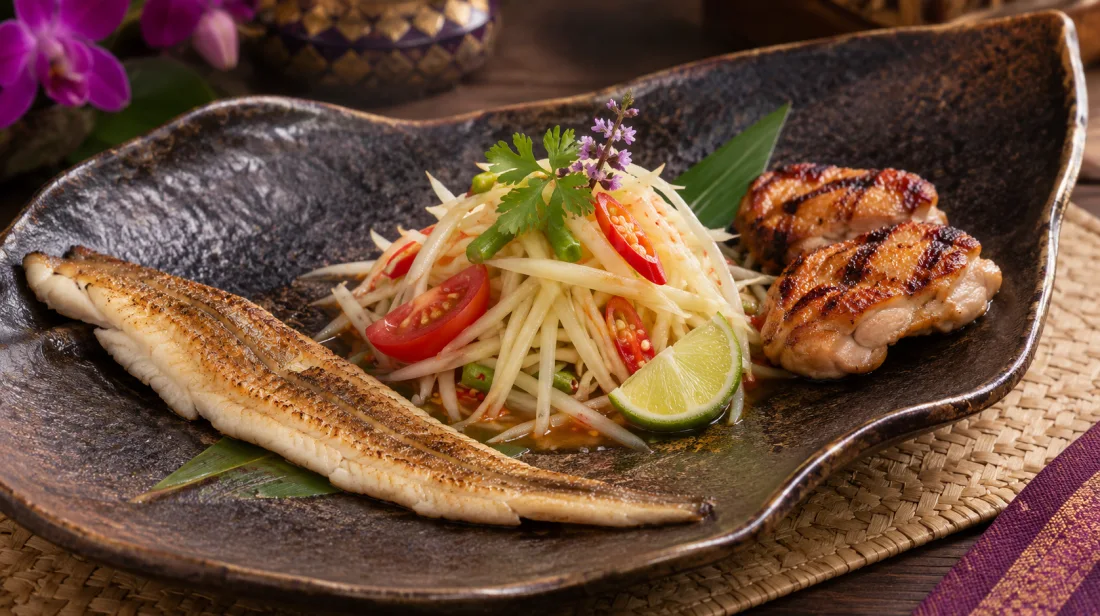

 grilled chicken
 fish sauce
Recognising the salad and the two cooked toppings
Shredded unripe papaya holds its crunch. Tomato and fresh chili may add colour. Cooked conger eel can be pale and tender, while cooked grilled chicken has browned edges and pale flesh. The toppings can sit separately or the fish can rest above the dressed papaya.
Why anago appears in a Thai dish
Thai chef Naree Boonyakiat documents papaya salad with grilled chicken and anago in a portfolio. It is one contemporary chef combination. Anago refers to conger eel in Japanese food, while unagi is freshwater eel. Japanese culinary records show the use of simmered conger eel cut into fillets.
Combining papaya, fish and chicken
Dress shredded papaya close to serving. Lime, chili and fish sauce are common, but the chef's listing does not specify the full dressing. Cooked anago can sit on the finished salad without breaking apart. Slice cooked grilled chicken separately and say where any extra sauce is used.
Crisp, soft and smoky
The papaya brings crunch, lime and heat. Cooked anago is mild and soft, and grilled chicken contributes a toasted smell. Try them individually or together. Rice and sauce are separate options according to the restaurant.
Ordering and choosing menu images
Ask which eel is used, whether it is fully cooked, whether grilled chicken is included and how much chili is served. A divided plate or a platter with the fish on the papaya can show the three components. Note any bones and the actual portion.
Fish, dressings and shared tools
Anago and fish sauce contain fish. Other versions may have peanut, dried shrimp or seafood seasonings. Soy, wheat or molluscs can occur in chicken marinade or eel glaze. Ask about the mortar, grill, brushes and knives as well as the actual ingredients.
If you have a food allergy, tell the restaurant before ordering and ask about ingredients, sauces and shared cooking equipment.