

 fish sauce
Where it comes from: the pounded salads of Isan and Laos
Green papaya salad is closely associated with Isan, northeastern Thailand. Isan and neighbouring Laos share a tradition of preparing pounded dishes with a mortar and pestle. The Lao green papaya preparation is called tam mak hoong. The Tourism Authority of Thailand presents som tam and its many variations among the foods of northeastern areas such as Buriram. This supports a connection to a shared cross-border food tradition, with no clear basis here for assigning the whole family to one inventor, city or year.
Tam Thai refers to a particular preparation on Thai menus. Fish sauce, lime, sugar and peanuts commonly give it a sweet-sour savouriness that differs from versions with fermented fish seasoning or preserved crab. Tam Thai is also served outside Isan, so modern restaurant menus do not map neatly onto one region.
What goes on the plate: papaya, dressing and peanuts
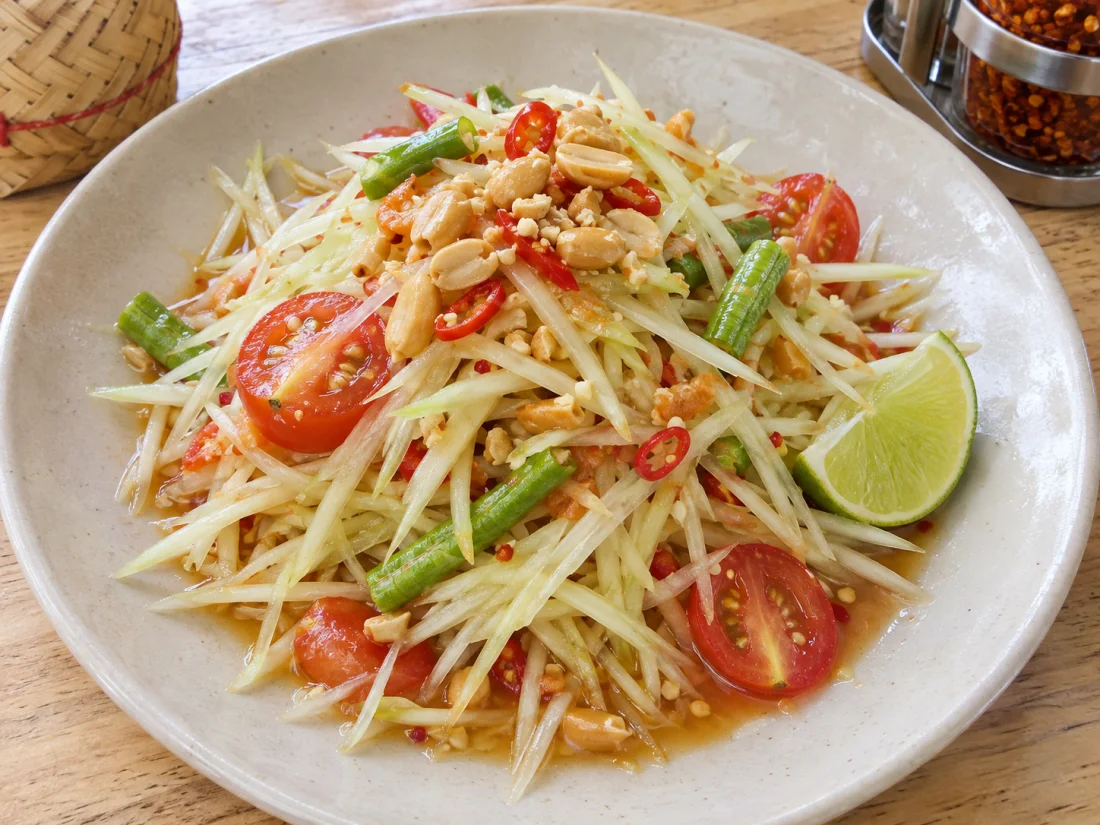
The base is an unripe papaya. Its firm flesh stays crunchy when shredded and carries the dressing. Long beans bring a different snap, lightly bruised tomatoes release juice, and roasted peanuts add aroma and a grainy crunch. The Thai Department of Agricultural Extension gives an example with carrots, garlic, chilli, palm sugar, tamarind paste, lime juice and fish sauce. A restaurant may use dried shrimp or change the balance of beans, tomatoes and papaya.
Fish sauce adds savoury saltiness. Sugar softens the acidity, lime contributes a citrus scent and tamarind can add a fuller fruity tartness. The amount of chilli is adjustable, and the appearance of red chilli fragments on the plate gives little indication of its actual heat.
Why use a mortar? Pounding and tossing work together
The papaya is cut into fine shreds. A cook can first bruise the garlic and chillies in the mortar so their aromas and heat reach the dressing. A few light taps on long beans and tomatoes help their flavours mingle with fish sauce, sugar and the acidic ingredients. The papaya is then lightly pressed and turned so the dressing coats the strands. Heavy pounding costs the papaya some of its crunch. Stirring everything loosely on a plate gives a different aroma because the tomatoes and seasonings have not been bruised together.
Some dressing generally pools at the bottom of the plate. Spoon it back over the strands to taste the crunch of the papaya, the tart tomato juice and the roasted scent of peanuts together. The salad is often pounded to order, and that freshly dressed texture is part of the experience.
What it tastes like: bright acidity, sweet and salty notes, and heat
Lime and crunchy papaya are often the first impressions, followed by palm sugar, the savouriness of fish sauce and the lingering heat of chilli. A recipe with less sugar can taste sharper. Finely pounded chilli distributes its heat through the salad, while roast peanuts add a nutty note against the acidic dressing. Two menus can both say Tam Thai and serve different balances of sweetness, tartness, heat and garnish.
For a milder dish, you can ask for less chilli when ordering. That request concerns flavour. If you have a food allergy, give the restaurant the specific ingredient you need to avoid.
Where people eat it and how it fits into a meal
The Tourism Authority of Thailand features som tam among the representative dishes of places such as Buriram and records several versions at urban restaurants. It works as a shared dish with grilled chicken and sticky rice. Its sour and spicy dressing sets off the roasted character of the chicken, and the rice can pick up a little of the dressing. Try a spoonful of papaya followed by a piece of chicken, with sticky rice on its own or dipped in a little dressing. Depending on the meal, the salad can be a starter or one of the main components of a simple lunch.
How to distinguish similar names on the menu
Som Tam Thai and the shorter Tam Thai commonly refer to the sweet-sour peanut version. Tam Pla Ra names a version with fermented fish seasoning, which gives a different aroma and savouriness. Tam Pu Pla Ra names both crab and fermented fish seasoning. Other pounded variations use ingredients such as pineapple or rice vermicelli. Names give clues to what goes in the dish; a photo with visible papaya strands alone does not tell you whether the recipes are alike.
Allergens: ask separately about peanuts, fish and crustaceans
Tam Thai commonly uses peanuts, and fish sauce is generally fish-based. Dried shrimp and crab can add crustaceans in some versions. Fish and crustaceans are separate allergen groups. Tell the restaurant whether you need to avoid fish, shrimp or crab, or peanuts. Chopped peanuts may be hard to see, fish sauce is already mixed into the dressing, and small dried shrimp can be difficult to spot.
A shared mortar, pestle, spoon or dressing container can transfer ingredients from one order to the next. Picking out the peanuts at the table still leaves a possibility of cross-contact. Before ordering, tell the restaurant what you are allergic to and ask about the recipe, premixed dressing and separate utensils. The restaurant’s actual ingredients and handling determine whether the dish is appropriate for you.
If you have a food allergy, tell the restaurant before ordering and ask about ingredients, sauces and shared cooking equipment.